Wolfi: the base distribution designed for containers

Actualizado: 2026-05-03
Wolfi turned three in August 2025 and is one of those quiet infrastructure projects whose influence shows more through where it shows up than through what it claims for itself. Born as the base for Chainguard’s container images, it has ended up used directly by teams that want tighter control of their supply chain without depending on Debian’s cadence or Alpine’s quirks. I have been using Wolfi as the image base for several services over the last six months and have a settled reading.
Key takeaways
- Wolfi is a kernelless Linux distribution designed exclusively for container user space.
- It uses glibc instead of musl, eliminating subtle incompatibilities with Python, numpy, and native libraries.
- Every package ships with an SPDX-format SBOM and Sigstore signature, with no extra manual work.
- Continuous publishing eliminates frozen versioning: security patches arrive in hours, not months.
- The adoption cost is real: Wolfi’s
apkdiffers from Alpine and there is friction for teams used toapt.
What Wolfi actually is
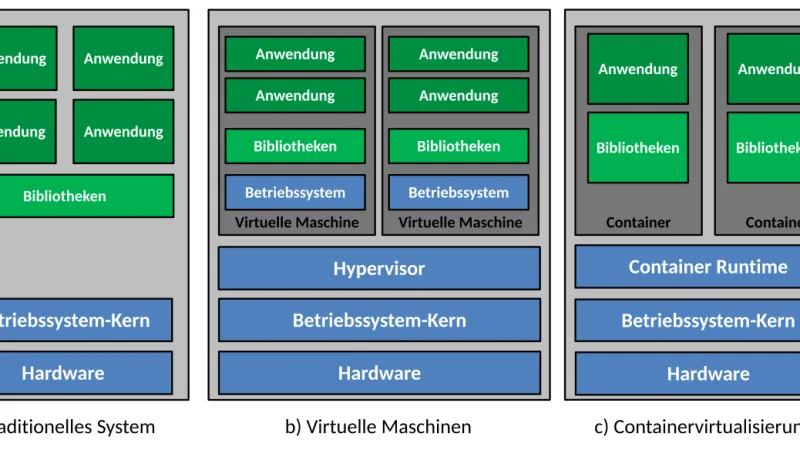
Wolfi describes itself as a Linux distribution without a kernel. That phrase sounds paradoxical until you get the context: a container image never runs its own kernel because it uses the host’s. All the space devoted to kernel, modules, and initramfs in a traditional distribution is, for a container, dead weight. Wolfi strips that layer and keeps only what runs a process in user space: glibc, package manager, libraries, and binaries.
The distinctive move versus Alpine is the choice of glibc as standard library. Alpine uses musl, which is more compact but subtly incompatible with much software built for glibc. Those edge cases show up mostly in:
- DNS resolution.
- Locale handling.
- Dynamic module loading.
- Pre-built Python wheels (numpy, pandas, pyarrow).
Wolfi compiles everything against glibc and recovers full compatibility with any binary that runs on Debian or Ubuntu, at the cost of a few extra megabytes.
The package manager is apk, the same as Alpine, but against its own repository built and signed by Chainguard. Wolfi packages are not Alpine packages renamed: they are fresh builds from source with hardening options enabled by default, SBOMs generated per package, and continuous publishing without a frozen semantic version.
Continuous publishing as a structural decision
Debian releases a major version roughly every two years. Ubuntu every six months with LTS every two years. Alpine every six months. Wolfi has no numbered release: each package is updated individually when upstream ships a new version, and the repository as a whole is always current.
This decision has consequences in both directions:
- Upside: when OpenSSL publishes a security fix, the Wolfi package updates within hours and images rebuilt on top pick the fix up immediately. No old vulnerabilities dragged for months waiting for the next distribution release.
- Downside: there are no stable reference points for reproducing a build. The same Dockerfile that worked yesterday can produce a different image today because a package updated.
My recommendation after several projects: pin versions explicitly in the Dockerfile where reproducibility matters, and accept continuous publishing where staying current matters.
SBOM and signing as first principles
Every Wolfi package publishes with an automatically generated SBOM in SPDX format listing the full build dependency chain. Chainguard images built on Wolfi inherit and aggregate those SBOMs, so a final image ships precise documentation of its content without you having to generate it.
Signing is native too. The apk repository is signed with public keys, and images are signed with Sigstore cosign. This lets you verify at deploy time that an image comes from the official repository and has not been altered. For anyone required by compliance or customer to prove provenance of the software they run, Wolfi removes an entire layer of manual work.
In my case, I have used those SBOMs to feed vulnerability scanning in the pipeline. The contrast with Debian images is noticeable: on Debian, the SBOM generated after the fact has gaps in packages installed via pip, npm, or go install because they never touch apt. On Wolfi the base layer is so well documented that noise in reports drops significantly.
Practical comparison with Alpine and Debian slim
For a statically linked Go application the difference is trivial: Wolfi and Alpine both produce images under 20 MB. For a Python application with compiled libraries, Alpine produces problems Wolfi does not: numpy, pandas, and pyarrow have no prebuilt wheels for musl and force compilation from source. On Wolfi, glibc wheels work directly.
Against Debian slim the comparison is different:
| Metric | Wolfi base | Debian slim |
|---|---|---|
| Unpacked size | ~15 MB | ~30 MB |
| Native SBOM | Yes | No |
| Security patches | Hours | Weeks/months |
| Package manager | apk (Wolfi) |
apt |
Where Wolfi clearly wins is publishing cadence and SBOM quality, not raw size. The cost of adopting Wolfi is team familiarity with apk; that friction fades within a month but exists.
Where it does not fit
Wolfi does not fit well in two cases:
- Applications depending heavily on unported Debian-ecosystem packages. When your system relies on a specific Ubuntu package that Wolfi does not ship, reimporting from source is serious work. Wolfi forces an inventory exercise that sometimes does not pay off.
- Teams without capacity to maintain their own images. Wolfi gains the most when you rebuild images regularly and maintain your own registry. If the team depends on pulling public images directly, you gain nothing special over a well-chosen Docker Hub official image. Wolfi’s value shows in the pipeline, not in
docker pull.
When it pays off
Adopting Wolfi depends on your stance on software supply chain:
- Regulated environments (customer or auditor demands traceability of every binary): Wolfi saves weeks of work. The SBOM ships by default, signatures are there, publishing cadence shrinks the CVE exposure window, and glibc avoids Alpine’s edge cases. It pays off from the first project.
- Pragmatic teams (supply chain not audited, images updating every few months): Wolfi will not change your security posture noticeably, and the investment in migrating Dockerfiles and training the team on
apkdoes not recoup easily. Debian slim updated regularly offers a reasonable balance without adoption cost.
The middle ground I have landed on is using Wolfi as the base for services that publish images outward or handle sensitive data, while keeping Debian slim for internal services where supply chain is not a critical vector. As the team gains familiarity, the frontier keeps shifting toward more adoption as gradual consolidation rather than a disruptive switch.
Conclusion
Wolfi solves the glibc + native SBOM + fast patches triangle that traditional distributions could not solve together. It is not the right choice for every team, but for those under compliance pressure on the supply chain or running nightly rebuild pipelines, it reduces real work. Incremental adoption — starting with the most exposed services — is the most sensible path.