Llama 3.1 405B: When Open Catches Up With Closed Top-Tier

Actualizado: 2026-05-03
Llama 3.1 405B, released by Meta on July 23, 2024, is the first open-weight model seriously competing with GPT-4o and Claude 3.5 Sonnet on reasoning and code benchmarks. 405 billion parameters, 128k token context (versus 8k in Llama 3), trained on 15T tokens. For teams looking for an open alternative to commercial frontier, this is the most significant moment to date.
Key takeaways
- Llama 3.1 405B closes the open-vs-closed gap on reasoning, code and MMLU benchmarks.
- The same release refreshes Llama 3.1 8B and 70B with 128k context and quality improvements.
- Hardware for self-hosting is prohibitive for most: ~220 GB VRAM in Q4, requiring multiple H100s or an M2 Ultra with 192 GB.
- For teams without self-hosting capacity, Together.ai, Fireworks and Groq offer per-token access at reasonable prices.
- Distillation — using 405B to generate training data for 8B and 70B — is the most strategic reason Meta released it.
What changes versus Llama 3 70B
| Aspect | Llama 3.1 405B | Llama 3.1 70B |
|---|---|---|
| Parameters | 405B | 70B |
| Context | 128k | 128k |
| MMLU | 88.6 | 82.0 |
| HumanEval | 89.0 | 80.5 |
| Hosted cost | ~$3–5/1M | ~$0.9/1M |
| Self-hosting VRAM (Q4) | ~220 GB | ~40 GB |
Llama 3.1 405B is 5.8x larger than 70B, with proportional inference cost. For most enterprise use cases (RAG, chat assistant, standard creative generation), 70B remains more pragmatic. 405B justifies when the task is at the complex reasoning frontier.
Benchmarks versus closed frontier
| Benchmark | Llama 3.1 405B | GPT-4o | Claude 3.5 Sonnet |
|---|---|---|---|
| MMLU | 88.6 | 88.7 | 88.7 |
| HumanEval | 89.0 | 90.2 | 92.0 |
| GSM8K | 96.8 | 95.8 | 95.0 |
| MATH | 73.8 | 76.6 | 71.1 |
Numbers are equivalent on most benchmarks. For many production tasks, 405B is indistinguishable from GPT-4o. The difference shows on extreme complex mathematical reasoning and some very specific code tasks where Claude 3.5 Sonnet still leads.
Hardware for self-hosting
The requirements are what make self-hosting impractical for most:
- FP16 (full precision): ~810 GB VRAM.
- INT8: ~405 GB.
- INT4 (GGUF): ~220 GB.
Practical implications:
- 2–4 × H100 80 GB with tensor parallelism for Q4.
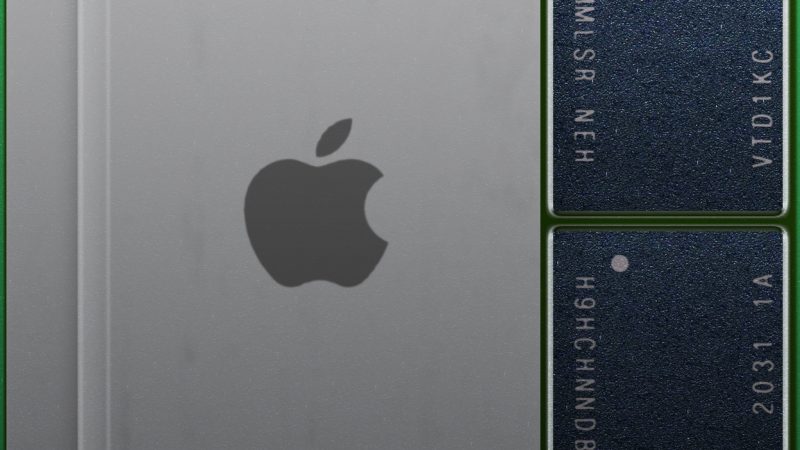
- Apple M2 Ultra with 192 GB unified memory: fits in Q4 at 8–10 tokens/s (for exploration, not production).
- Not viable on consumer hardware.
For self-hosting Llama 3.1 70B Q4, which also received the 128k context upgrade, requirements are ~40 GB — manageable with a Mac Studio M2 Ultra with 192 GB. See how to install Ollama on Mac for the local workflow.
Access options without self-hosting
If you cannot deploy 405B internally:
- Together.ai: pay-per-token, ~$3–5/1M tokens.
- Fireworks: similar price, good latency.
- Groq: extremely fast (>300 tokens/s on 405B with dedicated LPU hardware).
- AWS Bedrock: enterprise-grade, integrates with IAM and VPC.
- Vertex AI (Google): available with compliance controls.
For low-to-medium loads (<10k queries/day), hosted per-token is more economical. For high production loads, owned GPU cost starts to amortise.
Use cases where 405B justifies
- Complex reasoning at the frontier: tasks 70B does not solve satisfactorily.
- Sophisticated multi-step agents: where quality of each step affects the chain.
- Distillation: use 405B to generate training data that improves 8B and 70B. Probably the most important strategic reason for the release.
- Compliance with self-hosted frontier: organisations with air-gap or strict privacy requirements needing frontier quality.
Distillation: the multiplier effect
The 405B release opened a door the community quickly used: employing 405B as a “teacher” to generate training data that improves smaller models. Community fine-tunes of 8B trained on 405B-generated data already outperform the base 8B on specific domains. This dynamic — large open models improving the small-model ecosystem — is part of Meta’s strategic value.
Limitations
- Inference cost: ~10x versus 70B. Justify with the use case.
- Latency: processing 128k tokens with 405B takes more than a minute.
- License: Community license with restrictions for services with more than 700M monthly active users.
- Multimodality: text only (Llama 3.2 added vision later).
Conclusion
Llama 3.1 405B marks the moment open-weight models reached closed-frontier quality. For organisations with their own serving capacity or using hosted providers, it is a real alternative to GPT-4o. For most teams, Llama 3.1 70B remains more pragmatic: better cost, lower latency, affordable hardware. The historical importance of 405B exceeds its immediate practical adoption: it showed that “only closed models are frontier” stopped being true. Integrated with mature RAG pipelines — including reranking — it is a serious alternative for organisations with privacy or data sovereignty requirements.