Qué añade PegaProx sobre la GUI de Proxmox VE 9
Actualizado: 2026-06-20
Puntos clave
- PegaProx[1] 0.9.10.2 (release del 13 de mayo de 2026, 36 versiones publicadas, 1.200 estrellas en GitHub) es un panel de control web AGPL-3.0 para gestionar varios clústeres de Proxmox VE 8/9 y XCP-ng desde una sola pantalla.
- Lo que la GUI estándar de Proxmox VE 9 ya hace está infravalorado. Antes de añadir capas conviene saber dónde acaba la nativa.
- PegaProx aporta tres cosas que la GUI estándar no tiene de serie: migración en vivo entre clústeres distintos, OIDC con Entra ID y 2FA TOTP, y un escáner CVE más hardening en un clic.
- El balanceo inteligente viene de ProxLB[2] (autor: gyptazy), incorporado como contribución comunitaria. Es justo nombrarlo.
- No es una herramienta de un solo nodo. Si tienes un único Proxmox de homelab, la GUI nativa basta. PegaProx empieza a tener sentido a partir de dos clústeres, o cuando entra VMware/XCP-ng en la ecuación.
Qué hace ya la GUI de Proxmox VE 9
Antes de comparar conviene fijar la línea base. La interfaz que trae Proxmox VE 9[3] de fábrica es más capaz de lo que recuerda quien la vio por última vez en 6.x:
- Vista de datacenter con resumen agregado de CPU, RAM, almacenamiento y estado de HA por clúster.
- HA y replicación configurables sin línea de comandos, con groups y políticas de fencing.
- Ceph integrado (pools, OSDs, monitores) y ZFS desde la propia UI.
- Backup y restore vía Proxmox Backup Server, con retención por trabajo y verificación periódica.
- SDN (Software Defined Networking) con zonas, VNets y subredes que ya cubren la mayoría de patrones de red empresarial.
- Importador ESXi desde 8.2 para mover máquinas de VMware sin pasar por OVF intermedio.
- UI móvil funcional para cuando hace falta apagar algo desde el coche.
Donde se queda corta: un clúster, una sesión. La autenticación nativa cubre PAM, LDAP/Active Directory y 2FA TOTP, pero OIDC moderno (Entra ID, Keycloak con flows OIDC) sólo aparece vía plugins comunitarios. Y el balanceo entre nodos del mismo clúster es manual, salvo que instales ProxLB aparte.
Qué añade PegaProx
PegaProx se posiciona en la capa por encima del clúster individual. Sus diferenciales reales con la pila de versiones de hoy:
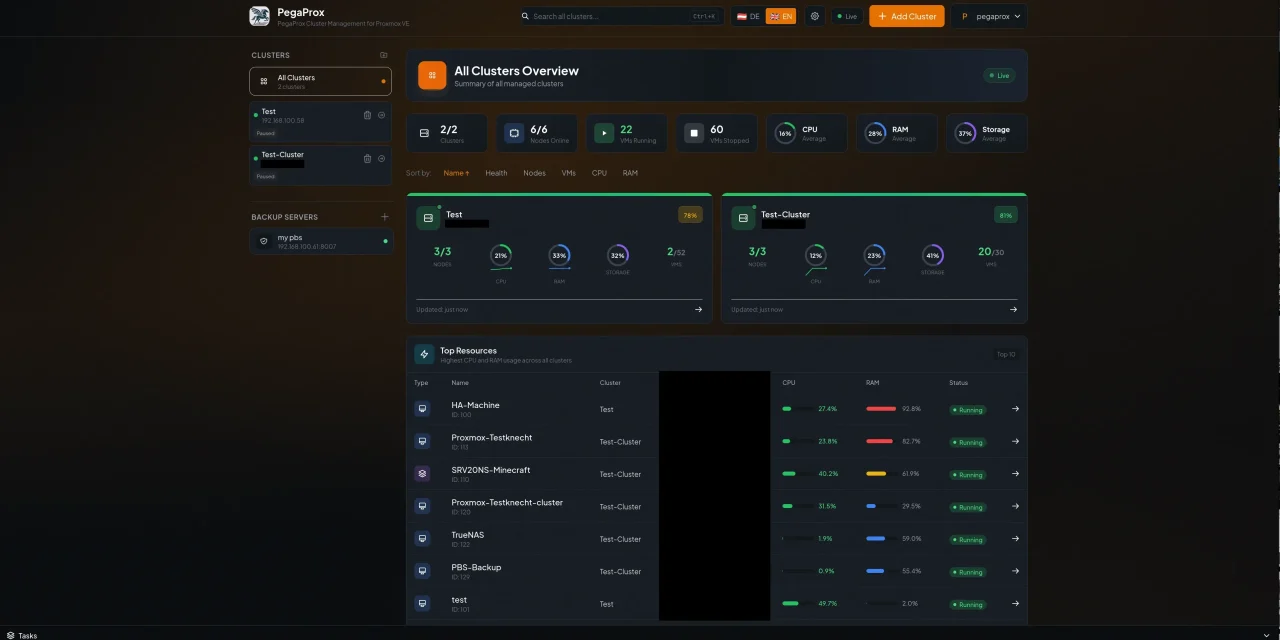
- Panel multi-clúster. Ves todos los Proxmox de la organización (más los XCP-ng, en tech preview) desde una sola URL, con métricas en vivo por SSE.
- Migración en vivo entre clústeres distintos. La nativa de Proxmox permite live migration dentro del mismo clúster. PegaProx la extiende a clústeres separados, lo que abre la puerta a evacuaciones, mantenimiento programado de hardware y consolidación sin parada de servicio.
- OIDC y Entra ID nativos, además del LDAP/AD tradicional. 2FA TOTP integrado y roles personalizados por encima del esquema de privilegios de Proxmox.
- Balanceo inteligente basado en ProxLB, el proyecto de gyptazy ya conocido en la comunidad. PegaProx lo incorpora como motor de balanceo automático, con redistribución de carga por CPU, RAM y patrones de uso.
- Escáner CVE integrado que cruza los paquetes instalados con feeds de vulnerabilidades públicas y marca los nodos afectados.
- Hardening de PVE en un clic, replicando buenas prácticas que normalmente se aplican a mano (configuración de SSH, sysctl, journald, fail2ban, parámetros de kernel).
- Puente a ESXi y XCP-ng para importar y migrar máquinas desde infraestructuras VMware y Xen sin construir el pipeline a mano.
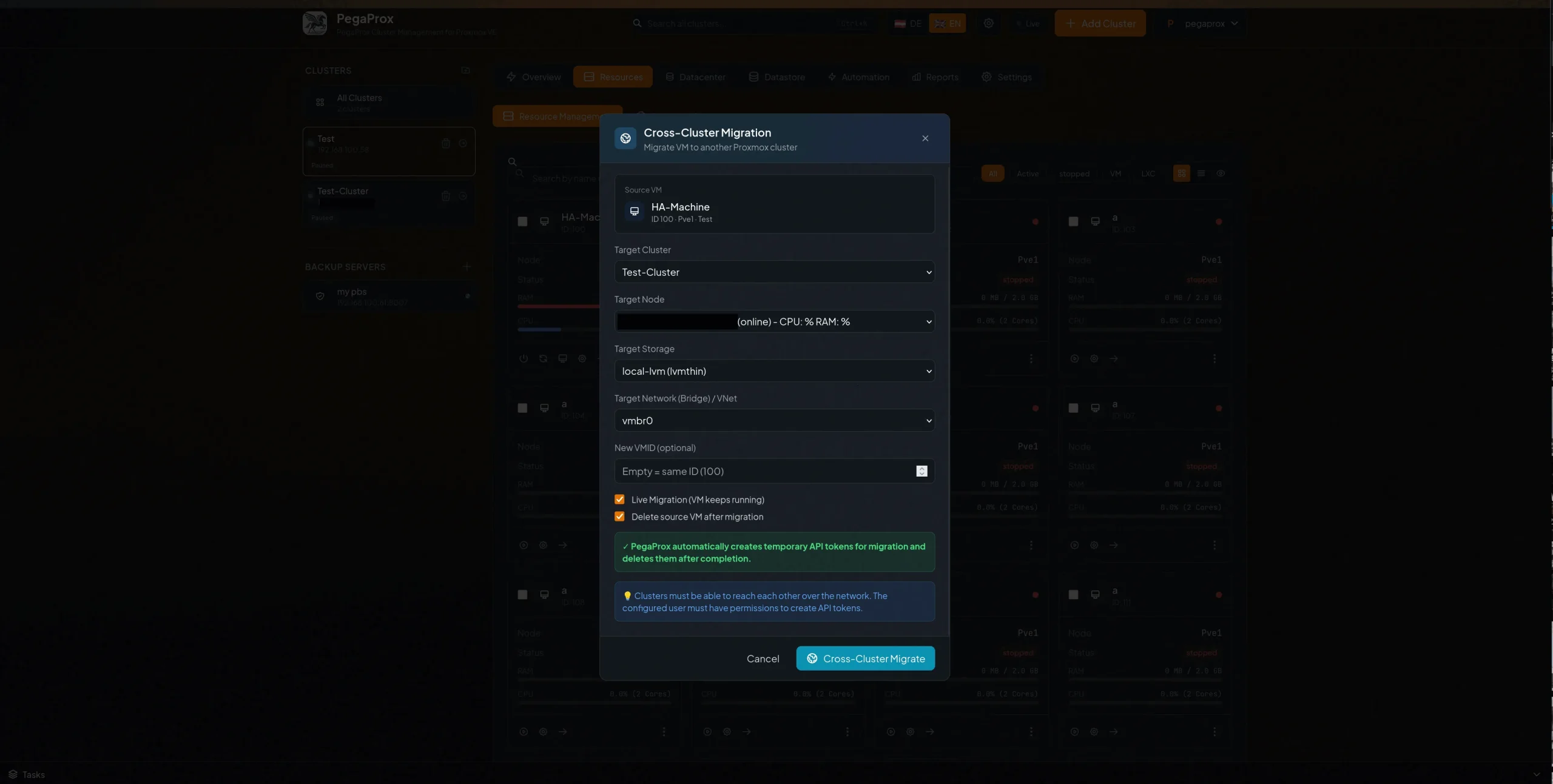
Migración en vivo entre clústeres distintos en PegaProx. Es la diferencia más visible frente a la GUI estándar de Proxmox VE 9, que sólo permite live migration dentro de un mismo clúster. Captura tomada del sitio oficial de PegaProx.
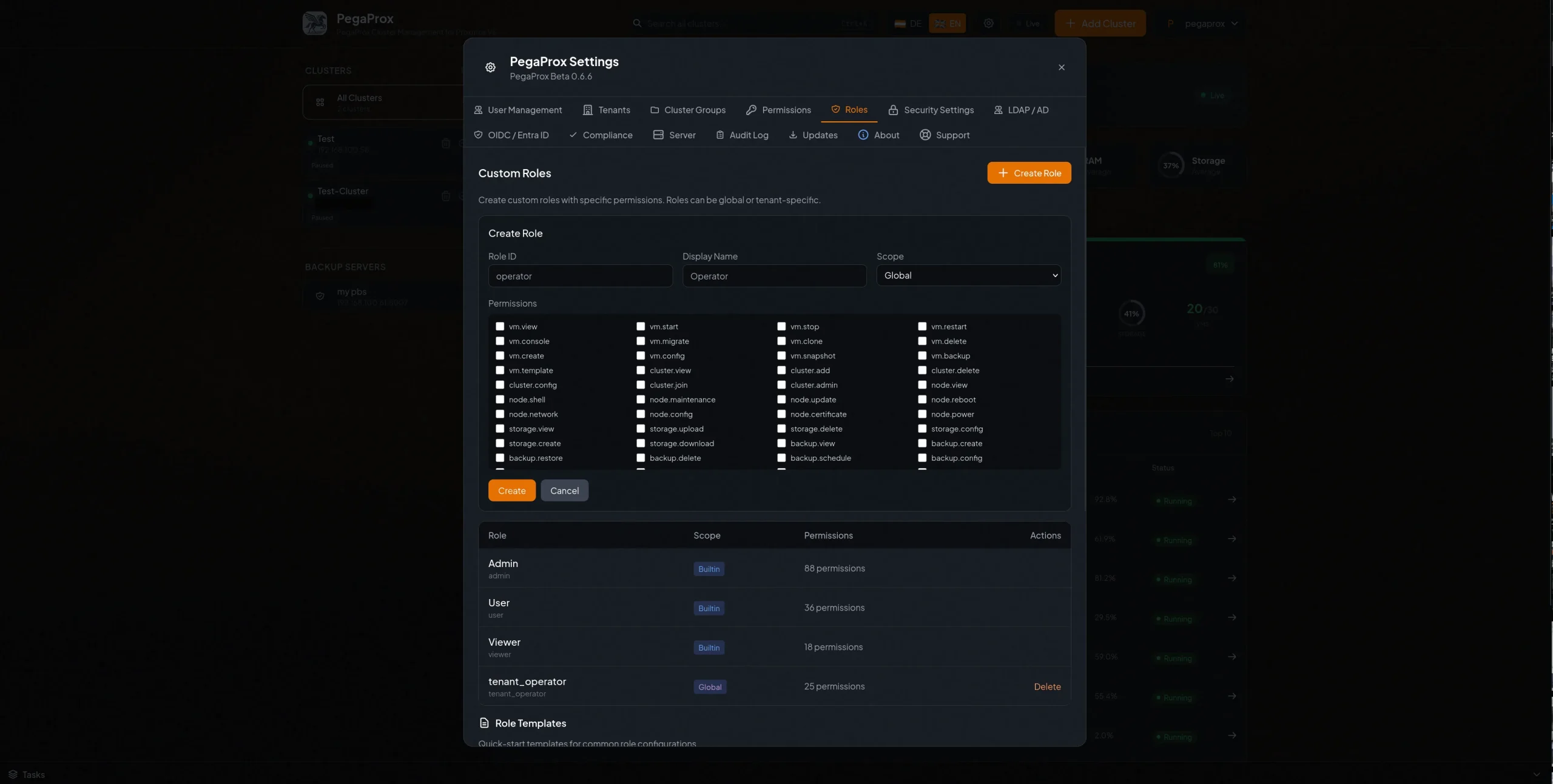
Gestión de usuarios y RBAC en PegaProx, con OIDC y Entra ID por encima del esquema de privilegios nativo de Proxmox. Captura tomada del sitio oficial de PegaProx.
Tabla comparativa
| Capacidad | GUI Proxmox VE 9 (estándar) | PegaProx 0.9.x |
|---|---|---|
| Alcance | ||
| Clústeres por panel | Uno | Varios |
| Migración en vivo entre clústeres | No (manual / CLI) | Sí |
| Vista multi-tenant | Parcial (vía ACL realms) | Nativa |
| Autenticación | ||
| PAM + usuarios locales | Sí | Sí |
| LDAP / Active Directory | Sí | Sí |
| OIDC / Entra ID | No (sólo plugins comunitarios) | Sí |
| 2FA TOTP | Sí | Sí |
| Roles personalizados | Limitado (vía privileges) | Sí |
| Operación | ||
| Balanceo automático | No (manual) | Sí (motor ProxLB de gyptazy) |
| Importador ESXi | Sí (desde 8.2) | Sí, con migración en vivo |
| Soporte XCP-ng | No | Sí (tech preview) |
| Panel Ceph + OSD | Sí | Sí |
| Seguridad | ||
| Escáner CVE integrado | No | Sí |
| Hardening en un clic | No (manual / scripts) | Sí |
| Soporte y licencia | ||
| Contrato de soporte de fabricante | Sí (suscripción Proxmox) | No (comunidad + sponsors) |
| Licencia | AGPL-3.0 | AGPL-3.0 |
| Estado de versión | 9.x estable | 0.9.10.2 (pre-1.0) |
Cuándo tiene sentido y cuándo no
Funciona bien cuando:
- Operas dos o más clústeres Proxmox y la fricción de saltar entre URLs e idiomas de auditoría empieza a costar tiempo real.
- Tu organización exige OIDC con Entra ID o Keycloak y los plugins comunitarios para Proxmox te parecen demasiado frágiles para producción.
- Migras desde VMware o XCP-ng y prefieres una herramienta web a un pipeline de
qm importovfyxe vm-exporta mano. - Quieres que el balanceo entre nodos sea automático sin instalar ProxLB por separado y mantener su configuración aparte.
No tiene sentido cuando:
- Tienes un solo Proxmox o un clúster pequeño y la GUI estándar te basta. Añadir una capa adicional es complejidad neta sin contrapartida. Para un homelab pequeño, una PaaS sobre Docker como Coolify suele cubrir lo que necesitas sin tocar el panel del hipervisor.
- Vas a redistribuir PegaProx dentro de un producto cerrado, embeber su código o construir un SaaS sobre él sin liberar derivadas. La AGPL-3.0 contagia.
- Necesitas contrato de soporte con SLA y respaldo legal. PegaProx no lo ofrece. Proxmox sí, vía suscripción.
Riesgos honestos
El proyecto es real y se mueve. v0.9.10.2 salió el 13 de mayo de 2026, hay 36 releases, 274 commits y 1.200 estrellas. Pero hay cosas que conviene saber antes de meterlo en una infraestructura crítica:
- Pre-1.0. Hay 33 issues abiertas y 4 PRs en cola. El equipo es de tres personas (Nico Schmidt, Marcus Kellermann, Laura Weber) bajo la organización SocialFurr. Activo, pero no maduro.
- Sin afiliación con Proxmox Server Solutions GmbH. Los autores lo declaran explícitamente. No es una herramienta oficial ni hay roadmap conjunto con el upstream.
- AGPL-3.0. Si planeas integrarlo en un producto que distribuyes a terceros o lo expones como SaaS, la AGPL obliga a liberar el código derivado. Es una decisión legal más que técnica.
- Marketing que apunta alto. La web menciona uso en Healthcare, Finance, Defense, Government, Law Enforcement. No hay forma pública de verificar nombres ni volúmenes. Es un claim, no un hecho.
Instalación rápida
Tres formas, todas documentadas en el repositorio:
-
Script de despliegue:
curl -sSL https://raw.githubusercontent.com/PegaProx/project-pegaprox/refs/heads/main/deploy.sh | sudo bash -
Plantilla LXC Debian 13 preconstruida, importable directamente en el clúster Proxmox.
-
Imagen de VM Debian preconstruida si prefieres aislar PegaProx en su propia máquina virtual.
Requisitos del README: Python 3.8 o superior, Proxmox VE 8.0+ o 9.0+, XCP-ng 8.2+ si quieres el puente y un navegador moderno. Para quienes prefieren no canalizar sudo bash directamente, el repositorio tiene el deploy.sh legible y el docker-compose.yml disponibles para auditarlos antes.
Veredicto
PegaProx cumple en multi-clúster y la integración con ProxLB es honesta. Para infraestructuras con dos o más clústeres, OIDC corporativo y necesidad de migrar desde VMware, instalarlo en preproducción y dejarlo correr unas semanas es una prueba barata. Para un homelab de un nodo o un clúster pequeño donde la GUI nativa cubre todo, no hace falta. Y antes de meterlo en producción crítica conviene esperar al 1.0, o aceptar el riesgo de un pre-release que se mueve cada semana. Si lo que buscas es virtualización más ligera para servicios multi-tenant, Firecracker microVMs es otro camino con tradeoffs distintos.
Preguntas frecuentes
¿Qué es PegaProx? PegaProx es un panel de control web open source bajo licencia AGPL-3.0 para gestionar de forma centralizada varios clústeres de Proxmox VE 8/9 y XCP-ng desde una sola interfaz. Lo mantiene un equipo de tres personas bajo la organización SocialFurr y no está afiliado a Proxmox Server Solutions GmbH.
¿Es gratis PegaProx? Sí. PegaProx es 100 % gratis bajo licencia AGPL-3.0, sin tiers de pago ni registro obligatorio. El proyecto se sostiene con sponsors voluntarios y todas las funciones están disponibles para todos los usuarios.
¿Funciona PegaProx con Proxmox VE 9? Sí. Según el README oficial, PegaProx soporta Proxmox VE 8.0+ y 9.0+, además de XCP-ng 8.2+. Requiere Python 3.8 o superior y un navegador moderno.
¿En qué se diferencia PegaProx de la GUI de Proxmox VE 9? La GUI estándar de Proxmox VE 9 gestiona un único clúster a la vez. PegaProx añade vista multi-clúster, migración en vivo entre clústeres distintos, autenticación OIDC con Entra ID, escáner CVE integrado, hardening en un clic y puente a VMware ESXi y XCP-ng.
¿Está PegaProx listo para producción? PegaProx está en versión 0.9.10.2 (pre-1.0). A 14 de mayo de 2026 tiene 36 releases, 274 commits y 1.200 estrellas en GitHub, pero todavía no ha alcanzado el 1.0 estable. Para infraestructuras críticas conviene esperar al 1.0 o aceptar el riesgo de un pre-release activo.
Datos verificados el 14 de mayo de 2026 contra el repositorio oficial de PegaProx y la documentación de Proxmox VE.