Metodologías Ágiles: Optimización del Desarrollo de Proyectos
Actualizado: 2026-06-20
Las metodologías ágiles rompen con el modelo en cascada clásico: en lugar de planificar todo al inicio y ejecutar en secuencia, trabajan en ciclos cortos — sprints — que permiten entregar valor rápidamente, recibir retroalimentación real y corregir el rumbo antes de que los errores sean costosos.
Puntos clave
- Las metodologías ágiles son un conjunto de principios (Manifiesto Ágil, 2001) implementados a través de marcos concretos: Scrum, Kanban, XP y otros.
- El ciclo iterativo reduce el riesgo: cada sprint produce un incremento funcional que puede probarse y validarse.
- La colaboración continua con el cliente o stakeholder reemplaza al documento de requisitos estático.
- No son exclusivas del software: marketing, diseño, investigación y operaciones las aplican con éxito.
- Implementar ágil sin cultura de equipo preparada produce pseudoágil: rituales sin beneficios.
Qué son las metodologías ágiles
El Manifiesto Ágil[1] de 2001 establece cuatro valores fundamentales:
- Individuos e interacciones sobre procesos y herramientas.
- Software funcionando sobre documentación exhaustiva.
- Colaboración con el cliente sobre negociación contractual.
- Respuesta ante el cambio sobre seguir un plan.
Estos valores se articulan en 12 principios concretos, entre los que destacan: entregar software funcional con frecuencia, aceptar que los requisitos cambian incluso en etapas tardías, y mantener un ritmo de trabajo sostenible.
Las metodologías ágiles son la implementación práctica de estos principios. Cada marco tiene reglas específicas, pero todas comparten la dinámica de iteración corta, revisión y adaptación.
Scrum: el marco más extendido
Scrum organiza el trabajo en sprints de 1-4 semanas. Su estructura:
- Product Backlog: lista priorizada de funcionalidades y mejoras gestionada por el Product Owner.
- Sprint Planning: el equipo selecciona qué items del backlog abordará en el sprint.
- Daily Standup: reunión de 15 minutos cada día para sincronizar y detectar bloqueos.
- Sprint Review: demostración del incremento al final del sprint con los stakeholders.
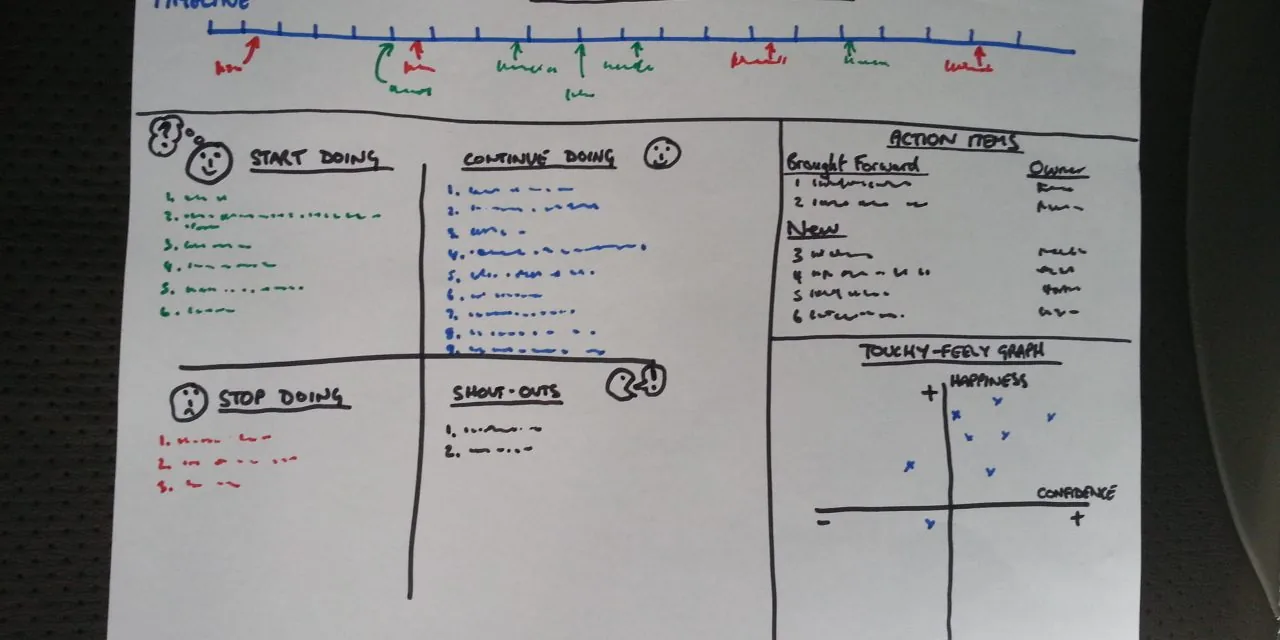
- Sprint Retrospective: el equipo reflexiona sobre el proceso y define mejoras para el próximo sprint.

Los tres roles de Scrum:
- Product Owner: voz del negocio y el cliente; prioriza el backlog.
- Scrum Master: facilita el proceso, elimina impedimentos, protege al equipo de interrupciones externas.
- Development Team: autoorganizado, responsable de entregar el incremento.
Scrum funciona especialmente bien con requisitos cambiantes y cuando el cliente puede participar activamente en las revisiones. Spotify, Booking.com y muchas empresas del sector tecnológico lo usan como base de su modelo de trabajo.
Kanban: flujo continuo sin sprints
Kanban visualiza el flujo de trabajo en un tablero con columnas (Pendiente → En curso → Revisión → Hecho) y aplica límites de trabajo en progreso (WIP limits) para evitar cuellos de botella.
Sus ventajas frente a Scrum:
- Sin sprints: el trabajo fluye de forma continua, sin necesidad de planning formal.
- WIP limits: fuerzan a terminar lo que se ha empezado antes de empezar algo nuevo, reduciendo el multitasking.
- Visibilidad inmediata: cualquier persona del equipo ve el estado de cada tarea en tiempo real.
Kanban es idóneo para equipos de operaciones, soporte y mantenimiento donde el trabajo llega de forma imprevisible. Toyota lo utilizó en sus líneas de fabricación antes de que se adaptase al software.
XP (Extreme Programming): calidad técnica como práctica
Extreme Programming lleva los principios ágiles a las prácticas de ingeniería:
- Test-Driven Development (TDD): los tests se escriben antes que el código.
- Pair Programming: dos desarrolladores trabajan juntos en el mismo código.
- Integración continua: el código se integra y prueba varias veces al día.
- Refactoring continuo: la deuda técnica se paga en cada iteración, no se acumula.
- Iteraciones cortas: de 1-2 semanas, con entregas funcionales al cliente.
XP es exigente en disciplina técnica, pero produce código de mayor calidad y equipos con menor rotación porque la presión es colectiva, no individual.
Implementación práctica: consejos para el éxito
Cinco lecciones de organizaciones que han adoptado ágil con éxito:
- Empieza por un equipo piloto. Introduce Scrum o Kanban en un equipo comprometido antes de escalar a toda la organización.
- Un Scrum Master comprometido marca la diferencia. No es un project manager renombrado: su función es proteger y facilitar, no reportar.
- El backlog debe estar vivo. Un backlog que no se refina semanalmente pierde valor rápidamente.
- Las retrospectivas son obligatorias. Si el equipo no para para reflexionar, repite los mismos errores indefinidamente.
- Adapta el marco al equipo, no el equipo al marco. Scrum by the book puede no encajar con tu contexto — los principios son los que importan.

Las metodologías ágiles se complementan bien con otras prácticas de gestión. Los OKR aportan la capa estratégica que los sprints solos no garantizan: los OKR responden al “por qué” y “hacia dónde”, mientras los sprints responden al “cómo” y “cuándo”. Para equipos que trabajan con tecnología cloud como Docker o plataformas de observabilidad, el ciclo ágil se traduce en pipelines de CI/CD que automatizan la parte de integración y entrega continua.
El pensamiento de diseño (Design Thinking) y las metodologías ágiles también se complementan: diseño para el descubrimiento del problema, ágil para la ejecución de la solución. Herramientas como Figma facilitan que el diseño viva dentro del mismo ciclo iterativo que el desarrollo.
Métricas para evaluar la madurez ágil
Para saber si el ágil funciona en tu organización, mide:
- Velocity: puntos de historia completados por sprint (no como fin en sí mismo, sino como señal de predictibilidad).
- Lead time: tiempo desde que una tarea entra al backlog hasta que está en producción.
- Cycle time: tiempo desde que una tarea entra en desarrollo hasta que está terminada.
- Tasa de defectos por sprint: más defectos = menos tiempo dedicado a calidad técnica.
- Satisfacción del equipo: el bienestar del equipo es un predictor del rendimiento sostenible.
Conclusión
Las metodologías ágiles no son una moda ni un conjunto de reuniones: son una forma de entender que el software — y cualquier proyecto complejo — se construye mejor en iteraciones cortas con retroalimentación real. Cuando se implementan con rigor y cultura adecuada, reducen el riesgo, mejoran la calidad y aumentan la satisfacción tanto del equipo como del cliente. El error más común es adoptar los rituales sin adoptar el mindset: el Manifiesto Ágil son valores, no un checklist de reuniones.