Startup Funding in 2024: The Uneven Recovery
Actualizado: 2026-05-03
The 2022-2023 venture capital winter left scars: fallen valuations, down rounds, startups closing, and general caution after the 2020-2021 party. Entering 2024, things are moving, but not uniformly. Generative AI concentrates a disproportionate share of capital. Other sectors remain slow. This article is an honest panorama of where money goes, what investors expect now, and how to prepare a round in this context.
Key Takeaways
- The VC market in 2024 is better than 2023 but still demanding: 3-6 months due diligence, less favourable terms, lower multiples.
- Generative AI, climate tech, and defence attract disproportionate attention; consumer, crypto, and DTC remain depressed.
- “Burn multiple” is the new central metric — burn / net ARR added; 2x acceptable, 1x good.
- Due diligence now includes code review, calls with ex-employees, and exhaustive unit-economics analysis.
- A well-run round takes 3-6 months in this environment; the “raise in 3 weeks” era is past.
The General State in Numbers
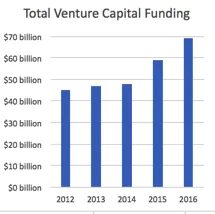
PitchBook data sets the context:
- 2021: record year, $621B global VC.
- 2022: drop to ~$483B.
- 2023: ~$345B — lowest level since 2018.
- Q4 2023 / Q1 2024: signs of selective recovery.
What those numbers mean in practice: funds have capital (dry powder exceeds $300B), but fewer deals close — those that do face more scrutiny, slower due diligence (3-6 months instead of 4-6 weeks in 2021), less favourable terms, and lower valuations especially at Series B onwards.
Where Capital Goes
Three sectors concentrate disproportionate attention in this cycle:
Generative AI
Roughly 35-40% of all 2023 VC went to AI companies. The trend continues. Most active subsectors: foundation models (mega rounds: OpenAI, Anthropic, Mistral, Cohere), vertical AI applied to niches (legal, healthcare, finance), tooling and infrastructure (vector DBs, orchestration, evaluation), and B2B apps with core AI.
Caveat: many investments go to companies without sustainable differentiation (“wrapping GPT-4”). Mature VCs filter for real moat — proprietary data, custom fine-tune, distribution, or deep integration.
Climate Tech
Quieter but with real momentum in energy storage (batteries, hydrogen), carbon capture and verifiable offsets, agritech and alternative protein, and grid tech and energy efficiency.
Defence and Security
Previously taboo in European VC, now accepted post-Ukraine. Helsing[1], Quantum Systems[2], and Skydio[3] have raised large rounds. Governments provide co-financed funds.
Where It Is Harder
Sectors still slow include: consumer / B2C discretionary, crypto (hibernating post-FTX), DTC retail, generic B2B SaaS without AI, and traditional mediatech.
Updated Sizes and Stages
Orders of magnitude in 2024:
- Pre-seed: $500k-2M for ~15-25% equity.
- Seed: $2-6M for ~15-20%.
- Series A: $8-20M for ~20-25%.
- Series B: $20-60M.
- Series C+: $50M+.
What has changed vs 2021: seed is now more competitive than Series A; Series A bar requires clearer PMF, ARR $1-3M, and 20%+/month growth; Series B requires $10M+ ARR with demonstrated capital efficiency.
What Investors Look At Now
Current priorities: capital efficiency (burn multiple below 2x), growth with fundamentals, clear path to profitability, defendable moat, large but realisable markets, and experienced team.
Preparing the Round
A practical runbook: 6 months before — tidy metrics, finance, product; 3 months before — decks and target investor list; 2 months before — warm intros; month 1 — official pitches and term sheets; months 2-3 — deep DD and terms negotiation; months 3-4 — close and legal docs. A well-run round takes 3-6 months today.
Conclusion
The capital market in 2024 is healthier than 2023 but still demanding. Founders who understood the shift — capital efficiency, serious DD, real-metric expectations — have an edge. AI dominates capital, but not all “AI” attracts; only with real moat. Climate and defence are growing opportunities. For startups outside these tailwinds, the game is building solid fundamentals before seeking capital.