The Customer Digital Twin: A Strategic Tool
Actualizado: 2026-05-03
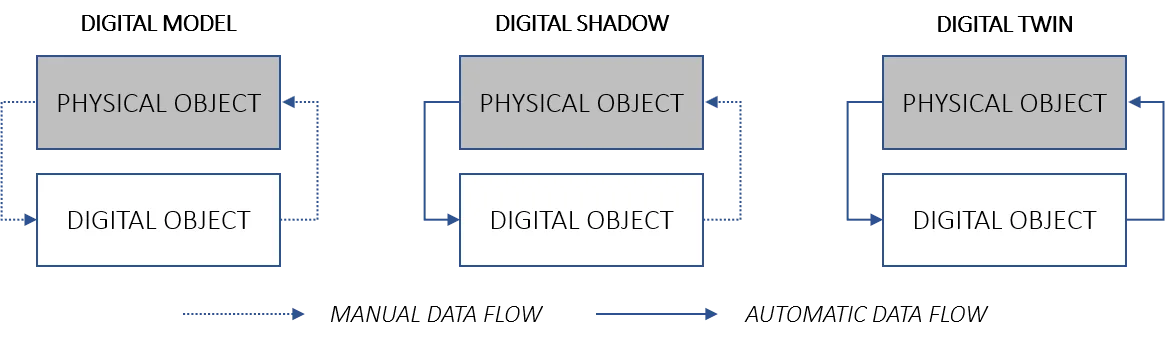
The customer digital twin is a dynamic virtual representation of a real user, updated in real time with behavioural data, preferences, and context. Unlike a static CRM profile, the digital twin allows anticipating behaviours, personalising experiences, and making proactive decisions about each customer relationship.
Key takeaways
- The customer digital twin aggregates data from multiple sources to create a living representation of the user.
- Its primary goal is to personalise experiences and anticipate needs — not merely record history.
- Companies like Amazon and Zara use it to improve recommendations, segmentation, and operational efficiency.
- Implementing it requires suitable technology infrastructure, a clear data strategy, and regulatory compliance (GDPR).
- Continuous improvement based on twin feedback is what separates a basic implementation from a differentiating one.
Definition and objectives
The customer digital twin is a digital representation of a real customer used to gather data and improve the experience. It can include:
- Products purchased and purchase dates.
- Websites, product pages, and categories visited.
- Ads viewed, content consumed, and session time.
- Preferred contact channels and incident history.
- Signals of abandonment intent or upcoming purchase.
The goal is not to accumulate data for its own sake, but to build a predictive model of each customer that enables real-time personalisation and anticipates needs before the customer expresses them. It differs from a simple CRM profile in that it updates continuously and can be used for simulations: “if we change this product’s price by 10%, how does this customer segment respond?”.

Benefits for the business
Implementing customer digital twins delivers concrete benefits across three dimensions:
- Personalisation at scale: each user receives experiences adapted to their context without marketing teams having to segment manually. Product recommendations, email messages, and discounts are calculated on the individual twin.
- Pattern and trend identification: aggregated twins allow detecting emerging behaviours before they become statistically visible trends — useful for inventory planning and product development.
- Operational efficiency: better segmentation reduces marketing campaign waste; anticipating churn allows proactive retention intervention before the customer leaves.
These advantages connect with the broader use of Big Data in decision-making, where individual-data granularity multiplies the value of aggregate analysis.
Success cases
Two established references:
Amazon uses the customer digital twin for its recommendation engines. The system aggregates purchase history, browsing, ratings, and patterns from similar users to deliver real-time recommendations. The revenue impact is significant: Amazon’s recommendation engine generates a substantial portion of its e-commerce revenue.
Zara (Inditex) applies the customer digital twin to personalise the online shopping experience and optimise store replenishment. By combining online behaviour data with in-store purchase patterns, it achieves a 360° view of the customer that improves both digital conversion and inventory management.
Beyond retail, customer digital twins are applied in banking (dynamic risk profiles), telecoms (churn prediction), and health (chronic patient monitoring), in line with the concepts described in digital twins of the organisation.

Implementation recommendations
Four critical factors for an effective implementation:
- Suitable technology infrastructure: a data integration platform capable of ingesting real-time signals (clickstream, transactions, app events), a data lake or lakehouse for storage, and a feature engineering layer to build the twin.
- Clear data strategy: define which signals are captured, how frequently they are updated, and how they are prioritised. An over-informed twin with low-quality variables predicts worse than a well-designed one with few relevant signals.
- Regulatory compliance (GDPR and equivalents): data feeding the digital twin are personal data. Consent, minimisation, and the right to erasure must be built into the architecture, not bolted on at the end. Security of this data is a critical design concern; see protection against digital threats.
- Continuous improvement cycle: measure the twin’s impact on business metrics (conversion, retention, NPS), adjust models, and review signals periodically. An unreviewed twin goes stale and predicts worse than a simpler model.
B2B sales optimisation with AI is an area where the customer digital twin is particularly powerful: modelling the behaviour of a corporate buyer with multiple stakeholders is difficult with static CRM but tractable with a real-time-updated twin.
Conclusion
The customer digital twin transforms the company-user relationship from reactive to predictive. It is not just another personalisation technology: it is an intelligence infrastructure that, well built, turns every interaction into a learning opportunity and every prediction into a real competitive advantage. Companies that implement it with rigour — quality data, regulatory compliance, and a continuous improvement cycle — are the ones that scale personalisation without scaling costs proportionally.