Industrial ‘As a Service’: Models That Work
Actualizado: 2026-05-03
The “as-a-service” model is spreading from software into industry: Rolls-Royce with “power by the hour”, Philips with “light as a service”, Caterpillar with flexible rental. Large manufacturers convert equipment sales into outcome sales. You don’t sell a turbine; you sell generation hours with SLA. For the buyer: less capex, less risk. For the seller: recurring revenue and deeper customer relationship.
Key takeaways
- The five shared ingredients of working models are: deep telemetry, clear SLAs, structured financial model, aligned incentives, and risk assumed with skin in the game.
- Equipment-as-a-Service (EaaS), outcome-based pricing, and Maintenance-as-a-Service are the three variants with proven traction.
- Without real telemetry, the model stays in marketing — the manufacturer can’t manage what they can’t measure.
- Transition from traditional sales takes one to five years; starting with one pilot product and two or three early adopter customers is the pragmatic strategy.
- OT cybersecurity of the connected asset is the most frequently underestimated technical dependency.
The Existing Models
Equipment-as-a-Service (EaaS)
The customer rents equipment per use or time; manufacturer retains ownership and includes maintenance.
- Aerospace: Rolls-Royce “Power by the Hour” — pay per flight hour, they maintain.
- Chemical plants: cooling, compressed air, steam “as a service”.
- Manufacturing: CNC, industrial robots per use.
- Construction: Kubota, Caterpillar flexible rental.
Outcome-Based Pricing
The customer pays for result, not product:
- Lighting: Philips charges per “lux × hour” delivered.
- Water: wastewater treatment, pay per m³ treated.
- Agriculture: yield per hectare with seed + fertiliser + services.
- Logistics: charge per moved unit, not per vehicle.
Maintenance-as-a-Service
Contract guaranteeing uptime in exchange for fee:
- Wind turbines: Siemens Gamesa, Vestas with LTSA (Long-Term Service Agreement).
- Elevators: Otis, Kone, Schindler with guaranteed uptime.
- Industrial machinery: upgrades, parts, and proactive operation included.
What Working Models Have in Common
Five shared patterns:
- Deep telemetry: manufacturer receives asset data 24/7 to know real state.
- Clear SLAs: what counts as “delivered”, with measurable metrics.
- Structured financial model: who pays capex, how profits split.
- Aligned incentives: manufacturer wants the asset to work well, not fail.
- Risk assumed with skin in the game: not “I assure it’ll work”, but “I pay consequences if not”.
Without all five, as-a-service stays marketing.
Technical Requirements to Enable It
To make the model work:
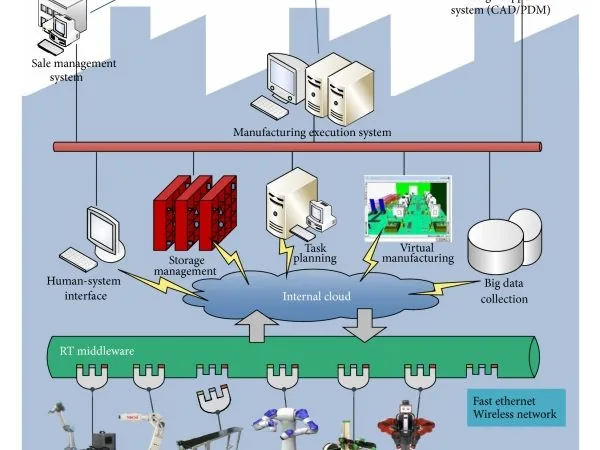
- Advanced IIoT: sensors, reliable connectivity, cloud.
- Digital twins of installed asset.
- Predictive maintenance with ML over history.
- Field service management for quick interventions.
- Usage-based pricing and billing platform.
- OT security: the connected asset is an attack vector.
“As-a-service” is impossible without substantial prior digital investment.
Cases with Numbers
- Rolls-Royce: ~50% of civil aerospace revenue is services.
- Philips: “Light as a service” contracts with Schiphol and RAU for more than 10 years.
- ABB: Ability generates more than $5B/year in digital services.
- Hilti: fleet management grew to more than 30% of revenue.
Where the Model Fails
Lessons from unsuccessful attempts:
- Without real telemetry: manufacturer doesn’t know if asset is used per contract.
- Impossible SLAs: committing to 99.99% uptime when reality is 98%.
- Customer who doesn’t want the model: some prefer full control by buying.
- Poor financing model: manufacturer lacks balance to carry capex.
- Traditional sales mindset: sales team keeps selling units, not services.
Transition: How to Start
Pragmatic runbook:
- One pilot product — not the whole line.
- Two or three early adopter customers willing to experiment.
- Full instrumentation: sensors, data pipeline, operational dashboards.
- Detailed financial model: honest unit economics, usage scenarios.
- Dedicated operations team understanding service, not just manufacturing.
- Iterate: first contract will have issues. Learn without breaking the relationship.
Conclusion
The as-a-service model in industry is real and growing, but not universal. Working cases share ingredients: deep telemetry, honest SLAs, aligned incentives, solid financing. For industrial manufacturers, transition represents a fundamental business change — not just technological. Long-term benefits justify investment, but execution is where most fail: starting small, with a product and customers wanting the model, is the pragmatic path.