Digital Twins in Energy: Operating Grids Without Surprises
Actualizado: 2026-05-03
The energy sector is one where digital twins are moving from pilot to real operation. The reason is clear: incident cost — blackout, turbine failure, wind farm shutdown — is high; infrastructure is ever more complex (distributed renewables, smart grids, prosumers); and compute and data capability finally allows it. This article covers concrete applications, measurable results, and realistic obstacles.
Key Takeaways
- Digital twins in energy cover three main cases: transmission and distribution grids, specific assets (turbines, plants), and market and dispatch optimisation.
- Typical ROI is 18-36 months for a well-implemented twin; in renewables, corrective maintenance reduction is 10-20%.
- IT/OT integration is the hardest political, not technical, problem.
- Cybersecurity for twins connected to operation is not optional: attacks on energy systems are real and have occurred.
- There are assets where the digital twin has no ROI: simple equipment, end-of-life assets, or companies without a data-driven decision culture.
Which Problems They Solve Here
In energy, digital twins cover three large cases:
- Transmission and distribution grids: simulate flows under scenarios (demand, wind, failures) before they happen.
- Specific assets: a wind turbine, a PV plant, a transformer — predict wear and failures.
- Market and dispatch: optimise generation and demand with models integrating prices, weather, and asset state.
All three share the same flow: sensors → model → operational decisions. What varies is detail level and update frequency.
Grid Twins
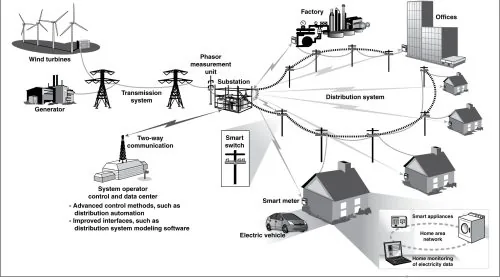
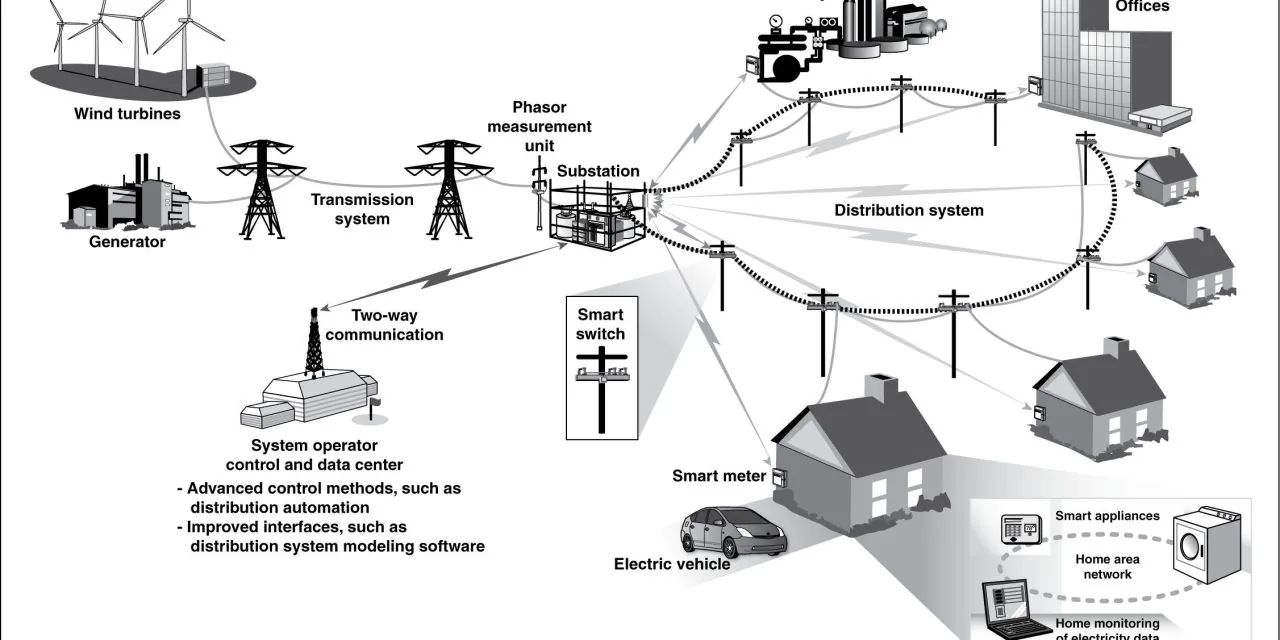
Grid operators (TSOs like Red Eléctrica in Spain or European equivalents) are building twins of their whole infrastructure:
- Real-time state of every substation, line, and transformer.
- “What if” simulation: if this line fails, how does flow reroute? does the system hold?
- Contingency planning: rehearsing thousands of scenarios to prepare for failures.
- Renewable integration: with variable generation (wind, sun), the twin helps predict balance.
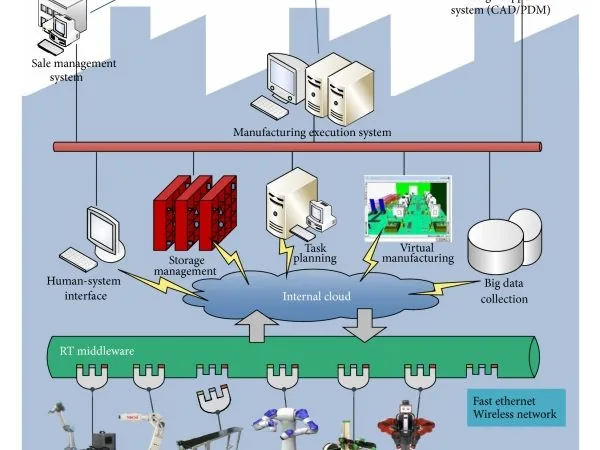
Typical stack: existing SCADA/EMS + physical-model layer (OpenModelica, Modelica, proprietary) + ML for forecasting + operator UI.
ROI measured by European operators: 20-40% reduction in outage duration and improved system stability during incidents.
Renewable Twins
A large wind farm has hundreds of turbines, each with sensors. A digital twin for that farm:
- Predicts production per integrated weather forecast.
- Detects degradation (bearings, blades, generator) weeks before failure.
- Dynamically optimises blade orientation to maximise output.
- Plans maintenance in predicted low-production windows.
Manufacturers like Siemens Gamesa, Vestas, and GE Renewable Energy offer twins of their own equipment. Large operators (Iberdrola, Ørsted, RWE) complement with their own farm-level twins.
Typical result: 10-20% reduction in corrective maintenance, 1-3% availability increase. On a 500 MW farm, that is millions a year.
Plant Twins
Conventional plants have had detailed models for years. The modern digital twin adds:
- Real-time integration with operation (before, they were static design models).
- ML over history to detect incipient anomalies before they become failures.
- Start/stop simulation — especially valuable in thermals cycling more due to renewable integration.
- Safety: twins for tests that cannot be done on the real asset.
In nuclear, twins form part of life-extension authorisation — demonstrating that the model matches real behaviour is part of regulation.
Cybersecurity: Do Not Neglect
A bidirectional digital twin — reading from sensors and able to influence control — is high-impact if compromised. Non-negotiable minimums:
- Strict segmentation between IT and OT (Purdue model).
- NIS2 mandates good practices for critical infrastructure; compliance is the legal minimum.
- Access monitoring for the twin with complete audit.
- Default “read-only” mode unless there is an operational reason for write access.
- Disaster recovery: if the twin is compromised, real operation must not stop.
Attacks on energy systems are real and have occurred. Underestimating them is irresponsible.
ROI and Measured Cases
Some public cases with verifiable numbers:
- Iberdrola / ScottishPower: grid twin reduces incident response time by 30%.
- E.ON: distribution-asset twins cut corrective maintenance 25%.
- Ørsted: offshore wind-farm twins optimise production +2-3%.
- EDF: hydro-plant twin reduces unplanned outages.
Typical ROI: 18-36 months to recover investment on a well-implemented twin.
When It Is Not Worth It
Honestly:
- Simple, low-cost assets: a sophisticated twin of a household meter has no ROI.
- Small companies without a mature OT team: high startup cost.
- End-of-life assets: investing in a twin of something retiring in two years does not pay.
- No data-driven decision culture: the twin generates data; if unused, it is pure cost.
Conclusion
Digital twins in energy have left the hype phase. There are measured cases with real ROI in grids, renewables, and asset maintenance. Investment is considerable — technical, cultural, and cybersecurity — but the sector is making it because the alternative cost is greater. For energy companies, the question is no longer “twin yes or no?” but “where do I start with highest impact?”. The answer usually lies in the highest-value asset with the best existing instrumentation.