Sustainable Data Centers: What Changes in 2024

Table of contents
- Key takeaways
- Beyond PUE: honest metrics
- Liquid cooling: from niche to mainstream
- Direct-to-chip liquid cooling
- Immersion cooling
- Rear-door heat exchangers
- Carbon-aware workload scheduling
- Waste-heat reuse
- District heating
- Agriculture and aquaculture
- Water usage: the ignored issue
- Greenwashing vs honest metrics
- Practical decisions for anyone choosing colo or cloud
- Conclusion
- Frequently asked questions
- Is PUE enough to tell whether a data center is sustainable?
- What PUE can liquid cooling reach compared with air cooling?
- How do you tell a genuinely "100% renewable" data center from greenwashing?
- Sources
Data centers consume between 1% and 2% of global electricity and grow every month. Regulatory, customer, and cost pressure pushes toward real sustainability, not just green marketing. In 2024 truly effective practices separate from greenwashing: more honest metrics, liquid cooling going mainstream, CO₂-based workload scheduling, and waste-heat reuse. This article covers what works in production today and what remains vaporware.
Key takeaways
-
PUE alone measures only electrical efficiency; complete metrics are PUE + WUE + CUE + ERE + REF.
-
Liquid cooling moves from niche to mainstream for GPU racks (H100, H200, MI300) with potential PUE of 1.05-1.10.
-
Carbon-aware workload scheduling is implementable today with the Green Software Foundation’s Carbon Aware SDK.
-
24/7 carbon-free energy matching is the honest renewables metric; annually purchased certificates are greenwashing.
-
European regulation (Energy Efficiency Directive, CSRD) already mandates joint metrics reporting.
Beyond PUE: honest metrics
PUE = total energy / IT energy. A PUE of 1.5 means 50% overhead; the reasonable target is below 1.1.
Problem: PUE measures only electrical efficiency, not total impact. Serious companies report complementary metrics:
-
WUE (Water Usage Effectiveness): litres of water / kWh IT. Critical in water-stressed zones such as Spain, California, or Arizona.
-
CUE (Carbon Usage Effectiveness): kg CO₂e / kWh IT. Reflects the real energy mix.
-
ERE (Energy Reuse Effectiveness): how much waste heat gets reused.
-
REF (Renewable Energy Factor): percentage of direct renewable energy, not purchased credits.
The EU already requires joint reporting through the Energy Efficiency Directive (revised 2023). Companies with data centers in the EU need to prepare for it.
Liquid cooling: from niche to mainstream
Rising density from AI GPU racks makes air cooling inadequate for new installations. Three approaches:
Direct-to-chip liquid cooling
Coolant tubes reach the CPU/GPU directly. Captures 70-80% of IT heat.
-
Application: GPU racks (H100, H200, MI300) for AI.
-
Potential PUE: 1.05-1.10.
-
Challenge: catastrophic leaks if the design fails.
Immersion cooling
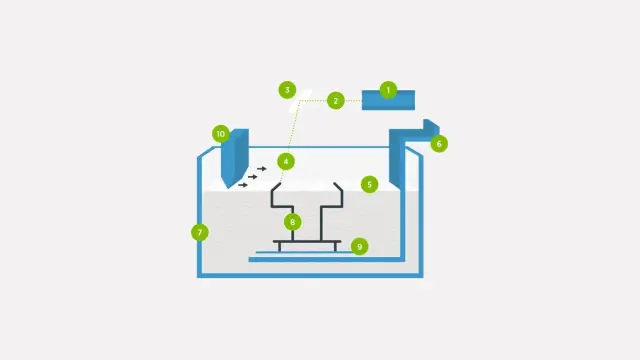
Servers submerged in dielectric fluid:
-
Single-phase: fluid circulates via pump.
-
Two-phase: fluid boils at low temperature, condenses at a heat exchanger.
-
PUE: 1.02-1.05.
-
Challenge: hardware needs certification, and maintenance differs from air cooling.
Rear-door heat exchangers
Liquid-to-air exchangers on the back of the rack:
-
Retrofit-friendly: fits an existing DC without a full redesign.
-
PUE: 1.2-1.3.
Hyperscalers (AWS, Azure, GCP) are putting most of their growth into direct-to-chip and immersion.
Carbon-aware workload scheduling
Grid carbon intensity varies by hour and region. Flexible workloads can run when and where the grid is cleanest:
-
By time: run batch jobs in the overnight hours of high wind output; run ML training when there is a solar surplus in spring.
-
By region: if you have data centers in Sweden (hydro) and Ireland (gas), prioritize Sweden for deferrable workloads.
Tools available today:
-
Carbon Aware SDK[1] (Green Software Foundation).
-
Electricity Maps API[2]: real-time carbon-intensity data.
-
WattTime[3]: similar data for the US.
Google targets 24/7 carbon-free energy by 2030; Microsoft has already rolled out carbon-aware batch scheduling in Azure Batch.
Waste-heat reuse
A data center produces tens of MW of heat. Venting it is waste. Alternatives with real-world cases:
District heating
-
Stockholm: Microsoft and Meta data centers heat homes through the district network.
-
Helsinki: targets 40% of district heating coming from data centers by 2030.
-
Spain: early-stage projects in several cities.
Requires data centers near heat networks and a sufficient return temperature (~60-80°C).
Agriculture and aquaculture
-
Greenhouses next to the data center for year-round production.
-
Fish farms using the warm water.
-
Algae cultivation for biofuels.
Water usage: the ignored issue
Evaporative cooling consumes large amounts of water. A mid-size data center can use between 1 and 5 million litres a day. In drought-prone regions this is contentious and increasingly regulated.
Companies that stand out on transparency: Equinix and Digital Realty publish detailed WUE figures. Hyperscalers are more opaque about it.
Greenwashing vs honest metrics
Common greenwashing:
-
"100% renewable" via market-purchased certificates while the data center runs on the local fossil mix.
-
Annual PPAs that balance out on paper, but not hour by hour.
-
"Carbon neutral" buying cheap offsets.
The honest metric is 24/7 carbon-free energy matching. Google leads in transparent reporting. For everyone else, the European Energy Efficiency Directive is starting to make granular reporting mandatory.
Practical decisions for anyone choosing colo or cloud
If you run your own data center or pick a provider:
-
Ask for real metrics (PUE, WUE, CUE) with evidence, not just statements.
-
Validate "renewable": a direct PPA or a dedicated plant, not certificates.
-
Review the cooling strategy: liquid is the future for GPU workloads.
-
Require ERE reporting if local heat-reuse options exist.
-
Consider workload portability so you can move load according to carbon intensity.
Conclusion
Sustainable data centers in 2024 are beyond the hype: liquid cooling is mainstream, carbon-aware workload scheduling is implementable today, heat reuse has real cases, and honest metrics are already a regulatory requirement. Serious ESG companies can’t settle for a PUE of 1.5 and purchased certificates. Those investing in real sustainability will gain an edge in cost, reputation, and compliance. Those sticking with greenwashing will face explanations that get harder to give, both to customers and to European regulators.
Frequently asked questions
Is PUE enough to tell whether a data center is sustainable?
No, PUE (total energy divided by IT energy) only measures electrical efficiency: a PUE of 1.5 means 50% overhead and the reasonable target is below 1.1. To capture total impact you need to add WUE (litres of water per kWh IT) and CUE (kg CO₂e per kWh IT). You also need ERE (how much waste heat is reused) and REF (share of direct renewable energy, not purchased credits). The Energy Efficiency Directive revised in 2023 already requires joint reporting of these in the EU.
What PUE can liquid cooling reach compared with air cooling?
It depends on the approach: direct-to-chip captures 70-80% of IT heat and allows a PUE of 1.05-1.10. Immersion cooling in dielectric fluid gets down to 1.02-1.05. Rear-door heat exchangers, which fit an existing DC without a full redesign, land at 1.2-1.3; air cooling is inadequate for dense GPU racks (H100, H200, MI300). The trade-offs are catastrophic leaks if a direct-to-chip design fails and hardware certification for immersion.
How do you tell a genuinely "100% renewable" data center from greenwashing?
The honest metric is 24/7 carbon-free energy matching: consumption covered by clean energy hour by hour. Market-purchased certificates and annual PPAs do not count: they only balance on paper while the data center runs on the local fossil mix. When choosing colo or cloud, ask for PUE, WUE and CUE with evidence. Insist that "renewable" means a direct PPA or a dedicated plant, and be sceptical of carbon neutrality achieved by buying cheap offsets.