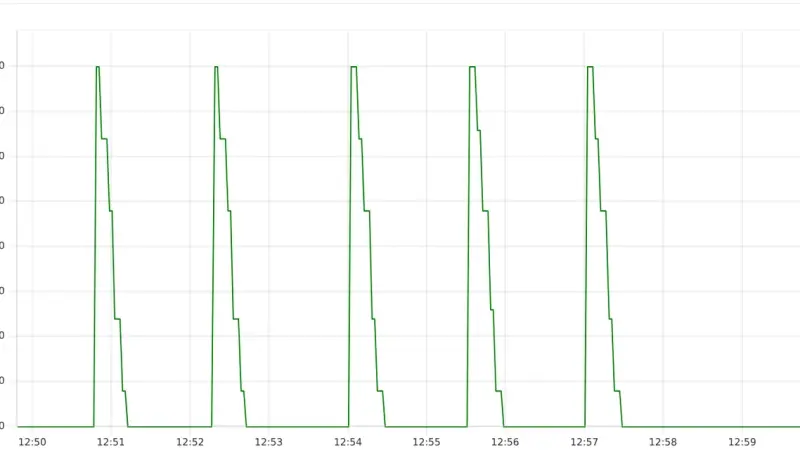
Since Kubernetes 1.37 the HPA accepts minReplicas: 0 without enabling any feature gate, but only with an External or Object metric: CPU cannot do it, because with no pods there is no CPU to measure. On k3s 1.37 with a Redis queue and prometheus-adapter, the HPA requested the first pod after a median of 13 s and was back at 0 after 58 s.
Kubernetes 1.35 GA consolidates three releases of work: native sidecars with full lifecycle management, generalised DRA for FPGAs and NPUs, and a scheduler that cuts resource waste by 15-25% in heterogeneous clusters. An operations-side balance sheet: what to enable now, what to watch before migrating, and what path to follow from 1.30.
Skills package reusable capabilities; subagents isolate bounded-task execution. Together they form the most effective pattern for composing complex agents in 2026.
The Model Context Protocol, proposed by Anthropic in late 2024 and adopted through 2025-2026 by Anthropic, OpenAI, Google, and the open-source community, already has proven operational patterns: separating generic servers from custom ones, explicit per-tool policies, credentials kept outside the model, prefixed composition, and contract tests. This is the state of the art in 2026.
Hybrid RAG in 2026 combines dense and lexical search fused with RRF, cross-encoder reranking over the top-50 candidates, structure-aware chunking, and continuous evaluation with Ragas or TruLens. It is the pattern that survives in serious production systems three years after the initial embeddings boom.
Kubernetes won the orchestration battle, but Docker Swarm stays maintained inside Docker Engine and makes real sense for small teams without dedicated SRE, self-hosted stacks on 1-5 VPS, and edge mini-clusters. In those contexts, Swarm's minimal learning curve and low operational cost outweigh Kubernetes's advanced features.
An Agent OS is a runtime layer built to run AI agents rather than ordinary applications, and after six months of production deployments the trade-off is clear. A dedicated agent stack starts slower but stays stable; Kubernetes with orchestration bolted on top moves faster early, then hits observability and policy limits. It pays off from five active agents.
A year after GraphRAG left the lab, one statistic holds: it works where corporate information has dense relational structure, fails where there are only loose documents. Patterns, ingestion costs, and architectural decisions that have survived a year of real deployment.
Twenty months after the initial announcement, Model Context Protocol went from curiosity to de-facto standard among agent clients and servers. What is available, which servers are worth it, which problems remain open, and how it compares to earlier protocol maps.
Platform engineering worked where teams built on concrete, painful problems and offered golden paths developers actually wanted, run with a product mindset. It stalled where the output was an empty Backstage portal: technically correct, unvisited, solving no operational problem. Three years after the Gartner hype of 2023, that split separates the winners from the sunk cost.
Six months after A2A landed at the Linux Foundation, and after several implementation cycles from Google, Microsoft, and open projects, what version 1 of the protocol means and whether it is safe to build on yet.
Kubernetes 1.35 has reached feature freeze, and three items matter. CEL-based admission policies go stable, replacing admission webhooks with expressions evaluated inside the control plane and removing an external failure point. Dynamic Resource Allocation goes stable for GPUs, NPUs and other accelerators. The new KubeletConfigSource API pushes kubelet configuration without restarting the node.
containerd Wasm support is production ready: the runwasi shim ships in containerd 2.0 and is backported to 1.7.7 and 1.6.25, so WasmEdge or wasmtime workloads run beside ordinary Linux containers on one Kubernetes cluster, selected per pod through RuntimeClass. Wasm wins on cold start, image size and kernel-free sandboxing, but not every workload fits.
With MCP solving the agent-to-tool layer, a parallel problem surfaces: how do two agents from different vendors communicate with each other. Google's Agent2Agent protocol, donated to the Linux Foundation in June 2025, tries to fill that gap with an open standard.
gVisor isolates containers by inserting Sentry, a kernel written in Go, between the container process and the real host kernel, shrinking the system-call surface a hostile tenant can reach. Its OCI-compatible runsc runtime drops in where runc used to sit. Use systrap mode, the default since 2023: portable, no special hardware required.
A caching proxy in front of a language model can cut the token bill significantly, but it introduces subtle risks if the design is not careful. Which cache types work in production, where the usual traps sit, and how to add them without degrading the experience.
An inference router decides which model answers each incoming request, weighing cost, latency and how hard the request actually is. Well-built inference routers cut total token spend by 30 to 70 percent with no quality loss the user can perceive. Four patterns cover most cases: length, task type, an auxiliary classifier, and learned routing.
TigerBeetle is a distributed database written in Zig, specialized in one specific kind of workload: high-volume double-entry accounting with strong consistency guarantees. It does not aim to replace Postgres; it aims to be the right tool when the problem is counting financial transactions at millions per second without subtle failures.
After three years of expansion and an overheated ecosystem around the term, platform engineering enters 2025 in a consolidation phase. The internal platforms that survive are the ones that understood their real function; those that mistook the label for the solution are dismantling their teams or cutting them drastically.
Citus is a Postgres extension that spreads tables across worker nodes while the cluster still looks like a single Postgres server to your application. The coordinator intercepts query planning and distributes the work. Picking the distribution key is the decision that matters most, since every later query inherits its consequences.
SQLite in production is a sound choice for small and mid-sized web applications once WAL mode is enabled, since concurrency on typical web loads improves by roughly two orders of magnitude. Litestream streams the WAL to S3-compatible object storage for point-in-time restore, and NVMe disks on cheap VPS plans removed the old disk objection.
After years of promising an open lakehouse, Apache Iceberg with REST catalogs plus dbt on top has jelled in 2025 into the reference stack. I break down what it solves, where it still hurts, and why the clean split between table, engine and transformation matters more than it looks.
DuckDB has spent two or three years quietly working its way into data architectures. It is no longer just the embedded database for local analytics: in 2025 it keeps turning up in concrete enterprise cases where it replaces far pricier pieces. A tour of the real patterns.
The term Agent OS has spent a year gaining traction across research and product circles. It describes a layer that goes well beyond an agent library: request scheduling, context management, persistent memory, and isolation. A look at the real state of that concept.
Wolfi, the kernelless distribution Chainguard announced in 2022, is now the base of Chainguard OS. Guide re-tested on 16 September 2026 on arm64: glibc 2.44, how to search its 15,119 packages with apk, SBOMs and signatures, an apko-built image, the 6-month retention policy and a comparison with Alpine and Debian slim.
Kata Containers has spent years promising VM-grade container isolation without giving up Docker ergonomics. With the 3.x series now mature under the OpenInfra Foundation, the technical story finally holds together and there is a clear niche where adopting it pays off.
Model Context Protocol turns ten months old since Anthropic's announcement, and it is no longer just a proposal: hundreds of servers, cross-vendor implementations and a public registry now back it. A look at what has worked, what is still weak, and why 2025 marks the shift from curiosity to basic infrastructure.
Distributed SQL databases have moved from promise to production reality. YugabyteDB and CockroachDB lead the segment from different angles. Choosing between them demands understanding what each design compromises and what horizontal scaling costs in practice.
Redpanda promises Kafka-protocol compatibility without the JVM, without ZooKeeper, and with a thread-per-core architecture. By 2025 there are already serious production deployments. It is worth understanding where the switch pays off and where it does not.
Kubernetes 1.34 ships with Dynamic Resource Allocation (DRA) graduating to stable, scheduler improvements, and CEL-based mutating admission policies that replace webhooks. A practical rundown of what is safe to upgrade now, what can wait, and what actually changes for teams running production clusters.
Redis 8.2 ships vector search as a native data type. The real question is whether it replaces a dedicated engine like Qdrant, Weaviate, or pgvector on workloads with millions of vectors and tight latency budgets, or only works as a bonus on top of the cache you already run.
Kafka 4.0, released on 18 March 2025, cannot start with ZooKeeper at all, so KRaft is the only option left. Metadata management now lives inside Kafka itself, a path that opened with KIP-500 in 2019 and became production-ready in Kafka 3.3. Migration is mandatory, and it shifts daily operations.
Open table formats over data lakes have moved from curiosity to backbone of many analytics architectures. Delta Lake 4.0 and Apache Iceberg 1.9 are the two with the most weight in 2025. We review where each one stands and which criteria make sense when choosing between them.
Six months after containerd 2.0 reached general availability there is enough real-world mileage to judge the migration from the 1.x branch in production. We cover what changes in the config file, what breaks on Kubernetes and Docker Swarm, and when planning the jump actually pays off.
Firecracker is the Rust-based virtual machine monitor AWS uses in Lambda and Fargate: it boots microVMs in under 125 milliseconds with under 5 MB of overhead. Switching from containers pays off when a shared kernel does not give enough isolation, especially for untrusted LLM agent code, and versus gVisor it wins on I/O performance.
Kubernetes 1.32 Penelope shipped in December and has been running in clusters for several months. It is a good time to look at which changes have aged well, which created extra work, and what lessons to carry into the jump to 1.33.
The PostgreSQL 17 optimisations that change real query plans sit in the planner and executor, so existing SQL benefits untouched. SAOP scans fold an IN list into a single index pass, worth 30 to 50 percent off p99 latency for 20 to 100 IDs. Streaming I/O cuts cold sequential scans and ANALYZE by 15 to 40 percent.
Valkey 8.1, released on March 31, is protocol and command compatible with Redis 7.x, so most existing clients connect without code changes. Swapping Valkey in for Redis is a realistic move once you plan the cutover: dump and restore is the simplest path, while zero downtime needs asymmetric replication. We moved our first production cluster two weeks ago.
Kubernetes 1.33 (Octarine) lands April 23. In-place pod resize moves to beta and ships on by default, sidecar containers finally reach GA, and several endpoint and security deprecations arrive that operators should review before upgrading from 1.32.
Graph RAG layers an explicit graph of entities and relationships on top of retrieval, so a question can be answered by traversing connections rather than by vector similarity alone. Microsoft Research published the GraphRAG paper in April 2024 and open-sourced the code that July. Lighter variants such as LightRAG and HippoRAG followed, running on Neo4j or Memgraph.
Coolify delivers a Vercel- or Heroku-like experience on your own servers: automatic HTTPS, managed databases, and branch previews without per-build or bandwidth fees. After several months using it on production VPS, here is where it shines, where it still has rough edges, and which teams will genuinely benefit from it.
GraphRAG has been in real enterprise use for over a year: during indexing, an LLM builds a knowledge graph that answers global questions about a corpus well, precisely where classic RAG fails because no single chunk holds the full answer. Here I compare indexing costs, the cases where it pays off, and the hybrid pattern that teams have settled on.
Cloudflare Workers turned eight in 2025 without slowing down: it now ships D1 for databases, R2 for egress-free storage, Durable Objects for distributed state, and Workers AI for running models without managing GPUs. It remains the fastest option for edge logic; for large in-memory processes or strict global consistency, other platforms fit better.
JuiceFS is a distributed, POSIX-compliant file system that separates data, stored in an S3-compatible object store, from metadata, stored in a database such as PostgreSQL or Redis. This guide installs JuiceFS on a three-node Linux cluster to share files without relying on NFS.
Hybrid search combines BM25 and vector retrieval to cover what each misses alone. Vectors fail on exact identifiers like SKUs or CVEs; BM25 fails when query and document use different vocabulary for the same idea. Reciprocal Rank Fusion (RRF) merges both rankings without depending on their score scales.
Model Context Protocol (MCP) is the open standard Anthropic published on 25 November 2024 to connect language models with external data and tools over JSON-RPC 2.0. It does not replace function calling: it standardises the server side, aiming to become for context what the Language Server Protocol is for code editors.
MariaDB 11.7 (November 2024) adds native vector search with an HNSW index, JSON improvements via JSON_OBJECT_AGG, and 5-15% faster read workloads versus 11.5. Against MySQL 8, the edge is not depending on HeatWave for embeddings; against PostgreSQL, it still trails on JSON depth and data types.
DuckDB is an embedded, columnar, vectorized SQL engine that runs inside your own process and queries Parquet, CSV, JSON, S3, and URLs in place. For DuckDB analytics up to a hundred gigabytes it beats pandas on speed and a cloud warehouse on friction cost. It is not a transactional engine. Version 1.0 landed in June 2024.
7 min2254.4
We use first- and third-party cookies to analyze site traffic. You can accept them, reject them, or configure your choice.
Learn more about cookies
Cookie preferences
NecessaryEssential for the site to work. Always on.
AnalyticsHelp us understand how the site is used (Google Analytics).