The linear function f(x) = ax + b is the simplest activation a neural network can use: in its identity form, f(x) = x, it is the standard choice for the output layer in regression, because it does not bound the range of possible values. In hidden layers it fails, because composing several linear functions collapses the whole network into one equivalent linear layer.
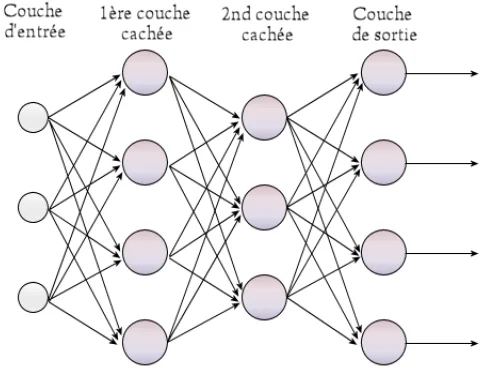
A fully connected neural network, also called a dense network, is the fundamental architecture of deep learning: every neuron in a layer connects to all neurons in the previous and next layer. This total connectivity lets it approximate any continuous function, though its computational cost grows quadratically with the number of neurons.
Adversarial machine learning studies deliberate attacks on AI systems (evasion, poisoning and model extraction) and the defenses used to resist them, chiefly adversarial training, robustness certification and monitoring the distribution of production input data.
Deep neural networks are today the foundation of almost every artificial intelligence application: from facial recognition to machine translation. Built on architectures like CNNs, RNNs, and Transformers, deep learning has transformed computer vision, speech recognition, and natural language processing over the last decade.
4 min2154.4
We use first- and third-party cookies to analyze site traffic. You can accept them, reject them, or configure your choice.
Learn more about cookies
Cookie preferences
NecessaryEssential for the site to work. Always on.
AnalyticsHelp us understand how the site is used (Google Analytics).