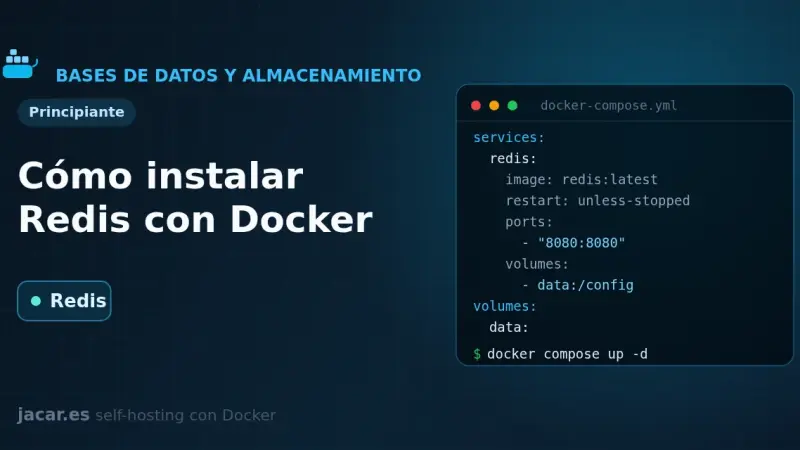
Redis is an in-memory key-value data store used as a cache, a job queue and a session manager. With Docker you bring it up from a single docker-compose.yml file, with persistence on a volume, a mandatory password and a healthcheck. This guide covers the installation, how to secure it and how it differs from Valkey.
Garnet es el servidor de caché abierto por Microsoft Research que habla el protocolo de Redis pero está escrito en .NET 8 con un núcleo de almacenamiento orientado a hardware moderno. Tras casi dos años en público, muestra números interesantes y una arquitectura que merece mirarse con calma, aunque el ecosistema Redis siga siendo más maduro.
Dragonfly lleva tres años como alternativa compatible con Redis, pero con arquitectura multihilo y sin fork para persistencia. En 2025 ya no es una curiosidad: hay despliegues serios que lo eligen por coste y latencia. Repaso de qué cambia y cuándo compensa mirarlo con calma.
Redis 8.2 ships vector search as a native data type. The real question is whether it replaces a dedicated engine like Qdrant, Weaviate, or pgvector on workloads with millions of vectors and tight latency budgets, or only works as a bonus on top of the cache you already run.
Valkey 8.1 salió el 31 de marzo y marca el momento en que la alternativa comunitaria de Redis deja de ser experimento. Cuenta una migración real: qué cambió, qué se mantuvo igual, y dónde hubo sobresaltos.
Redis moved to dual SSPL/RSAL licensing in March 2024, no longer meeting the OSI open-source definition. Valkey emerged as a BSD 3-Clause fork backed by AWS, Google Cloud, Oracle, and the Linux Foundation, fully protocol-compatible with Redis 7.2. Migrating is almost always trivial: swap the binary or the Docker image.
Redis alone isn't a caching strategy, just an ingredient: picking the right pattern among cache-aside, read-through, write-through, and write-behind, sizing TTL to how fast data actually changes, invalidating explicitly for critical data, and mitigating thundering herd with jitter and locking are the decisions that actually matter in production.
5 min2114.4
We use first- and third-party cookies to analyze site traffic. You can accept them, reject them, or configure your choice.
Learn more about cookies
Cookie preferences
NecessaryEssential for the site to work. Always on.
AnalyticsHelp us understand how the site is used (Google Analytics).