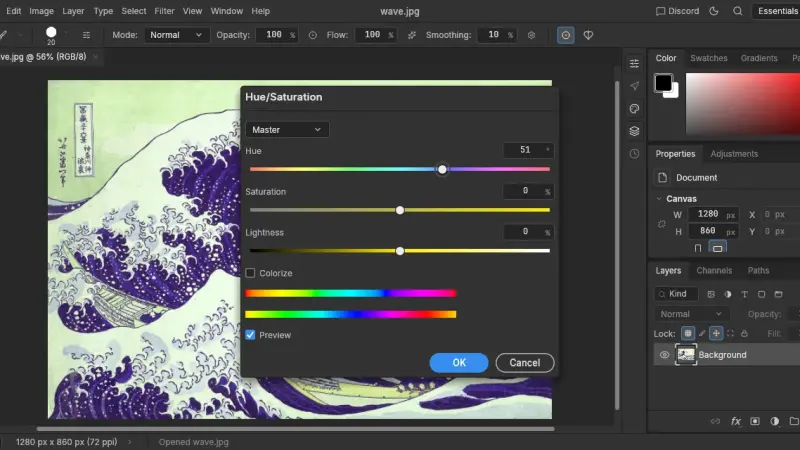
ArtCraft's Crafting Apps are twelve open-source creative apps written in Rust, licensed MIT or Apache 2.0, that you can also drive from a CLI and over MCP. I tested them on 13 October 2026 on Linux arm64: PhotoCraft 0.8.2 and PdfCraft 0.7.1 work from the terminal, over MCP and in the browser, but they are still early alpha.
Obscura is a headless browser engine written in Rust and released under Apache-2.0. It runs JavaScript on V8, speaks the Chrome DevTools Protocol and replaces headless Chrome inside Playwright or Puppeteer without touching your code. Its measured advantage is memory: around 38 MB per session against 532 MB for Chromium.
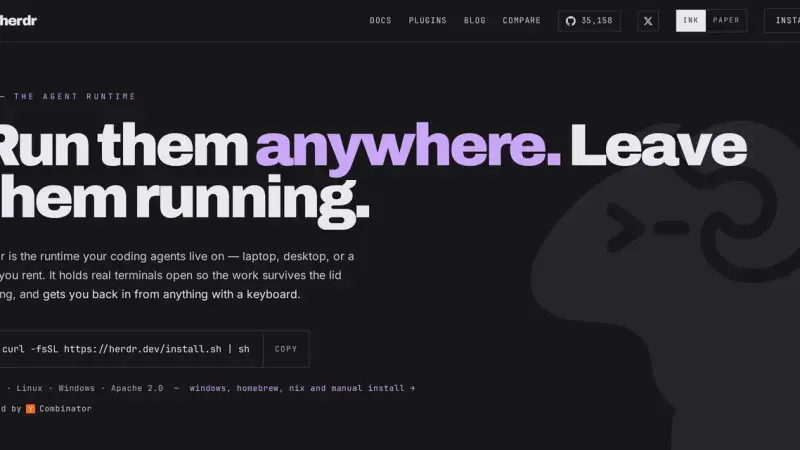
Herdr is a Rust terminal multiplexer that runs your coding agents inside a background server. It marks every pane as working, blocked or idle, and that status rolls up to the workspace, so you can see at a glance which agent is waiting on you.
Four and a half years after Rust officially entered Linux 6.1, with real Apple GPU and NVMe drivers in production and several public conflicts between maintainers, it is time for a sober technical balance. What works, what still costs, and where the next phase is heading.
Polars runs 3 to 10 times faster than pandas on aggregations, joins, and filters over parquet datasets of 1 to 20 GB, and holds 40 to 60 percent less memory thanks to native Arrow columns. With the 1.x API frozen and Arrow interoperability, both libraries can coexist in one pipeline.
Firecracker is the Rust-based virtual machine monitor AWS uses in Lambda and Fargate: it boots microVMs in under 125 milliseconds with under 5 MB of overhead. Switching from containers pays off when a shared kernel does not give enough isolation, especially for untrusted LLM agent code, and versus gVisor it wins on I/O performance.
Rust entered the Linux kernel as an experiment in 2022. Three years on it has stable in-tree drivers, an increasingly polished internal API, and a first wave of contributors who treat the language as the default choice for new code.
Rust Edition 2024 became stable on February 20, 2025 alongside Rust 1.85. Seven weeks later, the changes that actually matter for daily work are three: more granular variable capture in closures and Return Position Impl Trait, an expanded prelude with Future and AsyncFn, and unsafe now mandatory in extern blocks.
Vector is the Datadog observability agent, written in Rust with its own transformation language VRL. Typically 30-100 MB memory, handling logs, metrics, and traces from dozens of sources. The right choice when pipelines are too complex for Fluent Bit and a modern alternative to Logstash.
Rust 1.75 stabilises async fn in traits, return-position impl Trait, and several byte-level pointer methods such as byte_add. Rust 1.76 adds an ABI guarantee between char and u32, plus convenience utilities like Result::inspect and type_name_of_val. Two releases that add real ergonomics without flashy gestures.
Rust joined Linux mainline in version 6.1 (2022), and by 6.9 (2024) it already ships experimental drivers, including Asahi's GPU driver for Apple Silicon. In C/C++ projects like Chromium, around 70 percent of serious security bugs are memory-safety bugs, the real reason kernel maintainers are debating whether to adopt it.
Linkerd is the pragmatic service mesh for Kubernetes, prioritizing simplicity over feature catalogues. Its Rust proxy uses ~10 MB RAM per sidecar versus 50-100 MB for Envoy under Istio. This comparison explains when adopting it pays off, what it costs to operate, and when Istio makes more sense.
Zed is the editor built by Atom's creators, rebuilt in Rust with a native GPU-rendering UI framework and no Electron. It delivers ~8 ms latency, real-time collaboration with integrated voice and shared cursors, and an open license (GPL v3 + Apache 2.0). A serious VS Code alternative for pairs and small teams.
Rust has been in the Linux kernel since version 6.1, though adoption is measured and deliberate. The Apple AGX GPU driver for Asahi Linux is the most prominent real upstream example. The goal is to eliminate an entire class of memory-safety bugs in new drivers without rewriting existing C code.
Rust is no longer just a systems language: with tokio as the async runtime and axum as the HTTP framework, teams build high-performance backend services with compile-time type checking. It pays off in gateways, proxies and event processors; for typical CRUD over Postgres, Go or Node.js remain more productive.
7 min2694.6
We use first- and third-party cookies to analyze site traffic. You can accept them, reject them, or configure your choice.
Learn more about cookies
Cookie preferences
NecessaryEssential for the site to work. Always on.
AnalyticsHelp us understand how the site is used (Google Analytics).