Accessibility overlays were sold as a magic fix for WCAG and the European EAA directive in one step. In 2025 lawsuits against them have grown and disabled users are speaking out more critically than ever. A look at why they fail and what to do instead.
Spotify announced Backstage Plus, its own commercial offering built on top of the open Backstage project. The result is a de facto fork that raises uncomfortable questions about governance of company-donated CNCF projects. A look at the practical implications and what teams already running Backstage in production can do.
Post-quantum cryptography stopped being an academic topic once Cloudflare, Google, and Apple put ML-KEM hybrids into production. By 2025 it already covers the majority of real web traffic. A look at where adoption stands, where friction still shows up, and what to review in your own infrastructure.
Model Context Protocol turns ten months old since Anthropic's announcement, and it is no longer just a proposal: hundreds of servers, cross-vendor implementations and a public registry now back it. A look at what has worked, what is still weak, and why 2025 marks the shift from curiosity to basic infrastructure.
Dragonfly is a Redis-protocol-compatible cache built on a multithreaded shared-nothing design with one thread per data shard, so an eight-core node uses all eight cores where Redis uses one. Its fork-free snapshot algorithm keeps latency flat while persisting. Ordinary clients work fine; modules like RedisSearch and RedisJSON are where compatibility frays.
Astro 5 has spent nine months in production and has settled into a place of its own in the JavaScript world. Its bet on typed content and friction-free mixed rendering puts it halfway between Next.js and the static-site generators. A time-tested assessment.
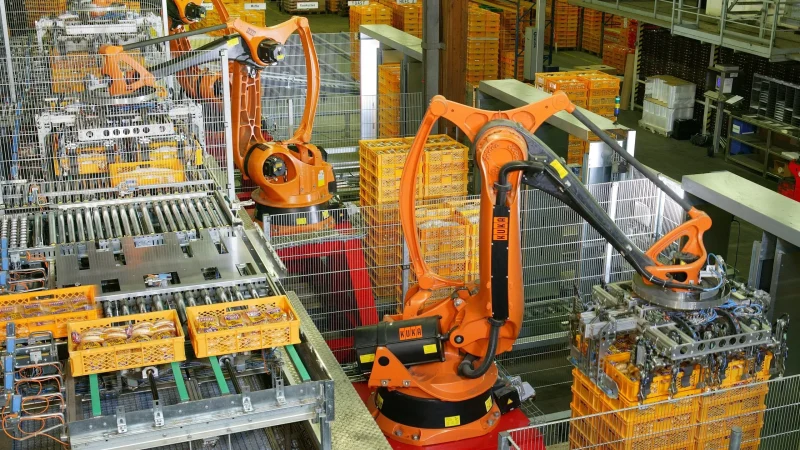
The dark factory, with no human workers on shift, has been promised for years but is only now starting to multiply in earnest. The Chinese and Japanese cases show a mature model; in Europe and Spain the reality is different. An honest look at what works and what is still hype.
Four years ago it was an academic curiosity. Today, scheduling workloads by grid carbon intensity is a built-in option in Kubernetes, in several cloud provider services, and in CI tooling. We look at what genuinely changed and what is still more promise than practice.
NVIDIA Blackwell GPUs change large-model training mainly at rack scale. The GB200 NVL72 packs 72 Blackwell GPUs and 36 Grace CPUs into around 120 kW and presents itself to software as one machine holding 13.4 TB of HBM3e. Official MLPerf Training v5.0 numbers show 2.2x on Llama 3.1 405B pretraining against H100.
Dokploy has become the most talked-about free alternative to Vercel and Render. It promises Docker Swarm simplicity without the weight of Kubernetes or dependence on a single vendor. We look at where it delivers and where the promise breaks down.
6 min2504.5
We use first- and third-party cookies to analyze site traffic. You can accept them, reject them, or configure your choice.
Learn more about cookies
Cookie preferences
NecessaryEssential for the site to work. Always on.
AnalyticsHelp us understand how the site is used (Google Analytics).