Dark factory: robotics and automation today
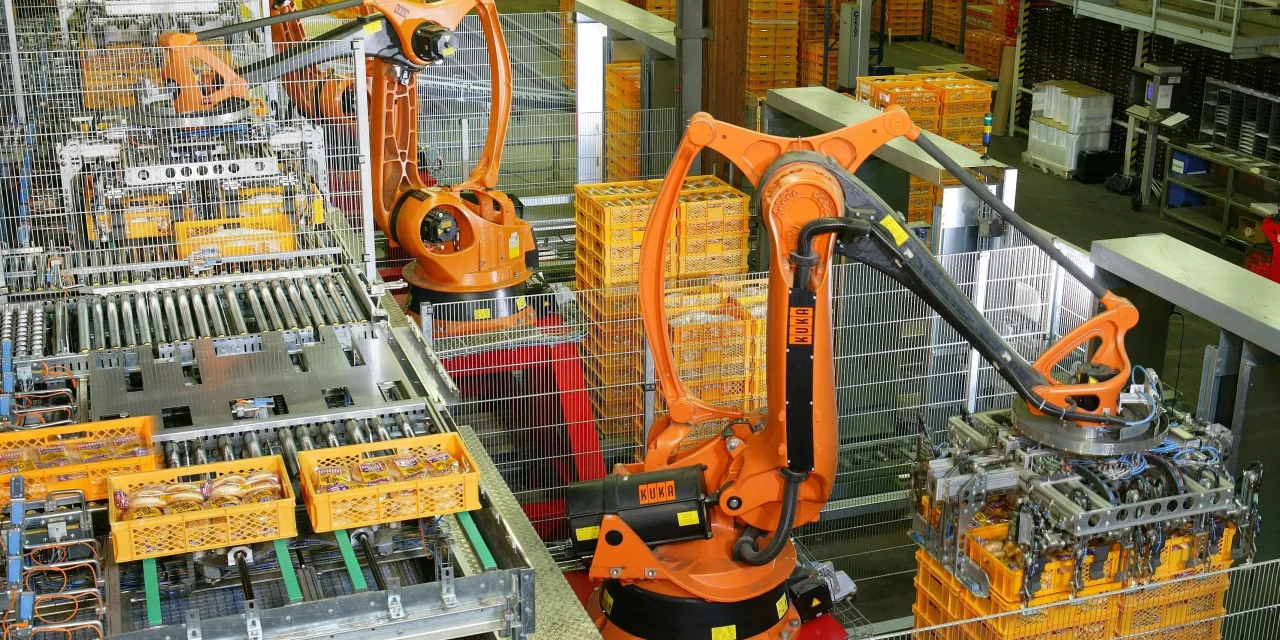
Table of contents
- Key takeaways
- What defines a dark factory
- What does work in 2025
- Where the promise breaks
- The cobot question
- Computer vision: the quiet enabler
- The Spanish reality
- My take
- Frequently asked questions
- Are there dark factories in Spain?
- What kind of production fits the dark-factory model?
- How much does an AI visual-inspection system cost today?
- Sources
The dark-factory concept, also called lights-out manufacturing, has existed since the 1980s but was anecdote rather than model for decades. In 2025 that is changing.
Xiaomi runs a plant near Beijing that assembles a phone roughly every six seconds, with a stated 81% automation rate and about 220 people overseeing the whole line, not each unit (Euronews[1]). Foxconn has rolled out at least three "lights-off" factories in China according to 2024 trade reporting (CommonWealth Magazine[2]). Fanuc has built robots with robots at its Oshino plant in Japan since 2001 (Wikipedia[3]). The pattern is multiplying outside Asia too, though more slowly.
Key takeaways
-
The strict definition is a factory that runs full shifts with no human presence on the production line; the practical definition is softer: minimal presence only for occasional intervention.
-
Mature cases share three traits: few references with low variability, high volume, and an also-automated input supply chain.
-
The model breaks on variability: each reference change requires reconfiguring robotic cells, recalibrating vision, and adjusting trajectories, work that tends to be faster with human operators.
-
Cobots (collaborative robots without safety cages) are gaining ground faster than the full dark model in Europe: cheaper, reusable across tasks, and socially less disruptive.
-
Spain has automated factories but no strictly dark factories: high product variability, strong union consensus, and the economics of the last human links explain the gap.
What defines a dark factory
The strict definition is a factory that can run full shifts with no human presence on the production line. The practical definition is softer: a factory where human presence on night or weekend shifts is minimal and limited to occasional intervention. Almost no real factory runs completely dark 24/7, but they do during lower-demand shifts.
Turning the lights off is practical. Robots do not need visible lighting, and climate control built for people stops making sense with nobody on the floor. Fanuc, for instance, also switches off air conditioning during unstaffed shifts in Oshino (Wikipedia[3]). The exact savings vary a lot by plant type and there is no reliable universal figure, but it is part of the model’s economics, even if rarely the deciding factor.
What does work in 2025
Mature dark-factory cases share traits:
-
Few references with low variability: phones, flash memory, standardized electronics, serial mechanical parts. The more uniform the product, the easier to automate.
-
High volume, which amortizes investment in specialized robotics.
-
Input supply chain also automated: materials arriving on continuous conveyors or autonomous vehicles, not boxes someone has to open and sort.
Xiaomi’s Changping line is a good example: 11 fully automated production lines, computer vision at each station for defect detection, internal logistics with autonomous mobile robots, and a management system that coordinates everything.
Fanuc in Oshino produces industrial robots using industrial robots, and has done so since 2001. The process is extremely mature: the plant builds around 50 robots per 24-hour shift and can run for up to 30 days straight with no one intervening on the line (Wikipedia[3]).
Where the promise breaks
The model breaks on variability. Any process that handles dozens or hundreds of distinct references, with different geometries, heterogeneous materials, or frequent design changes, does not fit the full dark-factory model. Each reference change requires reconfiguring robotic cells, recalibrating vision, and adjusting trajectories, and that tends to be faster with human operators.
Clear examples are European automotive plants that mix models on the same line. Volkswagen and Stellantis build different models on the same highly automated line, but not in dark mode. The reason is not lack of technology but economics: frequent reference changes and product complexity make the marginal cost of removing the last operators exceed the savings.
Another break point is internal supply-chain reliability. In a well-running factory, a tilted part or a jammed screw is a rare incident an operator resolves in seconds. Without operators, that same incident can stop a full line for hours until someone arrives.
The cobot question
An interesting trend complicating the dark-factory definition is the rise of cobots, collaborative robots designed to work near humans without safety cages. Universal Robots, FANUC CRX, and ABB’s collaborative lines have normalized in mid-size factories, especially in Germany and the Nordics. The global cobot market is estimated at 1.42 billion dollars in 2025, growing to 3.38 billion by 2030, a roughly 18.9% annual growth rate (MarketsandMarkets[4]). I covered this hybrid model in more depth in the 2026 collaborative-robotics balance sheet.
The cobot is the philosophical opposite of the dark factory. Instead of removing the operator, it augments them with a robotic partner that handles repetitive tasks while the human handles exceptions. The resulting model is not dark but hybrid: one person supervises two or three collaborative cells that together do the work of five traditional operators.
In practice this hybrid model is gaining ground faster than the full dark model in Europe. The reason is economic and sociopolitical at once. Cobots are cheaper than complex robotic cells, reusable across tasks, and their deployment does not require the same social consensus as closing a factory entirely to personnel.
Computer vision: the quiet enabler
The technical advance most pushing dark-factory viability in recent years is computer vision. Industrial cameras combined with deep learning models have dropped a lot in price. Entry-level AI visual-inspection systems now run 3,000-10,000 euros and mid-tier ones 20,000-50,000. Cost reductions versus manual inspection are at least 40% (Jidoka[5], AMD Machines[6]).
This changes the math because quality inspection was one of the last jobs where humans were hard to replace. Recent Vision Transformer-based models have closed that gap category by category. In sectors like food processing, where product variability is intrinsic, this was the main bottleneck. In 2025 that is changing, though not overnight.
The Spanish reality
Spain has automated factories but no strictly dark factories. SEAT in Martorell, Mercedes in Vitoria, or Gestamp in its stamping plants run at high automation with continuous human presence. The reasons match the rest of Europe: high product variability, strong union consensus, and economics where the last human links are cheaper than automating them.
There are exceptions in specific sectors. Some electronics component plants in Catalonia and the Basque Country run partially dark shifts, and in pharmaceuticals there are critical areas without humans at night, more for hygiene than cost.
The transition toward more darkness in Spain will likely pass through cobots and robotized cells in sectors with high cost pressure and low variability. We will not see a Spanish automotive plant running 100% dark this decade, but we will see more autonomous cells inside hybrid plants.
My take
The dark factory is a real model, mature in certain sectors and geographies, but exaggerated in general applicability. Painting it as the universal future of manufacturing ignores that product variability, changeover economics, and limits of automated fault detection still strongly condition where going human-free pays off.
For an average Spanish manufacturer the reasonable horizon is not dark factory but intelligent automation with smaller teams and integrated cobots. That transition is already underway and is far less disruptive than the full-darkness promise. Investing today in collaborative cells and computer vision is concrete progress toward the future.
What matters to understand from Spain is that Chinese dark factories already compete with us on production cost for certain products. Responding by trying to replicate their exact model makes no sense, but understanding where labor cost is the dominant factor and where it is not does. In sectors where labor is 40% of cost, the Chinese dark factory is unbeatable medium-term. In sectors where labor is 10%, the difference is nearly irrelevant and there is room to compete on design, quality, and flexibility.
Smart industrial strategy identifies which is which instead of trying to win a race that cannot be won.
This article is also available in Spanish: Fábrica oscura: robótica y automatización hoy. I have also written about data sovereignty in industry 4.0, a factor that weighs on the same automation decision.
Sources:
- Euronews: Inside Xiaomi’s Beijing factory: the machine behind a smartphone made every 6 seconds[1]
- CommonWealth Magazine: AI robots go to work at three Foxconn lights-off factories[2]
- Wikipedia: Lights out (manufacturing)[3]
- MarketsandMarkets: Collaborative robot market to be worth 3.38 billion dollars by 2030[4]
- Jidoka: AI visual inspection system pricing guide for manufacturers[5]
- AMD Machines: AI quality vision reduces inspection costs 40%[6]
Frequently asked questions
Are there dark factories in Spain?
Not strictly. SEAT in Martorell, Mercedes in Vitoria, or Gestamp run at high automation but with continuous human presence. The reasons are high product variability, strong union consensus, and economics where the last human links are cheaper than automating them. There are partial exceptions: electronics component plants in Catalonia and the Basque Country running partially dark shifts, and pharmaceutical areas without humans at night, more for hygiene than cost.
What kind of production fits the dark-factory model?
Mature cases share three traits: few references with low variability (phones, flash memory, standardized electronics, serial mechanical parts), high volume that amortizes specialized robotics, and an input supply chain that is also automated. The model breaks on variability: each reference change requires reconfiguring robotic cells, recalibrating vision, and adjusting trajectories, which tends to be faster with human operators.
How much does an AI visual-inspection system cost today?
Entry-level systems run 3,000-10,000 euros and mid-tier ones 20,000-50,000, with cost reductions versus manual inspection of at least 40%. That price drop matters because quality inspection was one of the last jobs where humans were hard to replace. Recent Vision Transformer-based models have closed that gap category by category, including sectors like food processing where product variability is intrinsic.