Polars lleva dos años pidiendo relevo a pandas. Con Polars 1.x estable y una comunidad creciente, toca revisar dónde de verdad compensa migrar, dónde pandas sigue ganando y cómo convivir entre ambos sin pagar dos veces.
A year after chat stopped being the only acceptable way to talk to an agent, UI patterns built specifically for agent tasks are emerging. I go through the ones starting to stick and the ones that are just cycle fashion.
Six months after containerd 2.0 reached general availability there is enough real-world mileage to judge the migration from the 1.x branch in production. We cover what changes in the config file, what breaks on Kubernetes and Docker Swarm, and when planning the jump actually pays off.
Firecracker is the Rust-based virtual machine monitor AWS uses in Lambda and Fargate: it boots microVMs in under 125 milliseconds with under 5 MB of overhead. Switching from containers pays off when a shared kernel does not give enough isolation, especially for untrusted LLM agent code, and versus gVisor it wins on I/O performance.
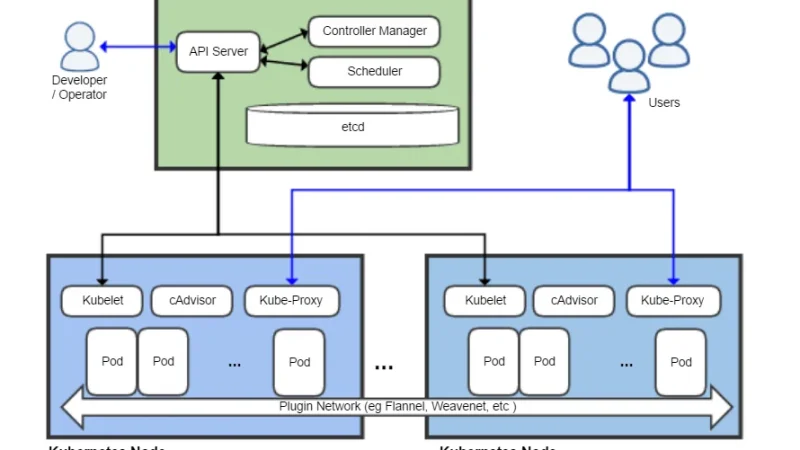
Kubernetes 1.32 Penelope shipped in December and has been running in clusters for several months. It is a good time to look at which changes have aged well, which created extra work, and what lessons to carry into the jump to 1.33.
Rust entered the Linux kernel as an experiment in 2022. Three years on it has stable in-tree drivers, an increasingly polished internal API, and a first wave of contributors who treat the language as the default choice for new code.
PostgreSQL 17 llegó en septiembre con mejoras silenciosas del planificador. Seis meses en producción confirman que los escaneos SAOP, el streaming I/O y los anti-joins han cambiado planes de consulta reales sin tocar una línea de SQL.
Valkey 8.1 salió el 31 de marzo y marca el momento en que la alternativa comunitaria de Redis deja de ser experimento. Cuenta una migración real: qué cambió, qué se mantuvo igual, y dónde hubo sobresaltos.
Rust Edition 2024 became stable on February 20, 2025 alongside Rust 1.85. Seven weeks later, the changes that actually matter for daily work are three: more granular variable capture in closures and Return Position Impl Trait, an expanded prelude with Future and AsyncFn, and unsafe now mandatory in extern blocks.
Kubernetes 1.33 (Octarine) lands April 23. In-place pod resize moves to beta and ships on by default, sidecar containers finally reach GA, and several endpoint and security deprecations arrive that operators should review before upgrading from 1.32.
Desde que Microsoft abrió GraphRAG, el patrón de usar grafos sobre tus propios datos ha pasado de experimento académico a técnica con aplicaciones prácticas. Reflexión sobre cuándo compensa, cómo se monta y qué errores se repiten.
The AI features Figma has rolled out since Config 2024 are changing how product design teams work. A look at what each feature delivers, what remains human work, and which habits are taking hold across teams.
Coolify delivers a Vercel- or Heroku-like experience on your own servers: automatic HTTPS, managed databases, and branch previews without per-build or bandwidth fees. After several months using it on production VPS, here is where it shines, where it still has rough edges, and which teams will genuinely benefit from it.
Two years into living with AI assistants in the editor, habits have settled. A reflection on what has changed in day-to-day coding, what has been learned, and what was still left to discover.
GraphRAG has been in real enterprise use for over a year: during indexing, an LLM builds a knowledge graph that answers global questions about a corpus well, precisely where classic RAG fails because no single chunk holds the full answer. Here I compare indexing costs, the cases where it pays off, and the hybrid pattern that teams have settled on.
Full-stack TypeScript with Next.js and tRPC removes type duplication between frontend and backend, but it is not a universal answer: Node still falls short on CPU-bound loads, testing remains fragmented, and large projects eventually split apart. It is the best fit for small-to-medium products with agile teams, not for sustained high-performance systems.
WASI 0.3, also known as preview 3, was ratified on June 11, 2026, adding native asynchronous concurrency to the WebAssembly component model through streams, futures, and async functions. It fixes old fragmentation across languages and runtimes, enables real composition between Wasm services, and paves the way for cooperative threads planned in upcoming 0.3.x releases.
Cloudflare Workers turned eight in 2025 without slowing down: it now ships D1 for databases, R2 for egress-free storage, Durable Objects for distributed state, and Workers AI for running models without managing GPUs. It remains the fastest option for edge logic; for large in-memory processes or strict global consistency, other platforms fit better.
JuiceFS is a distributed, POSIX-compliant file system that separates data, stored in an S3-compatible object store, from metadata, stored in a database such as PostgreSQL or Redis. This guide installs JuiceFS on a three-node Linux cluster to share files without relying on NFS.
Python 3.12, released in October 2023, brings inline generic syntax through PEP 695, tracebacks that pinpoint the exact error, and an average speedup of around 5% over 3.11 on pyperformance, plus experimental sub-interpreters with their own GIL. Migrating from 3.10 or 3.11 is straightforward: major libraries already ship compatible wheels.
Hybrid search combines BM25 and vector retrieval to cover what each misses alone. Vectors fail on exact identifiers like SKUs or CVEs; BM25 fails when query and document use different vocabulary for the same idea. Reciprocal Rank Fusion (RRF) merges both rankings without depending on their score scales.
Model Context Protocol (MCP) is the open standard Anthropic published on 25 November 2024 to connect language models with external data and tools over JSON-RPC 2.0. It does not replace function calling: it standardises the server side, aiming to become for context what the Language Server Protocol is for code editors.
MariaDB 11.7 (November 2024) adds native vector search with an HNSW index, JSON improvements via JSON_OBJECT_AGG, and 5-15% faster read workloads versus 11.5. Against MySQL 8, the edge is not depending on HeatWave for embeddings; against PostgreSQL, it still trails on JSON depth and data types.
Rust 1.75 stabilises async fn in traits, return-position impl Trait, and several byte-level pointer methods such as byte_add. Rust 1.76 adds an ABI guarantee between char and u32, plus convenience utilities like Result::inspect and type_name_of_val. Two releases that add real ergonomics without flashy gestures.
6 min2164.3
We use first- and third-party cookies to analyze site traffic. You can accept them, reject them, or configure your choice.
Learn more about cookies
Cookie preferences
NecessaryEssential for the site to work. Always on.
AnalyticsHelp us understand how the site is used (Google Analytics).