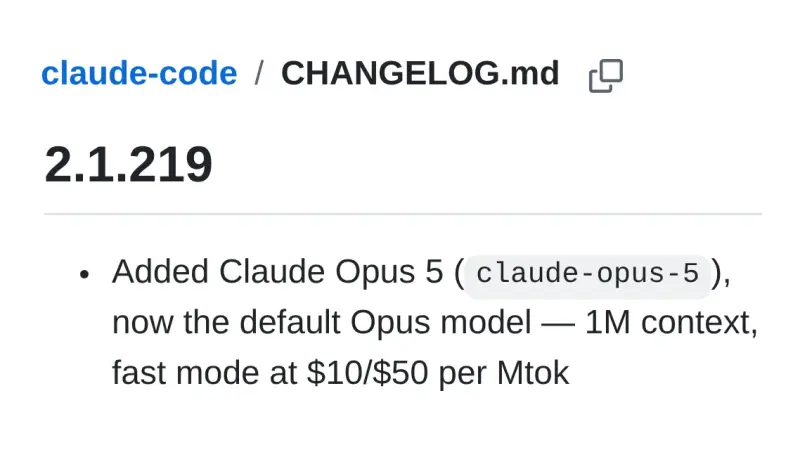
Between 1 June and 28 August 2026, Claude Code shipped 81 releases, from 2.1.160 to 2.1.251, carrying 149 additions. Four of them change how you actually work: Claude Opus 5 as the default, cross-session messaging, self-hosted environments, and credential masking in the sandbox.
This guide shows how to build a production-ready agent with the Anthropic SDK in Python: the tool-use loop with the Messages API, streaming with backpressure via a bounded queue, prompt caching with cache_control, your own MCP server registered with the Claude Agent SDK, OTel GenAI traces, and a non-root Docker container ready for production.
After eighteen months of multi-vendor adoption, MCP is the de facto standard for connecting models to tools. The complete guide: architecture, servers, policies, authentication, composition, and the antipatterns we’ve already seen in production.
The Model Context Protocol, proposed by Anthropic in late 2024 and adopted through 2025-2026 by Anthropic, OpenAI, Google, and the open-source community, already has proven operational patterns: separating generic servers from custom ones, explicit per-tool policies, credentials kept outside the model, prefixed composition, and contract tests. This is the state of the art in 2026.
Claude Sonnet 4.6 is the default model for most 2026 production workloads: it covers 80% of traffic with quality indistinguishable from Opus 4.7 in blind tests, at roughly 60% of Opus per-token price. Opus is still needed for complex reasoning and agentic coding on large codebases.
Opus 4.7 launched as Anthropic's most capable model, with emphasis on long-horizon agentic work. After two months of intensive use, these are the practical changes versus Opus 4.6.
The Model Context Protocol has gone from proposal to de facto standard for connecting editors with external tools. This practical guide walks through standing up a local MCP server, wiring it into VS Code or your client of choice, and understanding exactly what you are exposing.
Twenty months after the initial announcement, Model Context Protocol went from curiosity to de-facto standard among agent clients and servers. What is available, which servers are worth it, which problems remain open, and how it compares to earlier protocol maps.
Sixteen months after Anthropic first shipped computer use, with browser-use, OpenAI Operator and Gemini Computer Use all pushing in parallel, agents that drive the browser and desktop have moved from demo to real workflows. Time to review which patterns survive when you run them daily in production.
Claude Haiku 4.5, released by Anthropic on October 15, 2025, performs close to Sonnet 4 on structured tasks for roughly a third of the price. It carries a 200K-token context window and tool use on par with Sonnet 4.5. Pairing it as a filter ahead of Sonnet cuts total cost several times over.
Model Context Protocol turns ten months old since Anthropic's announcement, and it is no longer just a proposal: hundreds of servers, cross-vendor implementations and a public registry now back it. A look at what has worked, what is still weak, and why 2025 marks the shift from curiosity to basic infrastructure.
Computer Use in production works today for narrow, repetitive interface tasks where a human still checks the result. Anthropic shipped it in October 2024 calling it experimental and error-prone, and nine months on that framing still holds: teams run it on real work by constraining scope, not by trusting it end to end.
Anthropic released Claude Opus 4 and Claude Sonnet 4 on 22 May 2025, the first major naming jump since the 3.5 series. Claude 4 reasons noticeably better over long programming tasks: multi-hour refactors that previously stalled without a human nudge now run further alone, and the family targets agentic, multi-step flows.
September 2026 review of the MCP servers I use daily: filesystem, git, fetch, and memory are still reference servers, and DBHub replaces the archived Postgres server. The official registry verifies who publishes, not the code's security, so I apply five criteria and list tools with the MCP Inspector before connecting anything.
Claude 3.7 Sonnet, released by Anthropic on February 24, is a careful refinement rather than a generational jump. The same model answers in standard mode or in an extended thinking mode you switch on per request, trading tokens and latency for better results on hard problems. It also ships Claude Code, a command-line tool for programmers.
Model Context Protocol (MCP) is the open standard Anthropic published on 25 November 2024 to connect language models with external data and tools over JSON-RPC 2.0. It does not replace function calling: it standardises the server side, aiming to become for context what the Language Server Protocol is for code editors.
Computer Use is the Claude API feature, launched by Anthropic on 22 October 2024, that lets the model view screenshots and move the mouse, type, and click inside a loop your own system executes and controls. It works well on apps without an API and fails on CAPTCHAs, highly dynamic interfaces, and long tasks.
Claude 3.5 Sonnet (Anthropic, June 2024) matches Claude 3 Opus quality at Sonnet pricing, with a 200k-token context window and 92% on HumanEval. It stands out in coding and complex instruction-following, and introduced the Artifacts workspace feature on Claude.ai.
Anthropic launched the Claude 3 family on March 4, 2024 with three models: Haiku, Sonnet, and Opus, all with 200k-token context. Haiku costs $0.25 per million tokens; Opus matches GPT-4 Turbo on benchmarks. This comparison explains when to choose each tier and how to combine them in production to cut costs without sacrificing quality where it matters.
The LiteLLM proxy sits between your applications and your model providers, exposing a single endpoint in the OpenAI format that routes each call to OpenAI, Anthropic, Cohere, or a self-hosted model. It earns its place at the second provider, where clean code breaks down: every SDK brings its own client, message format, streaming semantics, errors, and function calling.
Claude 2, launched by Anthropic in July 2023, offers a 100,000-token context window and safety grounded in Constitutional AI. Against GPT-4 it wins on long-document analysis and wide-context code; GPT-4 remains ahead on complex mathematical reasoning and its tooling ecosystem.
6 min2094.5
We use first- and third-party cookies to analyze site traffic. You can accept them, reject them, or configure your choice.
Learn more about cookies
Cookie preferences
NecessaryEssential for the site to work. Always on.
AnalyticsHelp us understand how the site is used (Google Analytics).