The Spanish draft law transposing NIS2 is still in parliament in 2026, but the directive's technical obligations have applied since October 2024. Practical map: the ten minimum security measures, the 24-hour, 72-hour and one-month incident notification window, and the new supply-chain security obligations.
Kubernetes 1.35 GA consolidates three releases of work: native sidecars with full lifecycle management, generalised DRA for FPGAs and NPUs, and a scheduler that cuts resource waste by 15-25% in heterogeneous clusters. An operations-side balance sheet: what to enable now, what to watch before migrating, and what path to follow from 1.30.
NVIDIA still dominates frontier-model training in 2026, but inference tells a different story. AMD MI300X/MI325X with mature ROCm, Intel Gaudi 3, Google TPU v6, and AWS Trainium/Inferentia deliver 20 to 50% lower cost per token without sacrificing quality. Here is when to choose each option.
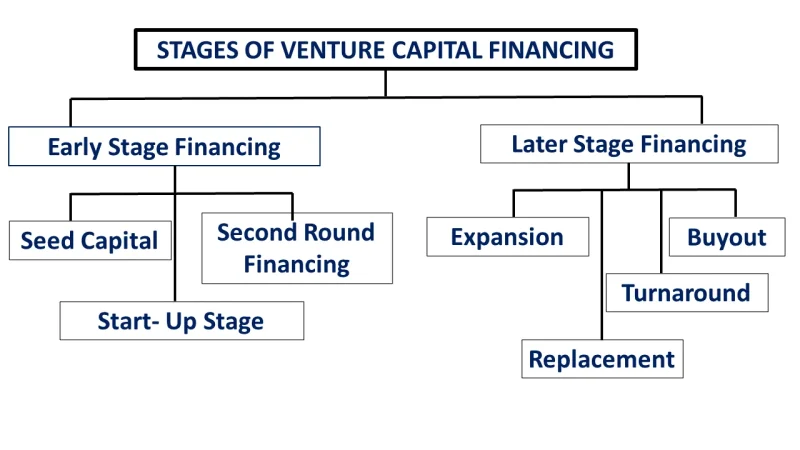
After the 2021 historic peak and the 2022 correction, startup funding in 2023 has been redefined: Series A rounds dropping from $15M to $8-10M, due diligence extending to 14 weeks, and metrics like the real Rule of 40 and NRR above 110% as the new minimum.
Kubernetes won the orchestration battle, but Docker Swarm stays maintained inside Docker Engine and makes real sense for small teams without dedicated SRE, self-hosted stacks on 1-5 VPS, and edge mini-clusters. In those contexts, Swarm's minimal learning curve and low operational cost outweigh Kubernetes's advanced features.
Ollama 0.5 or newer runs Llama 3.3 70B and Mistral Large 2 locally on Ubuntu 24.04: Q4_K_M quantization lets a single NVIDIA GPU with 24 GB of VRAM, an RTX 4090 for example, handle the full model. This guide installs the drivers, sets up Open WebUI, and exposes the service behind Traefik with TLS.
Two years after the final NIST standards, post-quantum migration is no longer hypothetical. What has actually been migrated, what remains stuck, where the real operational problems lie, and how the timelines look from April 2026.
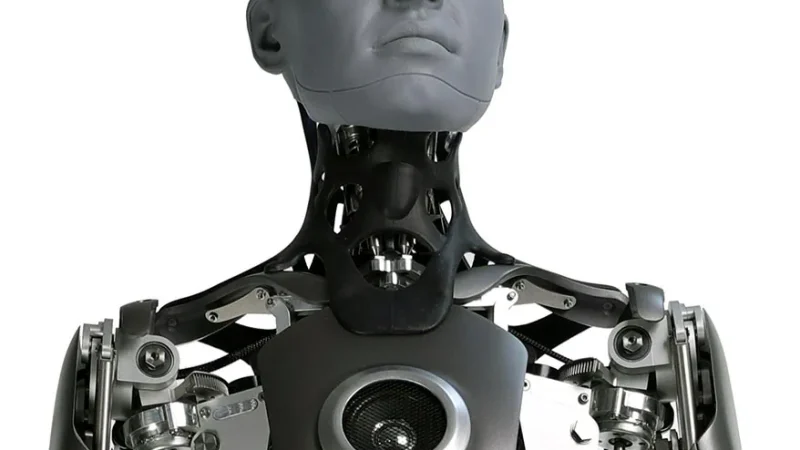
Humanoid robotics left the trade-show floor for factory floors and warehouses during 2025 and 2026. Which companies have really deployed units, which tasks fit, what real costs look like, and where humans remain unbeatable.
NPUs stopped being an accessory and became the component that defines real performance in laptops, phones, and small servers. A practical look at the hardware that rules 2026, which workloads pay off, and where the traditional GPU still wins.
Four and a half years after Rust officially entered Linux 6.1, with real Apple GPU and NVMe drivers in production and several public conflicts between maintainers, it is time for a sober technical balance. What works, what still costs, and where the next phase is heading.
After the 2021-2022 cycle, most blockchain projects have vanished from the radar, leaving only the ones that deliver real value. An honest inventory of which use cases work, which failed, and where blockchain is still a sensible idea.
After a decade of grandiose headlines, quantum computing enters this cycle with more honest metrics, thousand-physical-qubit machines, and the first serious signs of error correction at scale. It pays to separate what already works from what remains research.
Neural processing units have stopped being a marketing label on Snapdragon, Apple Silicon and AMD Ryzen AI laptops. Here is what you can actually do from code today, which tools are mature, and when it pays off to target the NPU instead of the CPU or GPU.
Fly.io has spent years selling the idea that deploying an application across several regions should be almost as simple as pushing an image and writing one config line. After several real projects on the platform, here is an honest read on what it delivers, what is missing, and who it is worth choosing over more classic options.
Garnet es el servidor de caché abierto por Microsoft Research que habla el protocolo de Redis pero está escrito en .NET 8 con un núcleo de almacenamiento orientado a hardware moderno. Tras casi dos años en público, muestra números interesantes y una arquitectura que merece mirarse con calma, aunque el ecosistema Redis siga siendo más maduro.
Tras la adquisición por Microsoft en 2019, Citus vivió un limbo comercial que terminó con Microsoft abriendo el código completo en 2022. Tres años después, la extensión de particionado para Postgres ha madurado y ofrece una ruta práctica para escalar sin abandonar el motor que ya conoces. Un repaso honesto.
OSV-Scanner se ha convertido en una referencia silenciosa para escanear dependencias open source. Su valor no está en el escaneo en sí, que muchas herramientas ofrecen, sino en su conexión directa con OSV.dev como fuente de verdad. Un análisis de por qué esto importa más de lo que parece.
Unikernels were promised as the future of cloud deployment back in 2015, then faded into obscurity soon after. Ten years later, Unikraft has reached a stable release and reads like a more mature, more useful take on that same idea. A review of what has changed.
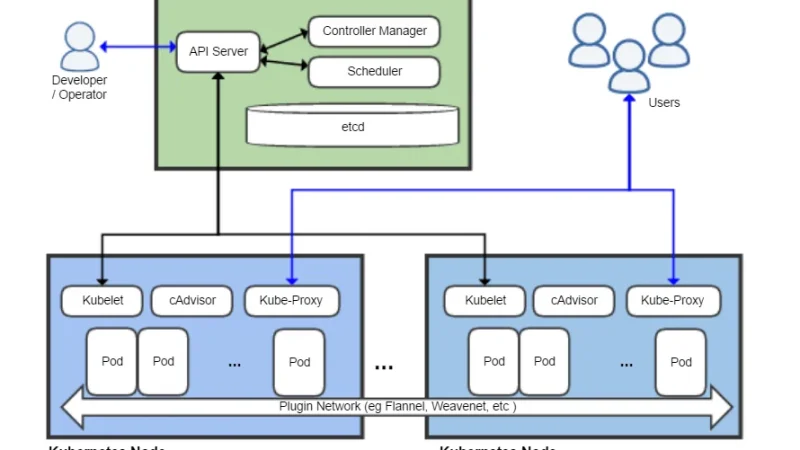
Kubernetes 1.34 ships with Dynamic Resource Allocation (DRA) graduating to stable, scheduler improvements, and CEL-based mutating admission policies that replace webhooks. A practical rundown of what is safe to upgrade now, what can wait, and what actually changes for teams running production clusters.
Six months after containerd 2.0 reached general availability there is enough real-world mileage to judge the migration from the 1.x branch in production. We cover what changes in the config file, what breaks on Kubernetes and Docker Swarm, and when planning the jump actually pays off.
Kubernetes 1.32 Penelope shipped in December and has been running in clusters for several months. It is a good time to look at which changes have aged well, which created extra work, and what lessons to carry into the jump to 1.33.
Rust entered the Linux kernel as an experiment in 2022. Three years on it has stable in-tree drivers, an increasingly polished internal API, and a first wave of contributors who treat the language as the default choice for new code.
Headscale es una reimplementación libre del plano de control de Tailscale. Con la versión 0.25 estable, es una opción sensata para mallas WireGuard privadas sin depender de la plataforma comercial. Cuento cómo, cuándo y dónde duele.
Deno 2.0 salió en octubre de 2024 con una apuesta clara: compatibilidad seria con npm, pnpm, package.json y node_modules, manteniendo la identidad del runtime. Medio año después, miramos qué ha supuesto para proyectos reales y dónde sigue cojeando.
NIST published the final post-quantum cryptography standards in August 2024. Six months on, it is time to move from headline to plan: crypto inventory, crypto-agility, a realistic timeline, and the typical mistakes of teams jumping in now.
WASI 0.3, also known as preview 3, was ratified on June 11, 2026, adding native asynchronous concurrency to the WebAssembly component model through streams, futures, and async functions. It fixes old fragmentation across languages and runtimes, enables real composition between Wasm services, and paves the way for cooperative threads planned in upcoming 0.3.x releases.
Meta publicó Llama 3.2 con modelos tan pequeños como 1B y 3B, pensados específicamente para ejecutarse en dispositivos. Análisis de qué pueden hacer realmente y cómo se comparan con las alternativas.
Cloudflare Workers turned eight in 2025 without slowing down: it now ships D1 for databases, R2 for egress-free storage, Durable Objects for distributed state, and Workers AI for running models without managing GPUs. It remains the fastest option for edge logic; for large in-memory processes or strict global consistency, other platforms fit better.
Qualcomm, Intel and AMD Copilot+ processors have normalised the presence of an NPU in everyday PCs. A 40 TOPS NPU can run quantised Phi-3 Mini drawing just 5-10 W, versus 40-50 W for a laptop GPU doing the same task. What actually changes for running AI models locally, and when it is worth it.
M3 and M4 solidified the Apple Silicon advantage: unified memory up to 128 GB shared across CPU, GPU, and Neural Engine; 12 to 16 hours of real battery life; and a 38-TOPS Neural Engine that runs large language models directly on the laptop. The practical difference for developers is measurable.
Vector is the Datadog observability agent, written in Rust with its own transformation language VRL. Typically 30-100 MB memory, handling logs, metrics, and traces from dozens of sources. The right choice when pipelines are too complex for Fluent Bit and a modern alternative to Logstash.
Terraform 1.6, 1.7, 1.8 y 1.9 han traído import blocks, removed, ephemeral values, un framework de tests nativo y el preview de stacks. Mientras tanto, OpenTofu consolida su fork tras el cambio a BSL.
IEC 62443 is the international cybersecurity standard for industrial control systems (ICS) and OT networks. Its four series blocks define security zones and conduits, four protection levels (SL 1-4) and seven foundational requirements. NIS2 pressure is accelerating adoption across Europe. IT teams need to master it to coordinate network segmentation, monitoring and incident response with OT environments.
eBPF-based continuous profiling captures CPU flame graphs for every process on a Linux node around the clock, without instrumenting code or restarting services, at under 1% overhead. Parca covers the whole cluster, Beyla adds automatic HTTP/gRPC metrics and traces, and Pyroscope brings native per-language detail to the most critical services.
In August 2024, NIST published its first finalized post-quantum cryptography standards: FIPS 203 (ML-KEM) for key exchange, FIPS 204 (ML-DSA) for digital signatures, and FIPS 205 (SLH-DSA) as a hash-based alternative. They replace RSA and ECDSA before a quantum computer can break them, and hybrid implementations are already live in Chrome and Cloudflare.
Kubernetes 1.30, released in April 2024, brings ValidatingAdmissionPolicy to general availability, eliminating the need for external webhooks for CEL-based admission policies. It adds pod scheduling readiness to control when a pod enters the scheduling cycle, and job success policy to define which index combination counts as success in distributed indexed Jobs.
Docker Scout continuously scans container images against CVE databases including NVD and ecosystem-specific advisories, and recommends base-image changes to remove vulnerabilities. Built into Docker Desktop and Hub, it competes with Trivy, Grype and Snyk. Best fit for teams already running end-to-end on the Docker ecosystem.
Grafana Beyla is an eBPF agent that automatically instruments existing applications without touching their code: it observes kernel syscalls and generates OpenTelemetry traces and RED metrics for services written in Go, Java, Python, Node, and Rust. It gives broad, immediate coverage, but it does not replace the manual SDK for business metrics and internal logic.
Qualcomm Snapdragon X Elite is the first ARM chip to match Apple M3 performance in Windows laptops, with 22+ hours of battery life and a 45 TOPS NPU for on-device AI. Most software runs well via the Prism emulator, though it is not yet ready for anti-cheat gaming or specialized x86 workloads.
Cloudflare Workers is no longer an isolated edge function. In 2024, together with KV, D1, R2, and Durable Objects, it forms a complete platform that matches AWS on latency and drops egress fees, though it still falls short on long-running compute and the mature managed databases AWS offers.
OpenTofu reached GA in January 2024 as an open-source Terraform fork under MPL 2.0, with Linux Foundation governance. Six months later, it is a stable drop-in replacement: same configs, same state format, same CLI. Version 1.7 adds native state encryption, the first real technical edge over Terraform.
Rust joined Linux mainline in version 6.1 (2022), and by 6.9 (2024) it already ships experimental drivers, including Asahi's GPU driver for Apple Silicon. In C/C++ projects like Chromium, around 70 percent of serious security bugs are memory-safety bugs, the real reason kernel maintainers are debating whether to adopt it.
WASI 0.2 reached GA in January 2024, bringing WebAssembly's Component Model into production: typed WIT interfaces that let Rust, Go, and JavaScript code compose without manual glue code. That shift makes edge functions with sub-1 ms cold start, secure plugins, and untrusted-code sandboxing viable today, though it does not replace containers for traditional apps.
Parca is a continuous profiling tool based on eBPF that samples CPU usage across an entire Kubernetes cluster around the clock, without instrumenting application code and with under 1% overhead. It catches performance regressions before production and makes flame graphs practical for everyday debugging.
Carbon-aware computing runs flexible workloads when grid electricity emits less CO2, cutting emissions 10-30% without changing infrastructure. Grid carbon intensity varies up to 16x by hour and region; tools like Electricity Maps, WattTime and the Carbon Aware SDK make that scheduling possible with real grid data.
Redis moved to dual SSPL/RSAL licensing in March 2024, no longer meeting the OSI open-source definition. Valkey emerged as a BSD 3-Clause fork backed by AWS, Google Cloud, Oracle, and the Linux Foundation, fully protocol-compatible with Redis 7.2. Migrating is almost always trivial: swap the binary or the Docker image.
cAdvisor is still embedded in kubelet and covers surface metrics, but falls short for production Kubernetes. The modern minimum stack pairs it with kube-state-metrics, node-exporter, Prometheus, and Grafana as a base, eBPF for deep network and syscall visibility, and OpenTelemetry for application context.
Llama 3 is the open-model family Meta released on April 18, 2024, in 8-billion and 70-billion-parameter sizes, trained on 15 trillion tokens. The 70B beat Claude Sonnet, Mistral Medium, and GPT-3.5 in Meta's own human evaluation, and its licence allows free commercial use up to 700 million monthly active users.
2 min1994.5
We use first- and third-party cookies to analyze site traffic. You can accept them, reject them, or configure your choice.
Learn more about cookies
Cookie preferences
NecessaryEssential for the site to work. Always on.
AnalyticsHelp us understand how the site is used (Google Analytics).