Startup Funding in 2024: The Uneven Recovery
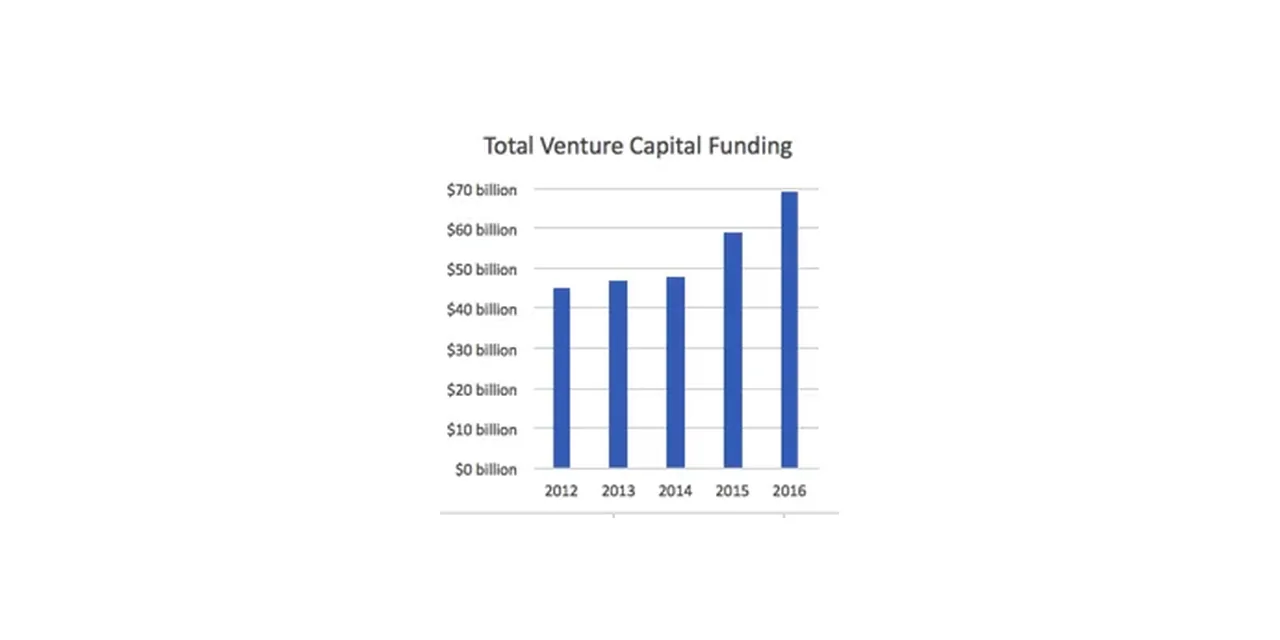
Table of contents
- Key takeaways
- The general state in numbers
- Where capital goes
- Generative AI
- Climate tech
- Defence and security
- Where it is harder
- Updated sizes and stages
- What investors look at now
- Due diligence in 2024
- Preparing the round
- Alternatives to VC
- Conclusion
- Frequently asked questions
- How long does it take to close a funding round in 2024?
- What burn multiple do investors expect before they invest?
- What ARR do I need to raise a Series A or Series B now?
- Sources
The 2022-2023 venture capital winter left real marks: fallen valuations, down rounds, startups closing, and a broad posture of caution after the 2020-2021 boom. Entering 2024, things are moving, but unevenly. Generative AI absorbs a disproportionate share of capital. Other sectors remain slow.
This article breaks down where money is going, what investors expect now, and how to prepare a raise in this context.
Key takeaways
-
The VC market in 2024 is better than 2023 but still demanding: 3-6 months due diligence, less favourable terms, lower multiples.
-
Generative AI, climate tech, and defence attract disproportionate attention; consumer, crypto, and DTC remain depressed.
-
"Burn multiple" is the new central metric: burn / net ARR added; 2x acceptable, 1x good.
-
Due diligence now includes code review, calls with ex-employees, and exhaustive unit-economics analysis.
-
A well-run round takes 3-6 months in this environment; the "raise in 3 weeks" era is past.
The general state in numbers
PitchBook data sets the context:
-
2021: record year, $621B global VC.
-
2022: drop to ~$483B.
-
2023: ~$345B, lowest level since 2018.
-
Q4 2023 / Q1 2024: signs of selective recovery.
What those numbers mean in practice: funds have capital (dry powder exceeds $300B), but fewer deals close. Those that do close face more scrutiny, slower due diligence (3-6 months instead of 4-6 weeks in 2021), less favourable terms, and lower valuations especially at Series B onwards.
Where capital goes
Three sectors attract disproportionate attention in this cycle:
Generative AI
Roughly 35-40% of all 2023 VC went to AI companies. The trend continues. Most active subsectors: foundation models (mega rounds: OpenAI, Anthropic, Mistral, Cohere), vertical AI applied to niches (legal, healthcare, finance), tooling and infrastructure (vector DBs, orchestration, evaluation), and B2B apps with AI at their core.
One important caveat: a large share of those investments goes to companies without sustainable differentiation ("wrapping GPT-4"). Mature VCs filter for real moat: proprietary data, custom fine-tune, distribution, or deep integration. For the patterns that actually work, see profitable niche AI startups.
Climate tech
Quieter but with real momentum in energy storage (batteries, hydrogen), carbon capture and verifiable offsets, agritech and alternative protein, and grid tech and energy efficiency. Specialist funds (Breakthrough Energy, Lowercarbon) and generalists are active. European sovereign funds prioritise climate.
Defence and security
Previously taboo in European VC, now accepted post-Ukraine. Helsing[1], Quantum Systems[2], and Skydio[3] have raised large rounds. Governments provide co-financed funds.
Where it is harder
Sectors still slow: consumer / B2C discretionary (except gaming and social), crypto (hibernating post-FTX; only serious infrastructure / L2 attracts capital), and DTC retail (thin margins and generalised VC antipathy). The list also holds generic B2B SaaS without AI (saturated; only works with clear differentiation) and traditional mediatech (displaced by the attention economy).
Companies in these sectors raise smaller rounds, on worse terms, and after more time in market.
Updated sizes and stages
Ballpark figures in 2024:
-
Pre-seed: $500k-2M for ~15-25% equity.
-
Seed: $2-6M for ~15-20%.
-
Series A: $8-20M for ~20-25%.
-
Series B: $20-60M.
-
Series C+: $50M+.
In AI, these numbers skew upward. A frontier AI "seed" can be $20M or more.
What has changed vs 2021: seed is now more competitive than Series A. The Series A bar requires clearer PMF, $1-3M ARR, and 20%+/month growth; Series B requires $10M+ ARR with demonstrated capital efficiency.
What investors look at now
The rulebook has changed. Current priorities:
-
Capital efficiency. Burn multiple (burn / net ARR added) must stay low: 2x acceptable, 1x good.
-
Growth with fundamentals. Expensive growth purchased via marketing is devalued.
-
Clear path to profitability. "Growth to the moon" no longer suffices.
-
Defendable moat. Proprietary data, network effects, switching costs.
-
Large but realisable TAM. Inflated TAMs no longer pass.
-
Experienced team. First-time CEOs in capital-intensive sectors face more friction.
Due diligence in 2024
The changes from 2021 are substantial:
-
Deep reference checks: investors call ex-employees and ex-customers, not just the references you provide.
-
Codebase review: fund CTOs review the code. Bad code is a red flag.
-
Exhaustive unit-economics analysis.
-
Deeper legal review: IP, contracts, compliance.
-
Customer calls: 5-10 calls with real customers, not the ones you select.
Expect 2-4 months of DD as normal. Founders who come in with clean cap tables, solid documentation, and defensible unit economics move through this stage noticeably faster.
Preparing the round
A practical runbook by stage:
Six months out: tidy metrics, financials, and product. Resolve technical debt or any issues that would surface in DD.
Three months out: teaser deck and full deck. Build your target investor list with research on check size, thesis, and existing portfolio.
Two months out: warm intros. First coffees with VCs.
Month one: official pitches, term sheets where there is genuine interest.
Months two and three: deep DD with lead investors, terms negotiation.
Months three and four: close, legal documentation, wire.
A well-run round takes 3-6 months today. For founders building outside traditional startup hubs, the alternatives to the Silicon Valley ring cover how fundraising dynamics differ when you are not in the default network.
Alternatives to VC
If VC is not the right fit for any reason, there are growing options:
-
Revenue-based financing (Pipe, Capchase): useful for SaaS with stable ARR.
-
Venture debt: extends runway without dilution.
-
Bootstrapping with profitability: valid if the market allows it.
-
European grants: Horizon, EIC for deep tech.
-
Corporate VC: strategic, with different terms and interest alignment.
VC is one funding tool among others, not the only one or necessarily the best for every startup.
Conclusion
The capital market in 2024 is healthier than 2023, but still demanding. Founders who understood the shift (capital efficiency, serious DD, real-metric expectations) have an edge. AI dominates capital, but not all "AI" attracts; only with real moat.
Climate and defence are growing opportunities. For startups outside these tailwinds, the game is building solid fundamentals before going out to raise.
Frequently asked questions
How long does it take to close a funding round in 2024?
A well-run round takes 3 to 6 months; the era of raising in 3 weeks is past. Due diligence alone takes 2 to 4 months, versus 4-6 weeks in 2021. It now includes deep reference checks with ex-employees and ex-customers, codebase review by fund CTOs, and exhaustive unit-economics analysis. It also includes deeper legal review of IP and contracts, and 5 to 10 calls with real customers that you do not get to select.
What burn multiple do investors expect before they invest?
Burn multiple, calculated as burn divided by net ARR added, has become the central metric: 2x is considered acceptable and 1x good. It sits alongside the other new priorities in the rulebook, such as growth with fundamentals rather than expensive growth bought through marketing. The list also holds a clear path to profitability and a defendable moat built on proprietary data, network effects, or switching costs. The last one is a large but realisable TAM, because inflated TAMs no longer pass.
What ARR do I need to raise a Series A or Series B now?
For Series A the bar requires clearer PMF, $1-3M ARR, and 20%+ monthly growth, with rounds of $8-20M for roughly 20-25% equity. Series B requires $10M+ ARR with demonstrated capital efficiency, in rounds of $20-60M. In AI these numbers skew upward: a frontier AI seed can be $20M or more.