After two years watching every product invent its own interface for talking to an agent, by January 2026 a stable design consensus is emerging about which patterns work, which do not, and what the average user already expects. Time to write down what has settled.
Los equipos de producto están tentados de sustituir entrevistas y tests reales por síntesis de IA. Dos años de experiencia ya permiten separar dónde la IA ayuda de verdad y dónde genera una falsa sensación de entender al usuario.
A year after chat stopped being the only acceptable way to talk to an agent, UI patterns built specifically for agent tasks are emerging. I go through the ones starting to stick and the ones that are just cycle fashion.
Desde que Microsoft abrió GraphRAG, el patrón de usar grafos sobre tus propios datos ha pasado de experimento académico a técnica con aplicaciones prácticas. Reflexión sobre cuándo compensa, cómo se monta y qué errores se repiten.
The AI features Figma has rolled out since Config 2024 are changing how product design teams work. A look at what each feature delivers, what remains human work, and which habits are taking hold across teams.
The Kano model classifies product features into three types: basics (what customers take for granted), performance (where more investment yields more satisfaction), and emotional delighters (unexpected extras that build loyalty). Knowing which category each feature belongs to sharpens every roadmap decision.
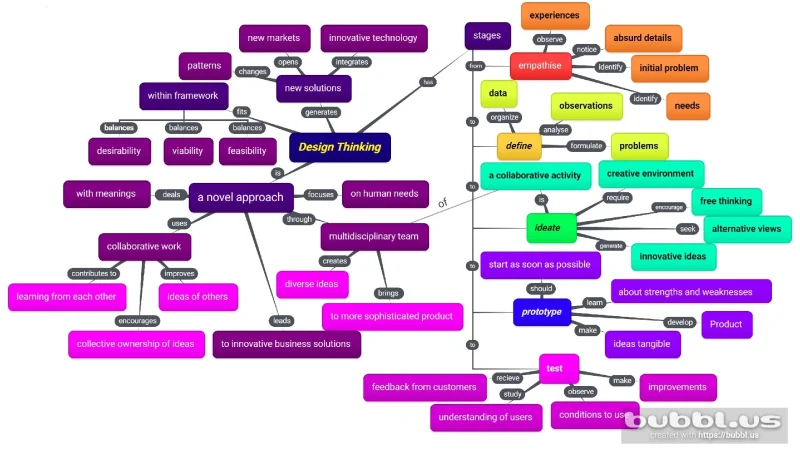
Design thinking is a user-centred problem-solving methodology structured around five iterative phases: empathise, define, ideate, prototype, and test. Following the Design Council Double Diamond model, it first identifies the right problem, then designs the right solution. Applicable to digital products, internal processes, and business models alike.
Useful startup metrics are the data points that let you evaluate a company's real performance: general performance metrics (MRR, retention, churn), area KPIs (CAC, LTV, NPS), and the AARRR framework, always prioritising retention and the LTV:CAC ratio over vanity metrics.
5 min1904.6
We use first- and third-party cookies to analyze site traffic. You can accept them, reject them, or configure your choice.
Learn more about cookies
Cookie preferences
NecessaryEssential for the site to work. Always on.
AnalyticsHelp us understand how the site is used (Google Analytics).