Artificial Intelligence
RAG with Postgres and pgvector in production: from PoC to SLO
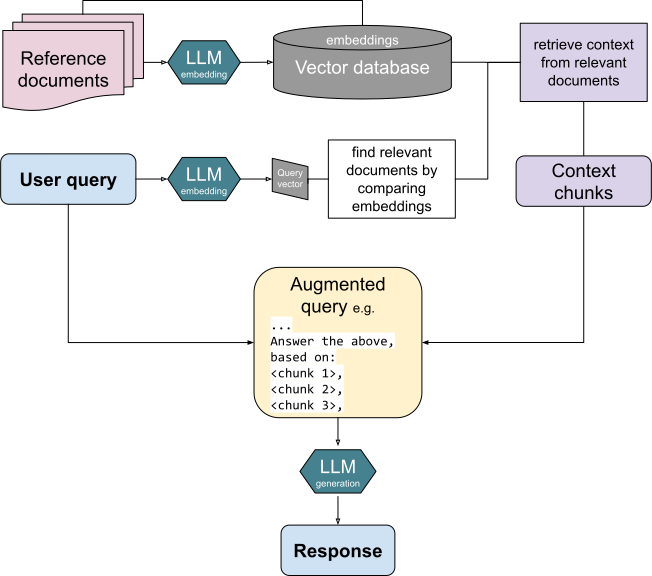
Embeddings, HNSW indexing, reranking, evaluation, context window, latency under load. Full stack with code and measurable SLOs.
Category
Methodologies that respect your time: lightweight processes for small teams.
Embeddings, HNSW indexing, reranking, evaluation, context window, latency under load. Full stack with code and measurable SLOs.
This guide shows how to build a production-ready agent with the Anthropic SDK in Python: the tool-use loop with the Messages API, streaming with backpressure via a bounded queue, prompt caching with cache_control, your own MCP server registered with the Claude Agent SDK, OTel GenAI traces, and a non-root Docker container ready for production.
Using an LLM to judge another LLM became widespread in 2024 and remains, in 2026, the only scalable way to evaluate qualitative quality in LLM systems. It is reliable when judge-human correlation exceeds 0.7 on 30 cases and gets recalibrated quarterly; below that threshold, do not trust the number.
Opus 4.7 launched as Anthropic's most capable model, with emphasis on long-horizon agentic work. After two months of intensive use, these are the practical changes versus Opus 4.6.
The first invoice for a production agent usually runs double or triple the estimate. This article walks through five real levers, in priority order, caching, routing, context control, batching, and telemetry, to cut cost without touching perceived quality.
After fourteen months testing AI-integrated DevOps tools across several teams, the stack that stays is small: Claude Code, Cursor, and Aider for code; PagerDuty AIOps, Datadog Bits AI, and Grafana Assistant for alert triage; and OpenTofu with OPA for infrastructure generation bounded by policy rules.
AI agents fail in production, and what matters is how you respond in the first twenty minutes. This runbook covers severity classification, isolating before investigating, purging contaminated memory, communicating without inventing facts, and turning every incident into a regression test before closing it as done.
LLM red teaming has gone from an esoteric activity to a mandatory practice. With the OWASP Agentic Top 10 and the CSA Agentic AI Red Teaming Guide converging on shared vocabulary, this is the operational playbook any team deploying agents needs to have.
Después de año y medio llenando tableros con agentes en producción, la pregunta que separa equipos que envían fiable de los que van a ciegas sigue siendo la misma: ¿cómo mides que el agente está funcionando?
The RICE framework is a prioritization methodology created by Intercom that produces a score by combining four factors: Reach, Impact, Confidence, and Effort. It divides the product of the first three by the estimated effort in person-months, so it can compare unrelated initiatives using one objective number.
Prompt engineering has moved from viral tricks to a discipline with reproducible patterns: few-shot, chain-of-thought, and structured output with function calling. Teams treating prompts like code (versioned, tested, and monitored) get consistently better results than those who improvise.
Two years after the final NIST standards, post-quantum migration is no longer hypothetical. What has actually been migrated, what remains stuck, where the real operational problems lie, and how the timelines look from April 2026.
After two years of pilots and a year of agents in production, governance has moved from an aspirational committee to an operational control. What audits ask for, what broke in 2025, and which guardrails absorb most incidents.
Durante 2025 cientos de equipos pusieron agentes IA en producción real. A principios de 2026, con datos suficientes, emergen lecciones consistentes sobre qué falla, qué funciona, cuánto cuesta y qué tareas no encajan. Repaso ordenado para equipos que empiezan ahora.
Tres años después de que platform engineering se convirtiera en palabra de moda, el polvo ha caído. Unas pocas empresas tienen plataformas internas que de verdad aceleran al desarrollo, muchas montaron un portal Backstage vacío y algunas volvieron a DevOps clásico. Análisis de qué distingue a las que ganaron.
La factura de IA en las empresas ha dejado de ser anecdótica. Entre tokens de modelos frontera, GPUs reservadas que nadie usa y pipelines RAG con cachés mal configuradas, muchos equipos pagan diez veces lo que deberían. Guía de FinOps específico para IA sin relatos promocionales.
Sixteen months after Anthropic first shipped computer use, with browser-use, OpenAI Operator and Gemini Computer Use all pushing in parallel, agents that drive the browser and desktop have moved from demo to real workflows. Time to review which patterns survive when you run them daily in production.
A selection of postmortems published between 2025 and 2026 by teams running AI systems in production reveals repeated patterns: guardrail failures, silent model drift, hidden vendor dependency, and a collection of near-misses worth distilling.
Dos años de experimentación con modelos generativos aplicados a descubrimiento de producto han dejado prácticas concretas útiles y otras tantas que se descartan. Un repaso honesto de qué ha funcionado, qué ha fracasado y cómo incorporar IA al ciclo de discovery sin corromper sus fundamentos.
A principios de 2026, varias plataformas de orquestación incluyen carbon-aware scheduling como opción por defecto o muy visible. Con meses de datos reales, toca evaluar si la promesa de reducir emisiones sin dañar rendimiento se cumple y en qué escenarios.
Los cuadros de mando con IA llevan un par de años prometiendo detección de anomalías mágica y causa raíz automática. La realidad es más modesta pero también más útil, si se sabe separar el ruido del valor real. Repaso honesto de qué funciona y qué no.
Large language models have spent two years promising effortless documentation for code, APIs and architecture. After watching dozens of projects try it, clear patterns emerge for where it works and where it just becomes more debt.
Guardrails frameworks promise to filter language-model inputs and outputs to block data leaks, harmful content, or hallucinations. After evaluating four of the most popular ones in production, I cover what they actually do, what latency and billing cost they add, and when they pay off over simpler controls.
Agents that chain calls to models, tools and memory are hard to debug without instrumentation designed for them. After a long year running agents in production, I cover what to measure first, which standards are consolidating, and which costly mistakes are avoided by getting the traces right from the start.
After three years of expansion and an overheated ecosystem around the term, platform engineering enters 2025 in a consolidation phase. The internal platforms that survive are the ones that understood their real function; those that mistook the label for the solution are dismantling their teams or cutting them drastically.
Probar sistemas que incluyen modelos de lenguaje rompe la primera regla del testing: la misma entrada da la misma salida. Analizo las estrategias que han funcionado tras un año largo integrando IA en productos reales, por qué los tests deterministas tradicionales no bastan y cómo plantear un cinturón de pruebas que capture regresiones sin bloquearse en la varianza.
Four years ago it was an academic curiosity. Today, scheduling workloads by grid carbon intensity is a built-in option in Kubernetes, in several cloud provider services, and in CI tooling. We look at what genuinely changed and what is still more promise than practice.
Los equipos de producto están tentados de sustituir entrevistas y tests reales por síntesis de IA. Dos años de experiencia ya permiten separar dónde la IA ayuda de verdad y dónde genera una falsa sensación de entender al usuario.
OpenSSH added hybrid post-quantum key exchange with ML-KEM in version 9.9 and made it the default algorithm in 10.0. The question is no longer whether to migrate SSH to post-quantum, but how to do it without breaking old clients: enable the hybrid mode, keep a classical fallback, and verify with ssh -v that the active algorithm is the right one.
Casi nueve meses después del lanzamiento de Computer Use, algunos equipos lo han llevado a producción para tareas reales. Dónde funciona, dónde todavía no conviene, y qué patrones están emergiendo para que un agente que maneja ratón y teclado no acabe siendo más problema que solución.
AI agents are starting to earn a real place in continuous integration pipelines: reviewing diffs, proposing fixes, generating missing tests. Six months of real-world use to separate the patterns that work from the ones that end up costing more time than they save.
Continuous profiling with eBPF samples every process's execution stack every few milliseconds without touching the code, then stores the history so you can compare last week's performance with today's. The cost measured in production runs between 1% and 3% of CPU, and it pays off most in databases, API gateways and high-concurrency services.
Han pasado siete años desde que Google publicó el Workbook, y buena parte del libro no ha envejecido. Repaso los patrones que de verdad aplicamos en equipos pequeños y los que resultaron ser cultura de campus.
In AI systems the real cost is not EC2 instances but input tokens in RAG and agents, chained tool calls, and frequent reindexing; those vectors, plus unattributed experimental spend, concentrate most of the monthly production bill.
Un sistema RAG sin evaluación continua se degrada en silencio. Los índices cambian, los modelos se actualizan, los usuarios preguntan cosas nuevas. Este es un repaso práctico de qué métricas vigilar y cómo montar el cuadro de mando que avisa antes del incidente.
Después de años acumulando SBOMs, el cuello de botella es filtrar qué CVEs afectan de verdad. VEX aparece como la pieza que convierte el ruido en señal, y en 2025 empieza a tener adopción real en pipelines de supply chain.
AI agents have moved from a lab curiosity to serious SDKs from three major providers. A reflection on moving from the flashy demo to an internal use case that shifts a real, measurable metric.
Semgrep has grown into one of the most pragmatic static analyzers in the ecosystem. A look at why it works where other SAST tools fail, and how to fit it into a pipeline without turning it into noise.
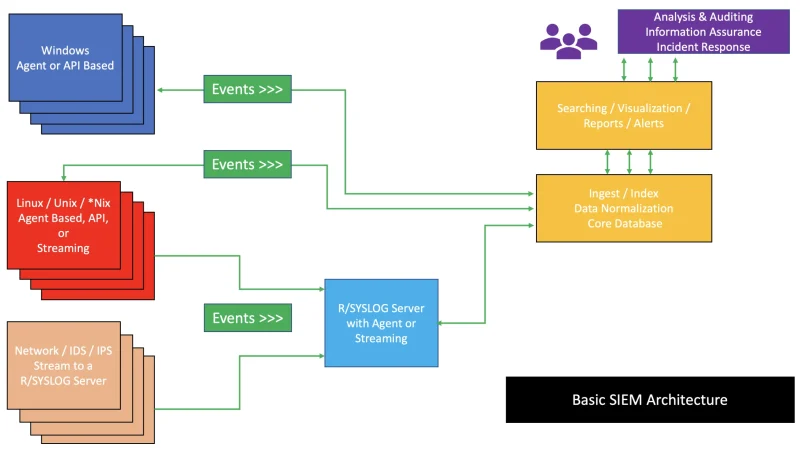
Two years after Zero Trust stopped being a marketing word, it is worth looking at how it connects with the SIEM teams run day to day. A look at useful signals, avoidable noise, and the decisions that actually change security posture.
Con las primeras obligaciones del AI Act europeo ya en vigor, la gobernanza de la IA en empresa deja de ser teórica. Qué comités montar, qué políticas escribir y qué auditar, desde la experiencia de varias implantaciones.
Dependabot and Renovate chase the same goal with different philosophies. I compare both after years running them on my own and client projects, covering when one fits better and when the other suits a team's workflow more.
A year ago open weights were a gamble; today they are a real production option. I review what has worked, what has not, and how Llama, DeepSeek, Qwen, and Mistral are fitting into enterprise architectures that used to depend on closed APIs.
Two years into living with AI assistants in the editor, habits have settled. A reflection on what has changed in day-to-day coding, what has been learned, and what was still left to discover.
Three years after RLHF became popular, the model-alignment field is far richer. A review of RLHF, DPO, and newer methods such as KTO and ORPO, with criteria for choosing between them.
SLSA v1.0 splits software supply-chain security into three tracks (Build, Source, and Dependencies), of which only Build is stabilized, with three levels: L1, L2, and L3. If you build in GitHub Actions, reaching L2 with Sigstore-signed provenance takes a few hours and is the starting point I recommend to any team.
Measuring RAG quality rigorously takes more than skimming a handful of answers: it requires objective metrics (faithfulness, relevance, context precision, and coverage), a golden set of hundreds of curated questions, and regular human validation of the LLM judge to avoid misleading conclusions.
Software is not immaterial: every request and database query consumes electricity with a carbon footprint. The Green Software Foundation encodes eight practical principles to reduce that footprint without rewriting systems. The result is a more efficient service, a lower cloud bill, and readiness for ESG regulation.
LLM applications need three distinct observability planes: prompt and response traces for debugging hallucinations, per-token and per-feature cost tracking, and response quality evaluation. Mature tools like Langfuse, LangSmith, and Helicone cover all three planes with specific instrumentation.