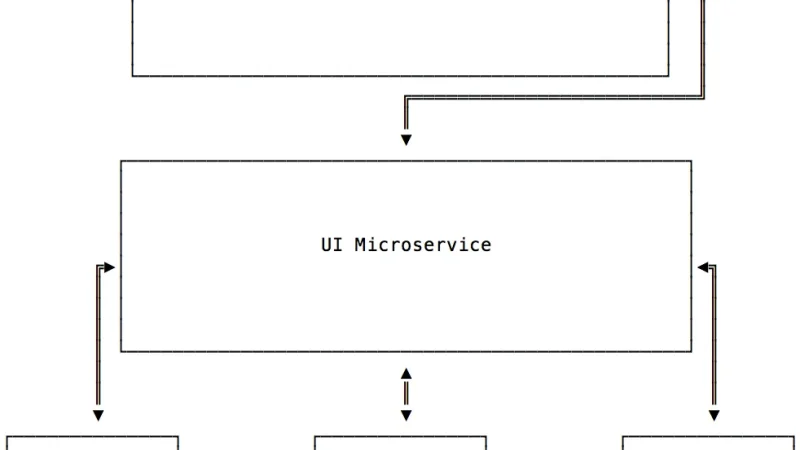
A service mesh adds mTLS, uniform observability, and traffic management between microservices without modifying application code. The ecosystem has consolidated: Istio is the most complete and complex, Linkerd prioritises simplicity with Rust proxies, and Cilium delivers sidecarless service mesh via eBPF.
Rust has been in the Linux kernel since version 6.1, though adoption is measured and deliberate. The Apple AGX GPU driver for Asahi Linux is the most prominent real upstream example. The goal is to eliminate an entire class of memory-safety bugs in new drivers without rewriting existing C code.
Rust is no longer just a systems language: with tokio as the async runtime and axum as the HTTP framework, teams build high-performance backend services with compile-time type checking. It pays off in gateways, proxies and event processors; for typical CRUD over Postgres, Go or Node.js remain more productive.
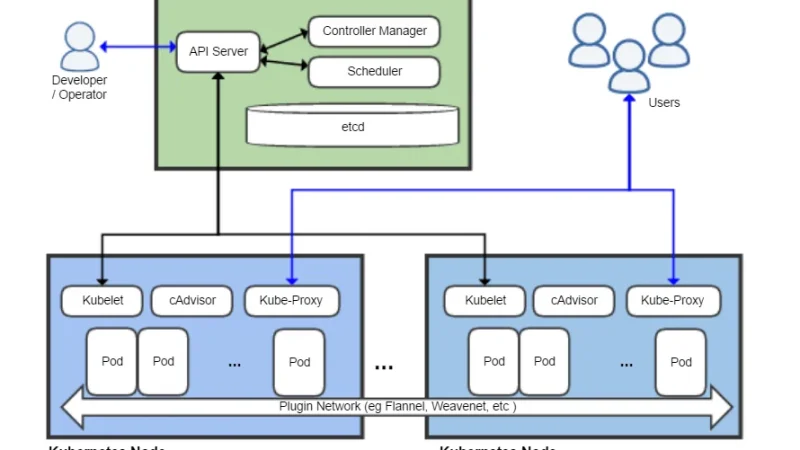
Kubernetes 1.27 ("Chill Vibes"), released in April 2023, makes SeccompDefault stable so pods get safer syscall defaults automatically, moves KMS v2 to beta with rotatable encryption keys for etcd secrets, and stabilises scheduling gates. It also removes PodSecurityPolicy for good: without migrating to Pod Security Admission first, the upgrade is blocked entirely.
Apache Kafka has consolidated in 2023 as the enterprise event backbone thanks to KRaft, now GA and removing the ZooKeeper dependency. The most mature patterns are CDC with Debezium, event sourcing, and stream processing with Kafka Streams or Flink, while Redpanda and Pulsar compete as real alternatives depending on the case.
OpenTelemetry is the CNCF project, graduated in May 2026, that unifies logs, metrics, and traces under one SDK and the OTLP protocol, without locking you into a single backend. Traces have been stable since 2021 and metrics since 2023; logs are still maturing, but already worth adopting on new projects.
Cilium replaces iptables with eBPF programs loaded directly into the Linux kernel, substituting O(n) linear chains with O(1) hash lookups. Documented benchmarks show up to 50% lower p95 latency, 2-3x more throughput, and 70% less kernel CPU in large Kubernetes clusters.
Kafka gets the headlines as the byword for modern messaging, but RabbitMQ remains the better choice for task queues with retries, asynchronous RPC, and pub/sub with complex routing. This guide compares both against NATS, walks through classic patterns and production mistakes, and helps you decide based on the actual use case rather than the trend.
With 30 or more microservices, end-to-end tests become slow, fragile and impractical. Pact implements consumer-driven contract testing: the consumer defines what it expects, the provider verifies it in its own CI pipeline, with no shared environment needed. The result is integration proof in seconds, not minutes.
Kubernetes 1.28 introduces native sidecar containers in alpha via KEP-753: adding restartPolicy Always to initContainers ensures correct startup and shutdown ordering. It fixes Jobs that never terminate. Istio, Linkerd, and observability agents like Fluent Bit are the primary beneficiaries.
Fine-tuning your own LLM pays off in three cases: you need a very specific style or voice, a rigid structured output format, or you want lower cost and latency from a small specialised model. LoRA and QLoRA have cut the GPU cost, but preparing data and running the model in production are still expensive. For everything else, RAG and prompt engineering are usually enough.
OpenAI Code Interpreter extends ChatGPT Plus with an isolated Python sandbox: it runs code on demand, reads files you upload (CSV, Excel, PDF, images, ZIPs) and returns results plus charts within the same chat. Sessions are ephemeral and offline, but remarkably effective for exploratory ad-hoc analysis without spinning up a notebook.
Choose modular architecture when your team has fewer than ten people and ships the system as a single unit; choose microservices when separate teams need to deploy independently or when specific components require very different scaling, in exchange for higher operational complexity.
4 min2674.5
We use first- and third-party cookies to analyze site traffic. You can accept them, reject them, or configure your choice.
Learn more about cookies
Cookie preferences
NecessaryEssential for the site to work. Always on.
AnalyticsHelp us understand how the site is used (Google Analytics).