The idea of UI generated on the fly instead of pre-built reached production in 2025. After a year of real-world use, the balance is more nuanced than the initial enthusiasm suggested.
Claude Code leads long-horizon agentic work, Cursor wins for fast daily interactive editing, Aider dominates CI-pipeline automation, and GitHub Copilot fits teams built around GitHub PRs; Windsurf competes with fresh traction. After a year using all five hard, the most productive combination for most people is still Claude Code plus Cursor.
Kubernetes 1.35 GA consolidates three releases of work: native sidecars with full lifecycle management, generalised DRA for FPGAs and NPUs, and a scheduler that cuts resource waste by 15-25% in heterogeneous clusters. An operations-side balance sheet: what to enable now, what to watch before migrating, and what path to follow from 1.30.
Skills package reusable capabilities; subagents isolate bounded-task execution. Together they form the most effective pattern for composing complex agents in 2026.
The Model Context Protocol, proposed by Anthropic in late 2024 and adopted through 2025-2026 by Anthropic, OpenAI, Google, and the open-source community, already has proven operational patterns: separating generic servers from custom ones, explicit per-tool policies, credentials kept outside the model, prefixed composition, and contract tests. This is the state of the art in 2026.
Hybrid RAG in 2026 combines dense and lexical search fused with RRF, cross-encoder reranking over the top-50 candidates, structure-aware chunking, and continuous evaluation with Ragas or TruLens. It is the pattern that survives in serious production systems three years after the initial embeddings boom.
Kubernetes won the orchestration battle, but Docker Swarm stays maintained inside Docker Engine and makes real sense for small teams without dedicated SRE, self-hosted stacks on 1-5 VPS, and edge mini-clusters. In those contexts, Swarm's minimal learning curve and low operational cost outweigh Kubernetes's advanced features.
El concepto de Agent OS pasó del slide al despliegue en 2025. Seis meses en producción dejan patrones visibles: qué arquitecturas funcionan, dónde se rompe el modelo y qué aporta frente a correr agentes sobre pila existente.
A year after GraphRAG left the lab, one statistic holds: it works where corporate information has dense relational structure, fails where there are only loose documents. Patterns, ingestion costs, and architectural decisions that have survived a year of real deployment.
The AI tool stack a developer uses in 2026 looks nothing like it did eighteen months ago. Agentic editors, review tools, terminal agents, and test assistants have settled into recognizable roles. A practical guide by category.
Twenty months after the initial announcement, Model Context Protocol went from curiosity to de-facto standard among agent clients and servers. What is available, which servers are worth it, which problems remain open, and how it compares to earlier protocol maps.
Tres años después de que platform engineering se convirtiera en palabra de moda, el polvo ha caído. Unas pocas empresas tienen plataformas internas que de verdad aceleran al desarrollo, muchas montaron un portal Backstage vacío y algunas volvieron a DevOps clásico. Análisis de qué distingue a las que ganaron.
Four and a half years after Rust officially entered Linux 6.1, with real Apple GPU and NVMe drivers in production and several public conflicts between maintainers, it is time for a sober technical balance. What works, what still costs, and where the next phase is heading.
After the 2023-2024 hype cycle led by Apple Vision Pro, the 2025 valley of disillusionment, and the quiet but real consolidation of Meta Quest 3S and the WebXR stack, it is time to assess honestly where extended reality stands. What works, what has died, what is still alive.
WASI preview 3 llegó como estándar estable a finales de 2025 y ha tenido unos meses para demostrar si realmente desbloquea los casos que preview 2 se quedaba cortos. Recorrido honesto por adopciones reales, bibliotecas maduras y patrones que empiezan a funcionar en producción.
After two years watching every product invent its own interface for talking to an agent, by January 2026 a stable design consensus is emerging about which patterns work, which do not, and what the average user already expects. Time to write down what has settled.
Six months after A2A landed at the Linux Foundation, and after several implementation cycles from Google, Microsoft, and open projects, what version 1 of the protocol means and whether it is safe to build on yet.
Con 1.34 liberado en agosto de 2025 y el ciclo de 1.35 en su última fase de congelación de funciones, qué llegará estable, qué quedará en beta, qué nos interesa a quienes mantenemos clústeres pequeños o medianos y qué podemos ignorar sin culpa hasta el siguiente ciclo.
La integración de WebAssembly dentro de containerd como tiempo de ejecución alternativo ha madurado. Ya es posible desplegar cargas mixtas Linux y Wasm en el mismo clúster de Kubernetes con argumentos operativos sólidos. Cuándo compensa y cuándo no.
La obligación del EAA entró en vigor el 28 de junio de 2025. Seis meses después tenemos ya primeros expedientes sancionadores, criterios de enforcement y lecciones operativas para equipos que aún corren detrás del calendario. Lo que sí se audita y lo que todavía no.
With MCP solving the agent-to-tool layer, a parallel problem surfaces: how do two agents from different vendors communicate with each other. Google's Agent2Agent protocol, donated to the Linux Foundation in June 2025, tries to fill that gap with an open standard.
Neural processing units have stopped being a marketing label on Snapdragon, Apple Silicon and AMD Ryzen AI laptops. Here is what you can actually do from code today, which tools are mature, and when it pays off to target the NPU instead of the CPU or GPU.
gVisor interpone un kernel en espacio de usuario entre el contenedor y el anfitrión. Después de años en producción en Google y adopción creciente en plataformas serverless, merece una lectura honesta sobre cuándo compensa frente a microVMs y runtimes clásicos.
A caching proxy in front of a language model can cut the token bill significantly, but it introduces subtle risks if the design is not careful. Which cache types work in production, where the usual traps sit, and how to add them without degrading the experience.
Un enrutador de inferencia decide qué modelo atiende cada petición en función de coste, latencia y complejidad. Bien diseñados reducen la factura de tokens sin que el usuario perciba degradación; mal diseñados introducen fallos sutiles difíciles de depurar.
TigerBeetle is a distributed database written in Zig, specialized in one specific kind of workload: high-volume double-entry accounting with strong consistency guarantees. It does not aim to replace Postgres; it aims to be the right tool when the problem is counting financial transactions at millions per second without subtle failures.
After three years of expansion and an overheated ecosystem around the term, platform engineering enters 2025 in a consolidation phase. The internal platforms that survive are the ones that understood their real function; those that mistook the label for the solution are dismantling their teams or cutting them drastically.
Tras la adquisición por Microsoft en 2019, Citus vivió un limbo comercial que terminó con Microsoft abriendo el código completo en 2022. Tres años después, la extensión de particionado para Postgres ha madurado y ofrece una ruta práctica para escalar sin abandonar el motor que ya conoces. Un repaso honesto.
SQLite lleva años ganando terreno en servidores reales gracias a WAL, a proyectos como Litestream y libSQL, y a hardware con discos rápidos. Repaso los patrones que siguen funcionando después de varios años de uso, los que no, y por qué el tamaño medio de una aplicación web se come ya sin despeinarse.
After years of promising an open lakehouse, Apache Iceberg with REST catalogs plus dbt on top has jelled in 2025 into the reference stack. I break down what it solves, where it still hurts, and why the clean split between table, engine and transformation matters more than it looks.
DuckDB has spent two or three years quietly working its way into data architectures. It is no longer just the embedded database for local analytics: in 2025 it keeps turning up in concrete enterprise cases where it replaces far pricier pieces. A tour of the real patterns.
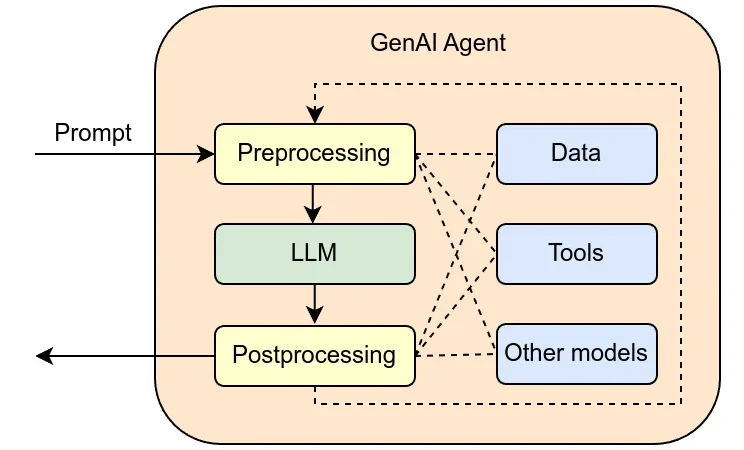
The term Agent OS has spent a year gaining traction across research and product circles. It describes a layer that goes well beyond an agent library: request scheduling, context management, persistent memory, and isolation. A look at the real state of that concept.
Wolfi turned three as a public project and has become the base for Chainguard container images and much of the industry chasing clean software supply chains. A field-tested review of what it offers against Alpine and Debian slim.
Kata Containers has spent years promising VM-grade container isolation without giving up Docker ergonomics. With the 3.x series now mature under the OpenInfra Foundation, the technical story finally holds together and there is a clear niche where adopting it pays off.
Accessibility overlays were sold as a magic fix for WCAG and the European EAA directive in one step. In 2025 lawsuits against them have grown and disabled users are speaking out more critically than ever. A look at why they fail and what to do instead.
Model Context Protocol turns ten months old since Anthropic's announcement, and it is no longer just a proposal: hundreds of servers, cross-vendor implementations and a public registry now back it. A look at what has worked, what is still weak, and why 2025 marks the shift from curiosity to basic infrastructure.
Astro 5 has spent nine months in production and has settled into a place of its own in the JavaScript world. Its bet on typed content and friction-free mixed rendering puts it halfway between Next.js and the static-site generators. A time-tested assessment.
Distributed SQL databases have moved from promise to production reality. YugabyteDB and CockroachDB lead the segment from different angles. Choosing between them demands understanding what each design compromises and what horizontal scaling costs in practice.
Python 3.13 introduce de forma experimental la ejecución sin GIL mediante PEP 703. Tras unos meses de rodaje empiezan a verse pruebas reales fuera del laboratorio. Conviene entender bien qué ganas, qué pierdes y qué no cambia todavía.
Los equipos de producto están tentados de sustituir entrevistas y tests reales por síntesis de IA. Dos años de experiencia ya permiten separar dónde la IA ayuda de verdad y dónde genera una falsa sensación de entender al usuario.
Redpanda promises Kafka-protocol compatibility without the JVM, without ZooKeeper, and with a thread-per-core architecture. By 2025 there are already serious production deployments. It is worth understanding where the switch pays off and where it does not.
Kubernetes 1.34 ships with Dynamic Resource Allocation (DRA) graduating to stable, scheduler improvements, and CEL-based mutating admission policies that replace webhooks. A practical rundown of what is safe to upgrade now, what can wait, and what actually changes for teams running production clusters.
Redis 8.2 ships vector search as a native data type. The real question is whether it replaces a dedicated engine like Qdrant, Weaviate, or pgvector on workloads with millions of vectors and tight latency budgets, or only works as a bonus on top of the cache you already run.
Kafka 4.0 llegó en marzo con la promesa cumplida: el clúster se autoadministra sin ZooKeeper. Después de meses operando clústeres KRaft y de la migración obligada, qué cambia de verdad, dónde duelen las diferencias y qué hay que saber antes de migrar.
Qwik has spent two years promising apps that start instantly because, instead of hydrating, they resume execution serialized on the server. With the 1.x series settled and real cases published, this guide checks whether resumability is worth the learning curve and which products benefit most from that client-side JavaScript saving.
TypeScript 5.5 llegó con inferencia de predicados, tipos de expresiones regulares estrictos y mejoras de declaraciones aisladas. Un año de uso real para separar lo que cambia el código diario de lo que es novedad cosmética, y cuándo conviene actualizar.
Open table formats over data lakes have moved from curiosity to backbone of many analytics architectures. Delta Lake 4.0 and Apache Iceberg 1.9 are the two with the most weight in 2025. We review where each one stands and which criteria make sense when choosing between them.
HTMX has carved out a niche in small and mid-sized web applications with a clear proposal: less JavaScript, more server. With version 2.0 stable for a year now, it is time to review which enterprise applications benefit and which still need a classic client-side framework.
6 min256
We use first- and third-party cookies to analyze site traffic. You can accept them, reject them, or configure your choice.
Learn more about cookies
Cookie preferences
NecessaryEssential for the site to work. Always on.
AnalyticsHelp us understand how the site is used (Google Analytics).