Vector databases have gone from an experimental curiosity to the central component of most LLM-based products. This comparison covers Qdrant, Pinecone, and Weaviate: architecture, strengths, limitations, and a decision tree for choosing the right option based on your operational priorities and budget.
PostgreSQL 16, released in September 2023, adds logical replication from a standby, the pg_stat_io view for breaking down I/O by operation type and context, and parallel FULL OUTER JOIN support. Upgrading from 15 is straightforward; 13 loses support in November 2025, so plan the update soon.
LangChain is a Python framework that unifies building LLM applications: prompt templates, retrievers over vector databases, function-calling agents, and conversational memory. It earns its keep in fast prototypes and multi-model systems, but for a single well-defined production use case, direct code usually stays more maintainable.
Chroma is the easiest vector database to get started with embeddings and semantic search: install it with pip install chromadb, no extra infrastructure required, and it exposes a minimal API (add, query, delete). It suits prototypes and mid-sized RAG systems well; past a few million vectors, Qdrant or Milvus scale better.
Rust has been in the Linux kernel since version 6.1, though adoption is measured and deliberate. The Apple AGX GPU driver for Asahi Linux is the most prominent real upstream example. The goal is to eliminate an entire class of memory-safety bugs in new drivers without rewriting existing C code.
Rust is no longer just a systems language: with tokio as the async runtime and axum as the HTTP framework, teams build high-performance backend services with compile-time type checking. It pays off in gateways, proxies and event processors; for typical CRUD over Postgres, Go or Node.js remain more productive.
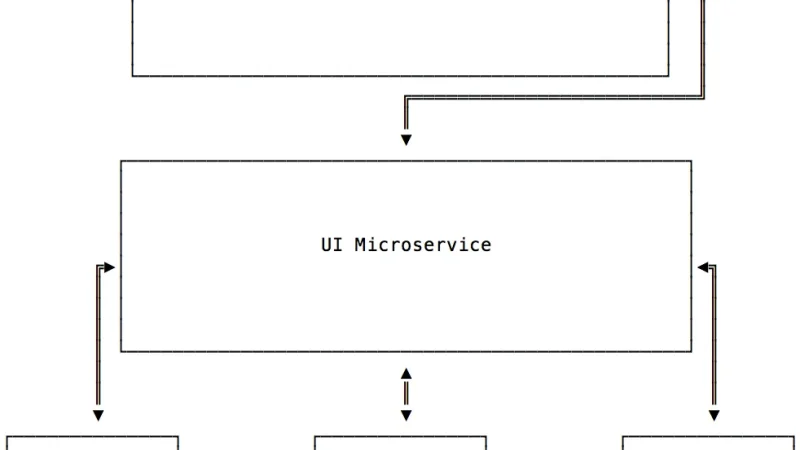
Micro-frontends bring the microservices idea to the UI: split the frontend into pieces that separate teams can develop and deploy independently. They pay off when coordination costs across four or more teams in the same SPA exceed the added technical overhead; without a mature design system and platform team, they tend to multiply problems.
Platform engineering formalizes the internal product development teams need. An Internal Developer Platform (IDP) centralises deployment, observability and self-service behind a unified interface so product teams deliver value without becoming infrastructure experts. Investment pays off from around 30 to 50 developers.
Redis alone isn't a caching strategy, just an ingredient: picking the right pattern among cache-aside, read-through, write-through, and write-behind, sizing TTL to how fast data actually changes, invalidating explicitly for critical data, and mitigating thundering herd with jitter and locking are the decisions that actually matter in production.
Kubernetes 1.27 ("Chill Vibes"), released in April 2023, makes SeccompDefault stable so pods get safer syscall defaults automatically, moves KMS v2 to beta with rotatable encryption keys for etcd secrets, and stabilises scheduling gates. It also removes PodSecurityPolicy for good: without migrating to Pod Security Admission first, the upgrade is blocked entirely.
Apache Kafka has consolidated in 2023 as the enterprise event backbone thanks to KRaft, now GA and removing the ZooKeeper dependency. The most mature patterns are CDC with Debezium, event sourcing, and stream processing with Kafka Streams or Flink, while Redpanda and Pulsar compete as real alternatives depending on the case.
OpenTelemetry is the CNCF project, graduated in May 2026, that unifies logs, metrics, and traces under one SDK and the OTLP protocol, without locking you into a single backend. Traces have been stable since 2021 and metrics since 2023; logs are still maturing, but already worth adopting on new projects.
WebAssembly is moving beyond the browser through WASI, the standard system interface, and the component model, which defines declarative WIT interfaces so modules written in different languages can compose with each other. Cold start lands around 1 ms versus roughly 500 ms for a container, a key difference for serverless and edge computing teams.
Cilium replaces iptables with eBPF programs loaded directly into the Linux kernel, substituting O(n) linear chains with O(1) hash lookups. Documented benchmarks show up to 50% lower p95 latency, 2-3x more throughput, and 70% less kernel CPU in large Kubernetes clusters.
Kafka gets the headlines as the byword for modern messaging, but RabbitMQ remains the better choice for task queues with retries, asynchronous RPC, and pub/sub with complex routing. This guide compares both against NATS, walks through classic patterns and production mistakes, and helps you decide based on the actual use case rather than the trend.
With 30 or more microservices, end-to-end tests become slow, fragile and impractical. Pact implements consumer-driven contract testing: the consumer defines what it expects, the provider verifies it in its own CI pipeline, with no shared environment needed. The result is integration proof in seconds, not minutes.
Kubernetes 1.28 introduces native sidecar containers in alpha via KEP-753: adding restartPolicy Always to initContainers ensures correct startup and shutdown ordering. It fixes Jobs that never terminate. Istio, Linkerd, and observability agents like Fluent Bit are the primary beneficiaries.
Fine-tuning your own LLM pays off in three cases: you need a very specific style or voice, a rigid structured output format, or you want lower cost and latency from a small specialised model. LoRA and QLoRA have cut the GPU cost, but preparing data and running the model in production are still expensive. For everything else, RAG and prompt engineering are usually enough.
Pixie uses eBPF to automatically instrument Kubernetes clusters without modifying application code. A per-node agent captures HTTP, gRPC, SQL, and Redis traffic at the kernel level, exposing service maps, CPU profiles, and SQL traces within minutes. It complements Prometheus for reactive diagnosis with no sidecars or redeploys.
OpenAI Code Interpreter extends ChatGPT Plus with an isolated Python sandbox: it runs code on demand, reads files you upload (CSV, Excel, PDF, images, ZIPs) and returns results plus charts within the same chat. Sessions are ephemeral and offline, but remarkably effective for exploratory ad-hoc analysis without spinning up a notebook.
Migrating from monolith to microservices means splitting a single system into independent services that deploy and scale on their own. It gains granular scalability and team autonomy, but adds real operational complexity: stable interfaces, Kubernetes orchestration, and a mature DevOps culture are conditions, not optional extras, for the migration to pay off.
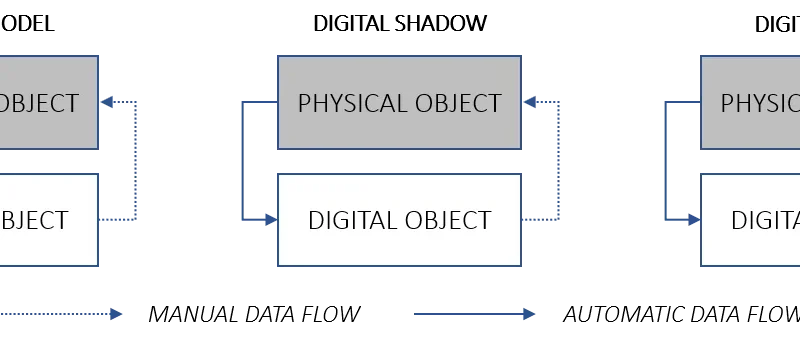
The customer digital twin is a dynamic virtual representation of a real user, built from behavioural data, preferences, and interactions and updated in real time. Unlike a static CRM profile, it anticipates needs, personalises experiences at scale, and supports proactive decisions about each customer relationship.
Choose modular architecture when your team has fewer than ten people and ships the system as a single unit; choose microservices when separate teams need to deploy independently or when specific components require very different scaling, in exchange for higher operational complexity.
The words in an application are not decoration: they determine whether the user completes the task or abandons it in frustration. Good UX writing demands clarity above all, consistent vocabulary across the interface, tone matched to the audience, and error messages that explain what failed and how to fix it, not just that something went wrong.
5 min204
We use first- and third-party cookies to analyze site traffic. You can accept them, reject them, or configure your choice.
Learn more about cookies
Cookie preferences
NecessaryEssential for the site to work. Always on.
AnalyticsHelp us understand how the site is used (Google Analytics).