Artificial Intelligence
Agent observability with OpenTelemetry GenAI semconv in 2026
The OTel GenAI spec stabilizes attributes for LLMs, tools, and agents. Practical Python implementation with Anthropic + Grafana Tempo.
Category
Technology with judgment: what actually moves the needle, no passing fads.
The OTel GenAI spec stabilizes attributes for LLMs, tools, and agents. Practical Python implementation with Anthropic + Grafana Tempo.
Tested May 2026 recipe: oMLX 0.3.8 on Mac M5 Max with 128 GB, TurboQuant at 3.5-bit, Qwen 3.6 35B-A3B model stack, Claude Code wiring and real benchmarks.
Cobots have been promising the fenceless factory for almost fifteen years. In 2026, with the market heading toward eleven billion dollars and 70% of orders coming from outside automotive, it is time to review what has delivered and what remains open.
A principios de 2026, varias plataformas de orquestación incluyen carbon-aware scheduling como opción por defecto o muy visible. Con meses de datos reales, toca evaluar si la promesa de reducir emisiones sin dañar rendimiento se cumple y en qué escenarios.
After the 2023-2024 hype cycle led by Apple Vision Pro, the 2025 valley of disillusionment, and the quiet but real consolidation of Meta Quest 3S and the WebXR stack, it is time to assess honestly where extended reality stands. What works, what has died, what is still alive.
WASI preview 3 llegó como estándar estable a finales de 2025 y ha tenido unos meses para demostrar si realmente desbloquea los casos que preview 2 se quedaba cortos. Recorrido honesto por adopciones reales, bibliotecas maduras y patrones que empiezan a funcionar en producción.
Con 1.34 liberado en agosto de 2025 y el ciclo de 1.35 en su última fase de congelación de funciones, qué llegará estable, qué quedará en beta, qué nos interesa a quienes mantenemos clústeres pequeños o medianos y qué podemos ignorar sin culpa hasta el siguiente ciclo.
After a decade of Prometheus, three years of consolidation around OpenTelemetry, and the open stack now mature with Grafana, Loki, and Tempo, concrete recommendations for teams starting or reviewing their observability layer: what fits, what is excess, and what to avoid.
La integración de WebAssembly dentro de containerd como tiempo de ejecución alternativo ha madurado. Ya es posible desplegar cargas mixtas Linux y Wasm en el mismo clúster de Kubernetes con argumentos operativos sólidos. Cuándo compensa y cuándo no.
gVisor interpone un kernel en espacio de usuario entre el contenedor y el anfitrión. Después de años en producción en Google y adopción creciente en plataformas serverless, merece una lectura honesta sobre cuándo compensa frente a microVMs y runtimes clásicos.
Authentik is one of the sturdiest self-hosted identity projects in the open-source landscape. A practical Docker Compose install guide, the Redis-free architecture since 2025.10, and the real friction points of a first install.
CVE-based attack surface management has moved from an abstract list to an engineering practice with real prioritization. We look at how it works once EPSS, KEV and exposure context enter the same equation.
Wolfi turned three as a public project and has become the base for Chainguard container images and much of the industry chasing clean software supply chains. A field-tested review of what it offers against Alpine and Debian slim.
Post-quantum cryptography stopped being an academic topic once Cloudflare, Google, and Apple put ML-KEM hybrids into production. By 2025 it already covers the majority of real web traffic. A look at where adoption stands, where friction still shows up, and what to review in your own infrastructure.
Dragonfly lleva tres años como alternativa compatible con Redis, pero con arquitectura multihilo y sin fork para persistencia. En 2025 ya no es una curiosidad: hay despliegues serios que lo eligen por coste y latencia. Repaso de qué cambia y cuándo compensa mirarlo con calma.
Four years ago it was an academic curiosity. Today, scheduling workloads by grid carbon intensity is a built-in option in Kubernetes, in several cloud provider services, and in CI tooling. We look at what genuinely changed and what is still more promise than practice.
Los primeros racks GB200 NVL72 llevan meses en manos de los hiperescalares y ya empiezan a verse mediciones públicas. La generación Blackwell no es una mejora incremental sobre Hopper, sino un cambio en la forma de entrenar modelos grandes. Repasamos qué cambia y qué no.
OpenSSH added hybrid post-quantum key exchange with ML-KEM in version 9.9 and made it the default algorithm in 10.0. The question is no longer whether to migrate SSH to post-quantum, but how to do it without breaking old clients: enable the hybrid mode, keep a classical fallback, and verify with ssh -v that the active algorithm is the right one.
The combination of Parca for continuous profiling, Beyla for eBPF auto-instrumentation, and Grafana as the visualisation layer delivers deep observability without touching code. A look at how the three pieces fit together and where the limits still show.
WireGuard is simple over a single link, but hand-building a multi-node mesh quickly turns into a tangle of keys and routes. Patterns that work, when pure WireGuard earns its keep, and when it is worth leaning on Tailscale or Headscale instead.
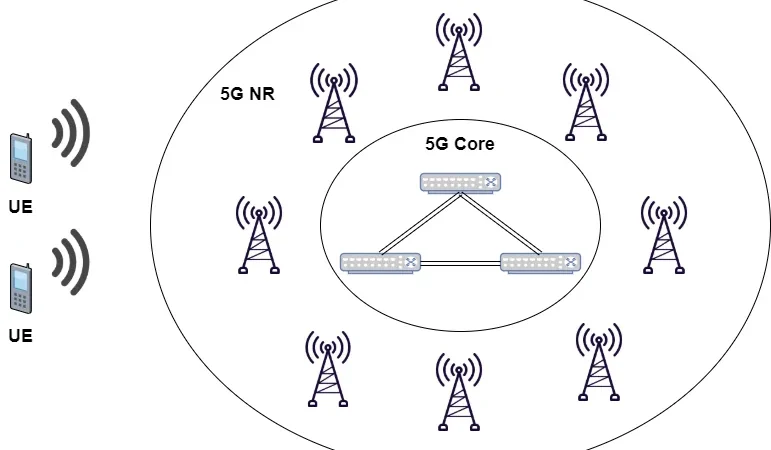
After years of pilots, private 5G is starting to show up in plants, ports, and warehouses with cases that actually work. What changed in 2025, which deployments make sense, and where WiFi 6E or a wired network still win the comparison.
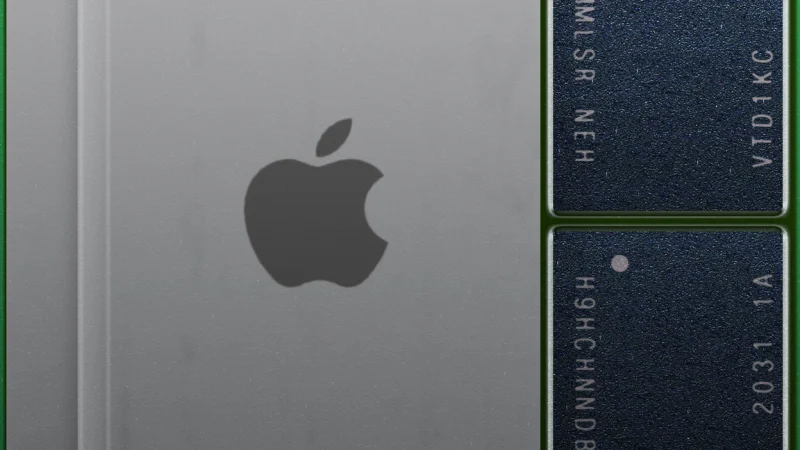
I have spent six months using a MacBook Pro with M4 Pro as my main development machine. I lay out what has genuinely changed versus the previous M2 Pro, where the jump is noticeable, and where the investment is not justified if you already own a recent machine.
Continuous profiling with eBPF samples every process's execution stack every few milliseconds without touching the code, then stores the history so you can compare last week's performance with today's. The cost measured in production runs between 1% and 3% of CPU, and it pays off most in databases, API gateways and high-concurrency services.
Prompt injection is the most common vulnerability in LLM applications, and many teams defend against it with filters that do not work. We review defense layers backed by evidence, what actually works, and what is security theater.
NIS2 entered force on 17 October 2024. Six months later, companies are in the trenches. I cover what has actually changed in operational security, what was paper theater, and where the directive still bites.
Cuando un LLM pasa de contestar texto a ejecutar herramientas, la superficie de ataque cambia de categoría. La inyección de prompts, la contaminación de memoria y el abuso de protocolos entre agentes son el nuevo OWASP Top 10.
Valkey 8.1 salió el 31 de marzo y marca el momento en que la alternativa comunitaria de Redis deja de ser experimento. Cuenta una migración real: qué cambió, qué se mantuvo igual, y dónde hubo sobresaltos.
Kubernetes 1.33 (Octarine) lands April 23. In-place pod resize moves to beta and ships on by default, sidecar containers finally reach GA, and several endpoint and security deprecations arrive that operators should review before upgrading from 1.32.
Después de años acumulando SBOMs, el cuello de botella es filtrar qué CVEs afectan de verdad. VEX aparece como la pieza que convierte el ruido en señal, y en 2025 empieza a tener adopción real en pipelines de supply chain.
Semgrep has grown into one of the most pragmatic static analyzers in the ecosystem. A look at why it works where other SAST tools fail, and how to fit it into a pipeline without turning it into noise.
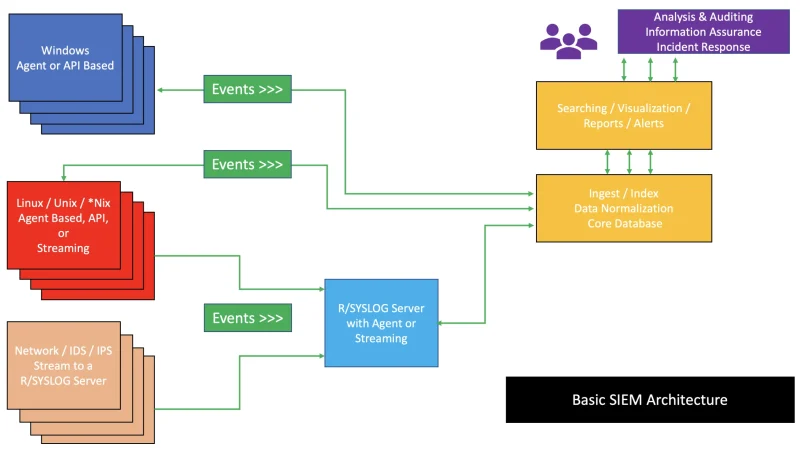
Two years after Zero Trust stopped being a marketing word, it is worth looking at how it connects with the SIEM teams run day to day. A look at useful signals, avoidable noise, and the decisions that actually change security posture.
CodeQL lleva años siendo el motor de análisis estático de GitHub, pero su alcance real no siempre está claro. Balance de qué detecta bien, qué se le escapa y cómo conviene integrarlo en el flujo de revisión.
Nebula es una VPN peer-to-peer liberada por Slack en 2019 que ha ido madurando sin mucho ruido. Explico cómo funciona, cuándo tiene sentido frente a WireGuard o Tailscale, y qué aprendí desplegándola entre varios nodos.
Industrial edge computing moves processing capacity from the centralised cloud to the plant floor, the machine, or the robotic cell. Local latency (10-50 ms) is critical for process control, machine vision, and safety systems: it is a physical limit that bandwidth alone cannot solve. OPC UA, K3s, and private 5G now form a proven production-ready stack.
Trivy and Grype have spent years competing to be the default container scanner. Trivy broadened its scope to IaC, Kubernetes, and Git repos in one binary; Grype specialised in SBOM precision and lower false-positive rates. After a year of intensive CI use with real images, here is a side-by-side breakdown of where each one wins.
A badly configured Alertmanager turns every incident into noise: a single unrouted receiver ends with an ignored Slack channel within a week. This article covers, on Alertmanager 0.27 and Prometheus 2.54, how to design the routing tree, inhibition rules, silences and on-call rotations to curb alert fatigue without losing real incidents.
Kubernetes 1.31 brings no fireworks, but it closes old debts: AppArmor reaches GA, native sidecars now run enabled by default on their way to stable in 1.33, and DRA moves through alpha toward beta. A practical review from the perspective of someone operating clusters in production.
OpenTelemetry declared logs signals stable in July 2024. The third pillar of modern observability finally joins metrics and traces under a single protocol and a shared data model.
CrowdSec installs on Debian or Ubuntu with an official script and the crowdsec package; you then enable the Traefik, WordPress and Gitea collections, configure acquisition to read the right logs, and add the Traefik bouncer as a middleware to block or captcha-challenge IPs flagged by the LAPI in real time.
The NIS2 directive entered into force on October 17, 2024, but by mid-2026 only part of the member states have fully transposed it: Germany and the Netherlands closed their law, Spain and France remain in process under pressure from Brussels. Here is what already applies and how to prepare without panic.
containerd is the runtime that runs containers in most modern Kubernetes clusters, and almost nobody notices. It manages the full container lifecycle: pulling the image, starting it, networking, and mounting the filesystem. It became the default runtime after Kubernetes 1.24 removed dockershim in May 2022.
A practical guide for development teams who need to meet WCAG 2.1 without turning accessibility into an endless project. Three layers, a set of proven tools, and 2-3 months of disciplined work are enough for most teams.
Microsoft 365 Copilot integrates large language models into Word, Excel, Teams, and Outlook to draft, summarise, and analyse data without leaving the usual workflow. It operates inside the tenant's data graph, respects the organisation's existing permissions, and never uses that data to train the base OpenAI or Anthropic model.