Cobots have been promising the fenceless factory for almost fifteen years. In 2026, with the market heading toward eleven billion dollars and 70% of orders coming from outside automotive, it is time to review what has delivered and what remains open.
Kubernetes won the orchestration battle, but Docker Swarm stays maintained inside Docker Engine and makes real sense for small teams without dedicated SRE, self-hosted stacks on 1-5 VPS, and edge mini-clusters. In those contexts, Swarm's minimal learning curve and low operational cost outweigh Kubernetes's advanced features.
Two years after the final NIST standards, post-quantum migration is no longer hypothetical. What has actually been migrated, what remains stuck, where the real operational problems lie, and how the timelines look from April 2026.
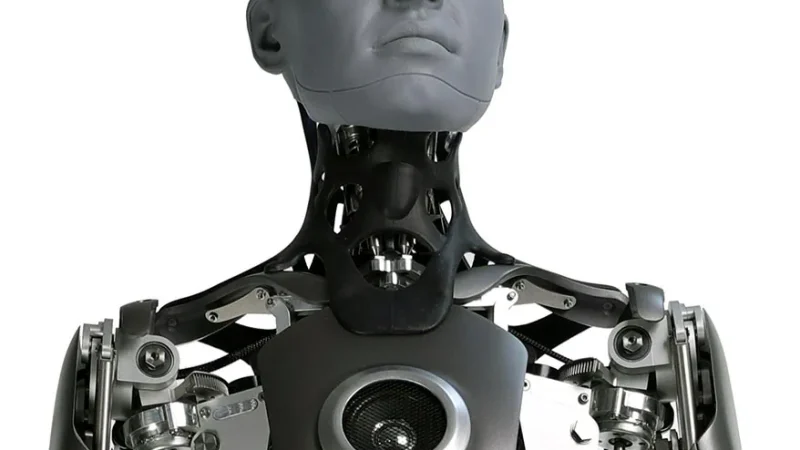
Humanoid robotics left the trade-show floor for factory floors and warehouses during 2025 and 2026. Which companies have really deployed units, which tasks fit, what real costs look like, and where humans remain unbeatable.
Four and a half years after Rust officially entered Linux 6.1, with real Apple GPU and NVMe drivers in production and several public conflicts between maintainers, it is time for a sober technical balance. What works, what still costs, and where the next phase is heading.
A principios de 2026, varias plataformas de orquestación incluyen carbon-aware scheduling como opción por defecto o muy visible. Con meses de datos reales, toca evaluar si la promesa de reducir emisiones sin dañar rendimiento se cumple y en qué escenarios.
After the 2021-2022 cycle, most blockchain projects have vanished from the radar, leaving only the ones that deliver real value. An honest inventory of which use cases work, which failed, and where blockchain is still a sensible idea.
Con 1.34 liberado en agosto de 2025 y el ciclo de 1.35 en su última fase de congelación de funciones, qué llegará estable, qué quedará en beta, qué nos interesa a quienes mantenemos clústeres pequeños o medianos y qué podemos ignorar sin culpa hasta el siguiente ciclo.
After a decade of Prometheus, three years of consolidation around OpenTelemetry, and the open stack now mature with Grafana, Loki, and Tempo, concrete recommendations for teams starting or reviewing their observability layer: what fits, what is excess, and what to avoid.
La integración de WebAssembly dentro de containerd como tiempo de ejecución alternativo ha madurado. Ya es posible desplegar cargas mixtas Linux y Wasm en el mismo clúster de Kubernetes con argumentos operativos sólidos. Cuándo compensa y cuándo no.
After a decade of grandiose headlines, quantum computing enters this cycle with more honest metrics, thousand-physical-qubit machines, and the first serious signs of error correction at scale. It pays to separate what already works from what remains research.
Neural processing units have stopped being a marketing label on Snapdragon, Apple Silicon and AMD Ryzen AI laptops. Here is what you can actually do from code today, which tools are mature, and when it pays off to target the NPU instead of the CPU or GPU.
Fly.io has spent years selling the idea that deploying an application across several regions should be almost as simple as pushing an image and writing one config line. After several real projects on the platform, here is an honest read on what it delivers, what is missing, and who it is worth choosing over more classic options.
Tras la adquisición por Microsoft en 2019, Citus vivió un limbo comercial que terminó con Microsoft abriendo el código completo en 2022. Tres años después, la extensión de particionado para Postgres ha madurado y ofrece una ruta práctica para escalar sin abandonar el motor que ya conoces. Un repaso honesto.
Authentik is one of the sturdiest self-hosted identity projects in the open-source landscape. A practical Docker Compose install guide, the Redis-free architecture since 2025.10, and the real friction points of a first install.
CVE-based attack surface management has moved from an abstract list to an engineering practice with real prioritization. We look at how it works once EPSS, KEV and exposure context enter the same equation.
Post-quantum cryptography stopped being an academic topic once Cloudflare, Google, and Apple put ML-KEM hybrids into production. By 2025 it already covers the majority of real web traffic. A look at where adoption stands, where friction still shows up, and what to review in your own infrastructure.
Dragonfly lleva tres años como alternativa compatible con Redis, pero con arquitectura multihilo y sin fork para persistencia. En 2025 ya no es una curiosidad: hay despliegues serios que lo eligen por coste y latencia. Repaso de qué cambia y cuándo compensa mirarlo con calma.
OpenSSH added hybrid post-quantum key exchange with ML-KEM in version 9.9 and made it the default algorithm in 10.0. The question is no longer whether to migrate SSH to post-quantum, but how to do it without breaking old clients: enable the hybrid mode, keep a classical fallback, and verify with ssh -v that the active algorithm is the right one.
WireGuard is simple over a single link, but hand-building a multi-node mesh quickly turns into a tangle of keys and routes. Patterns that work, when pure WireGuard earns its keep, and when it is worth leaning on Tailscale or Headscale instead.
I have spent six months using a MacBook Pro with M4 Pro as my main development machine. I lay out what has genuinely changed versus the previous M2 Pro, where the jump is noticeable, and where the investment is not justified if you already own a recent machine.
Six months after containerd 2.0 reached general availability there is enough real-world mileage to judge the migration from the 1.x branch in production. We cover what changes in the config file, what breaks on Kubernetes and Docker Swarm, and when planning the jump actually pays off.
Prompt injection is the most common vulnerability in LLM applications, and many teams defend against it with filters that do not work. We review defense layers backed by evidence, what actually works, and what is security theater.
Kubernetes 1.33 (Octarine) lands April 23. In-place pod resize moves to beta and ships on by default, sidecar containers finally reach GA, and several endpoint and security deprecations arrive that operators should review before upgrading from 1.32.
6 min2244.2
We use first- and third-party cookies to analyze site traffic. You can accept them, reject them, or configure your choice.
Learn more about cookies
Cookie preferences
NecessaryEssential for the site to work. Always on.
AnalyticsHelp us understand how the site is used (Google Analytics).