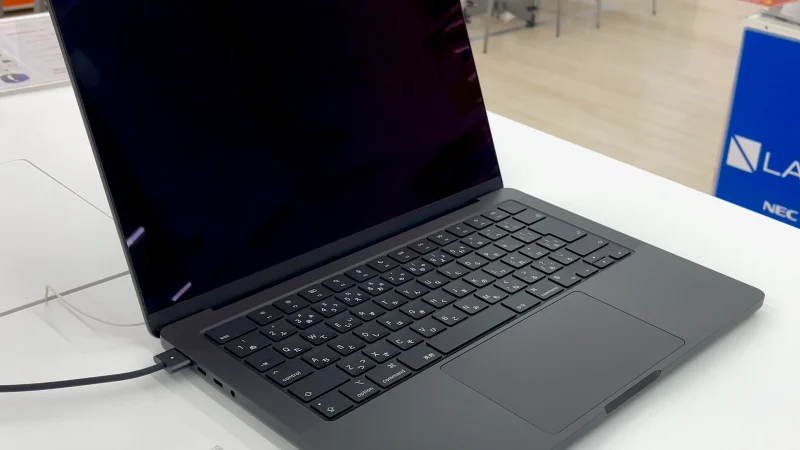
M3 and M4 solidified the Apple Silicon advantage: unified memory up to 128 GB shared across CPU, GPU, and Neural Engine; 12 to 16 hours of real battery life; and a 38-TOPS Neural Engine that runs large language models directly on the laptop. The practical difference for developers is measurable.
Vector is the Datadog observability agent, written in Rust with its own transformation language VRL. Typically 30-100 MB memory, handling logs, metrics, and traces from dozens of sources. The right choice when pipelines are too complex for Fluent Bit and a modern alternative to Logstash.
Terraform 1.6, 1.7, 1.8 y 1.9 han traído import blocks, removed, ephemeral values, un framework de tests nativo y el preview de stacks. Mientras tanto, OpenTofu consolida su fork tras el cambio a BSL.
eBPF-based continuous profiling captures CPU flame graphs for every process on a Linux node around the clock, without instrumenting code or restarting services, at under 1% overhead. Parca covers the whole cluster, Beyla adds automatic HTTP/gRPC metrics and traces, and Pyroscope brings native per-language detail to the most critical services.
In August 2024, NIST published its first finalized post-quantum cryptography standards: FIPS 203 (ML-KEM) for key exchange, FIPS 204 (ML-DSA) for digital signatures, and FIPS 205 (SLH-DSA) as a hash-based alternative. They replace RSA and ECDSA before a quantum computer can break them, and hybrid implementations are already live in Chrome and Cloudflare.
Trivy and Grype have spent years competing to be the default container scanner. Trivy broadened its scope to IaC, Kubernetes, and Git repos in one binary; Grype specialised in SBOM precision and lower false-positive rates. After a year of intensive CI use with real images, here is a side-by-side breakdown of where each one wins.
Kubernetes 1.30, released in April 2024, brings ValidatingAdmissionPolicy to general availability, eliminating the need for external webhooks for CEL-based admission policies. It adds pod scheduling readiness to control when a pod enters the scheduling cycle, and job success policy to define which index combination counts as success in distributed indexed Jobs.
A badly configured Alertmanager turns every incident into noise: a single unrouted receiver ends with an ignored Slack channel within a week. This article covers, on Alertmanager 0.27 and Prometheus 2.54, how to design the routing tree, inhibition rules, silences and on-call rotations to curb alert fatigue without losing real incidents.
Docker Scout continuously scans container images against CVE databases including NVD and ecosystem-specific advisories, and recommends base-image changes to remove vulnerabilities. Built into Docker Desktop and Hub, it competes with Trivy, Grype and Snyk. Best fit for teams already running end-to-end on the Docker ecosystem.
Grafana Beyla is an eBPF agent that automatically instruments existing applications without touching their code: it observes kernel syscalls and generates OpenTelemetry traces and RED metrics for services written in Go, Java, Python, Node, and Rust. It gives broad, immediate coverage, but it does not replace the manual SDK for business metrics and internal logic.
Cloudflare Workers is no longer an isolated edge function. In 2024, together with KV, D1, R2, and Durable Objects, it forms a complete platform that matches AWS on latency and drops egress fees, though it still falls short on long-running compute and the mature managed databases AWS offers.
Kubernetes 1.31 brings no fireworks, but it closes old debts: AppArmor reaches GA, native sidecars now run enabled by default on their way to stable in 1.33, and DRA moves through alpha toward beta. A practical review from the perspective of someone operating clusters in production.
CrowdSec installs on Debian or Ubuntu with an official script and the crowdsec package; you then enable the Traefik, WordPress and Gitea collections, configure acquisition to read the right logs, and add the Traefik bouncer as a middleware to block or captcha-challenge IPs flagged by the LAPI in real time.
Rust joined Linux mainline in version 6.1 (2022), and by 6.9 (2024) it already ships experimental drivers, including Asahi's GPU driver for Apple Silicon. In C/C++ projects like Chromium, around 70 percent of serious security bugs are memory-safety bugs, the real reason kernel maintainers are debating whether to adopt it.
WASI 0.2 reached GA in January 2024, bringing WebAssembly's Component Model into production: typed WIT interfaces that let Rust, Go, and JavaScript code compose without manual glue code. That shift makes edge functions with sub-1 ms cold start, secure plugins, and untrusted-code sandboxing viable today, though it does not replace containers for traditional apps.
Redis moved to dual SSPL/RSAL licensing in March 2024, no longer meeting the OSI open-source definition. Valkey emerged as a BSD 3-Clause fork backed by AWS, Google Cloud, Oracle, and the Linux Foundation, fully protocol-compatible with Redis 7.2. Migrating is almost always trivial: swap the binary or the Docker image.
Llama 3 is the open-model family Meta released on April 18, 2024, in 8-billion and 70-billion-parameter sizes, trained on 15 trillion tokens. The 70B beat Claude Sonnet, Mistral Medium, and GPT-3.5 in Meta's own human evaluation, and its licence allows free commercial use up to 700 million monthly active users.
Chainguard Images are minimal Docker containers from the company behind Sigstore, with zero known CVEs, Cosign-signed SBOMs and daily rebuilds on top of Wolfi, its own glibc-based distribution. They pay off over official images when strict compliance, supply chain audits or sensitive production workloads are at stake.
3 min2274.2
We use first- and third-party cookies to analyze site traffic. You can accept them, reject them, or configure your choice.
Learn more about cookies
Cookie preferences
NecessaryEssential for the site to work. Always on.
AnalyticsHelp us understand how the site is used (Google Analytics).