NIST published the final post-quantum cryptography standards in August 2024. Six months on, it is time to move from headline to plan: crypto inventory, crypto-agility, a realistic timeline, and the typical mistakes of teams jumping in now.
WASI 0.3, also known as preview 3, was ratified on June 11, 2026, adding native asynchronous concurrency to the WebAssembly component model through streams, futures, and async functions. It fixes old fragmentation across languages and runtimes, enables real composition between Wasm services, and paves the way for cooperative threads planned in upcoming 0.3.x releases.
Meta publicó Llama 3.2 con modelos tan pequeños como 1B y 3B, pensados específicamente para ejecutarse en dispositivos. Análisis de qué pueden hacer realmente y cómo se comparan con las alternativas.
Cloudflare Workers turned eight in 2025 without slowing down: it now ships D1 for databases, R2 for egress-free storage, Durable Objects for distributed state, and Workers AI for running models without managing GPUs. It remains the fastest option for edge logic; for large in-memory processes or strict global consistency, other platforms fit better.
Qualcomm, Intel and AMD Copilot+ processors have normalised the presence of an NPU in everyday PCs. A 40 TOPS NPU can run quantised Phi-3 Mini drawing just 5-10 W, versus 40-50 W for a laptop GPU doing the same task. What actually changes for running AI models locally, and when it is worth it.
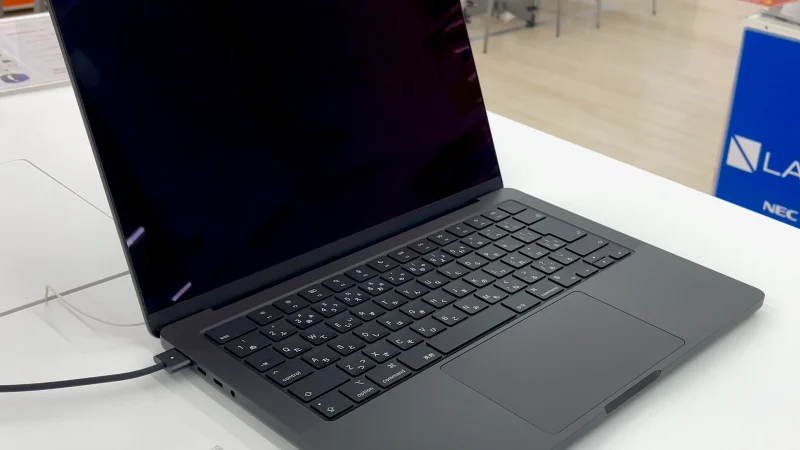
M3 and M4 solidified the Apple Silicon advantage: unified memory up to 128 GB shared across CPU, GPU, and Neural Engine; 12 to 16 hours of real battery life; and a 38-TOPS Neural Engine that runs large language models directly on the laptop. The practical difference for developers is measurable.
Vector is the Datadog observability agent, written in Rust with its own transformation language VRL. Typically 30-100 MB memory, handling logs, metrics, and traces from dozens of sources. The right choice when pipelines are too complex for Fluent Bit and a modern alternative to Logstash.
Terraform 1.6, 1.7, 1.8 y 1.9 han traído import blocks, removed, ephemeral values, un framework de tests nativo y el preview de stacks. Mientras tanto, OpenTofu consolida su fork tras el cambio a BSL.
IEC 62443 is the international cybersecurity standard for industrial control systems (ICS) and OT networks. Its four series blocks define security zones and conduits, four protection levels (SL 1-4) and seven foundational requirements. NIS2 pressure is accelerating adoption across Europe. IT teams need to master it to coordinate network segmentation, monitoring and incident response with OT environments.
eBPF-based continuous profiling captures CPU flame graphs for every process on a Linux node around the clock, without instrumenting code or restarting services, at under 1% overhead. Parca covers the whole cluster, Beyla adds automatic HTTP/gRPC metrics and traces, and Pyroscope brings native per-language detail to the most critical services.
In August 2024, NIST published its first finalized post-quantum cryptography standards: FIPS 203 (ML-KEM) for key exchange, FIPS 204 (ML-DSA) for digital signatures, and FIPS 205 (SLH-DSA) as a hash-based alternative. They replace RSA and ECDSA before a quantum computer can break them, and hybrid implementations are already live in Chrome and Cloudflare.
Kubernetes 1.30, released in April 2024, brings ValidatingAdmissionPolicy to general availability, eliminating the need for external webhooks for CEL-based admission policies. It adds pod scheduling readiness to control when a pod enters the scheduling cycle, and job success policy to define which index combination counts as success in distributed indexed Jobs.
Docker Scout continuously scans container images against CVE databases including NVD and ecosystem-specific advisories, and recommends base-image changes to remove vulnerabilities. Built into Docker Desktop and Hub, it competes with Trivy, Grype and Snyk. Best fit for teams already running end-to-end on the Docker ecosystem.
Grafana Beyla is an eBPF agent that automatically instruments existing applications without touching their code: it observes kernel syscalls and generates OpenTelemetry traces and RED metrics for services written in Go, Java, Python, Node, and Rust. It gives broad, immediate coverage, but it does not replace the manual SDK for business metrics and internal logic.
Qualcomm Snapdragon X Elite is the first ARM chip to match Apple M3 performance in Windows laptops, with 22+ hours of battery life and a 45 TOPS NPU for on-device AI. Most software runs well via the Prism emulator, though it is not yet ready for anti-cheat gaming or specialized x86 workloads.
Cloudflare Workers is no longer an isolated edge function. In 2024, together with KV, D1, R2, and Durable Objects, it forms a complete platform that matches AWS on latency and drops egress fees, though it still falls short on long-running compute and the mature managed databases AWS offers.
OpenTofu reached GA in January 2024 as an open-source Terraform fork under MPL 2.0, with Linux Foundation governance. Six months later, it is a stable drop-in replacement: same configs, same state format, same CLI. Version 1.7 adds native state encryption, the first real technical edge over Terraform.
Rust joined Linux mainline in version 6.1 (2022), and by 6.9 (2024) it already ships experimental drivers, including Asahi's GPU driver for Apple Silicon. In C/C++ projects like Chromium, around 70 percent of serious security bugs are memory-safety bugs, the real reason kernel maintainers are debating whether to adopt it.
WASI 0.2 reached GA in January 2024, bringing WebAssembly's Component Model into production: typed WIT interfaces that let Rust, Go, and JavaScript code compose without manual glue code. That shift makes edge functions with sub-1 ms cold start, secure plugins, and untrusted-code sandboxing viable today, though it does not replace containers for traditional apps.
Parca is a continuous profiling tool based on eBPF that samples CPU usage across an entire Kubernetes cluster around the clock, without instrumenting application code and with under 1% overhead. It catches performance regressions before production and makes flame graphs practical for everyday debugging.
Carbon-aware computing runs flexible workloads when grid electricity emits less CO2, cutting emissions 10-30% without changing infrastructure. Grid carbon intensity varies up to 16x by hour and region; tools like Electricity Maps, WattTime and the Carbon Aware SDK make that scheduling possible with real grid data.
Redis moved to dual SSPL/RSAL licensing in March 2024, no longer meeting the OSI open-source definition. Valkey emerged as a BSD 3-Clause fork backed by AWS, Google Cloud, Oracle, and the Linux Foundation, fully protocol-compatible with Redis 7.2. Migrating is almost always trivial: swap the binary or the Docker image.
cAdvisor is still embedded in kubelet and covers surface metrics, but falls short for production Kubernetes. The modern minimum stack pairs it with kube-state-metrics, node-exporter, Prometheus, and Grafana as a base, eBPF for deep network and syscall visibility, and OpenTelemetry for application context.
Llama 3 is the open-model family Meta released on April 18, 2024, in 8-billion and 70-billion-parameter sizes, trained on 15 trillion tokens. The 70B beat Claude Sonnet, Mistral Medium, and GPT-3.5 in Meta's own human evaluation, and its licence allows free commercial use up to 700 million monthly active users.
2 min2044.5
We use first- and third-party cookies to analyze site traffic. You can accept them, reject them, or configure your choice.
Learn more about cookies
Cookie preferences
NecessaryEssential for the site to work. Always on.
AnalyticsHelp us understand how the site is used (Google Analytics).