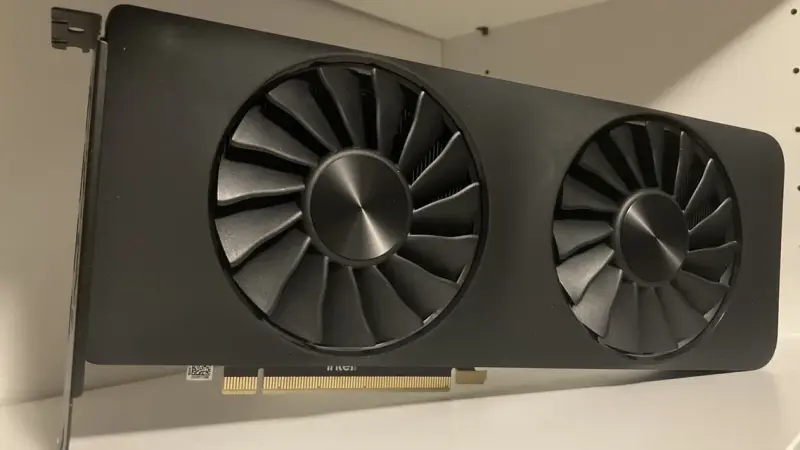
Qwen3-VL 8B at Q4_K_M is 4.68 GiB of weights plus a 1.08 GiB vision tower, and its KV cache costs 144 KiB per token. At 8,192 tokens of context the total is around 7 GiB and fits comfortably in 16 GB; at the native 256K it would ask for 36 GiB of cache alone and fits on no consumer card.
Muse Code is the terminal coding agent Meta Superintelligence Labs released in beta on 5 August 2026. It runs on Muse Spark 1.2, coordinates persistent background subagents, appends every model call and every edit to a local event log, and installs with a single command on macOS and Linux.
Since 2 August 2026 transparency (Art. 50) and Commission enforcement powers apply; the AI Omnibus moved Annex III high-risk to 2 December 2027. A per-system checklist with downloadable template.
Synthetic data has moved from a precarious substitute for real data to a central component of modern model training: the most reliable pattern expands a real core of 500 examples with thousands of synthetic paraphrases, provided you validate diversity, correctness, and distribution, and keep at least 30% real data to avoid model collapse.
While OpenAI and Anthropic dominate headlines with rounds worth hundreds of millions, a growing group of niche AI startups generates one to ten million dollars in revenue with teams of two to ten people. They share five patterns: narrow vertical focus, 70-80% margins, community distribution, iteration cycles in days, and AI as an internal lever.
After fourteen months testing AI-integrated DevOps tools across several teams, the stack that stays is small: Claude Code, Cursor, and Aider for code; PagerDuty AIOps, Datadog Bits AI, and Grafana Assistant for alert triage; and OpenTofu with OPA for infrastructure generation bounded by policy rules.
Humanoid robotics left the trade-show floor for factory floors and warehouses during 2025 and 2026. Which companies have really deployed units, which tasks fit, what real costs look like, and where humans remain unbeatable.
The European AI Act took effect on 1 August 2024 with a staggered calendar, and its Annex III high-risk rules no longer land in August 2026. The Digital Omnibus, closed by the Parliament and the Council, moves that deadline 17 months to 2 December 2027. Prohibitions since February 2025 and general-purpose AI duties since August 2025 still apply.
FinOps for AI counts different units than classic cloud FinOps: tokens, calls, computed embeddings and GPU time, all of which scale nonlinearly with use. The costliest habit is sending everything to frontier models; 40 to 70 percent of those calls run on mid-tier models with no noticeable quality loss. Uncached RAG and self-recursing agents do the rest.
Sixteen months after Anthropic first shipped computer use, with browser-use, OpenAI Operator and Gemini Computer Use all pushing in parallel, agents that drive the browser and desktop have moved from demo to real workflows. Time to review which patterns survive when you run them daily in production.
Among the AI features in SRE dashboards, alert correlation is the one with demonstrated value: it groups dependent alerts from a single incident, cutting time to acknowledge and fatigue during a crisis. Automatic incident summaries help too. The real problem was never a shortage of information, it was separating signal from noise and correlating scattered symptoms.
AI testing breaks the assumption every automated suite was built on, because the same input no longer produces the same output. Anthropic documents that temperature 0.0 is still not fully deterministic, and OpenAI's seed parameter only promises mostly reproducible results. What works instead is a layered belt of checks that catches regressions without tripping over ordinary variance.
Redis 8.2 ships vector search as a native data type. The real question is whether it replaces a dedicated engine like Qdrant, Weaviate, or pgvector on workloads with millions of vectors and tight latency budgets, or only works as a bonus on top of the cache you already run.
Gemini 2.5 Pro reached preview on 25 March 2025 and general availability at the end of June, alongside the cheaper, faster Gemini 2.5 Flash. Two things separate it from Gemini 2.0: a one-million-token context window that behaves stably to at least 500k, and multimodality that has left the demo stage behind.
Anthropic released Claude Opus 4 and Claude Sonnet 4 on 22 May 2025, the first major naming jump since the 3.5 series. Claude 4 reasons noticeably better over long programming tasks: multi-hour refactors that previously stalled without a human nudge now run further alone, and the family targets agentic, multi-step flows.
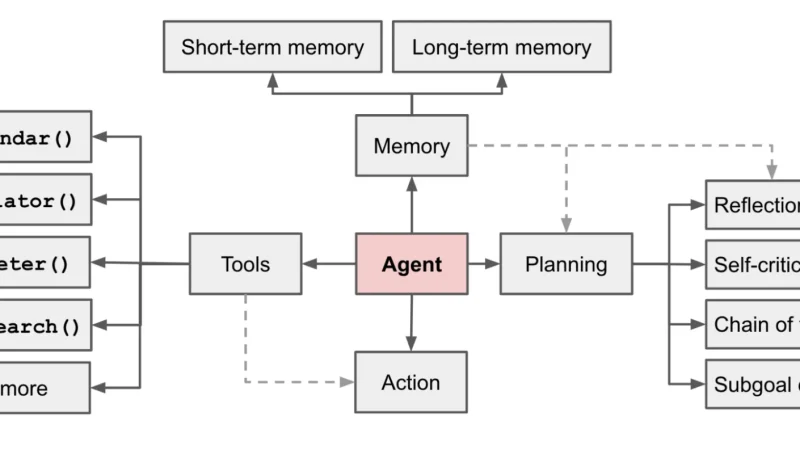
AI agents have moved from a lab curiosity to serious SDKs from three major providers. A reflection on moving from the flashy demo to an internal use case that shifts a real, measurable metric.
The AI features Figma has rolled out since Config 2024 are changing how product design teams work. A look at what each feature delivers, what remains human work, and which habits are taking hold across teams.
AI governance in a company means a standing committee, written policies, a model and use-case inventory, risk assessment, and audits. The first provisions of the EU AI Act took effect on 2 February 2025, banning practices such as social scoring and requiring minimum AI literacy for staff. Fines reach 35 million euros or 7 percent of global turnover.
Claude 3.7 Sonnet, released by Anthropic on February 24, is a careful refinement rather than a generational jump. The same model answers in standard mode or in an extended thinking mode you switch on per request, trading tokens and latency for better results on hard problems. It also ships Claude Code, a command-line tool for programmers.
A year ago open weights were a gamble; today they are a real production option. I review what has worked, what has not, and how Llama, DeepSeek, Qwen, and Mistral are fitting into enterprise architectures that used to depend on closed APIs.
Two years into living with AI assistants in the editor, habits have settled. A reflection on what has changed in day-to-day coding, what has been learned, and what was still left to discover.
o3-mini, the first public release of OpenAI's o3 reasoning series, clearly improves logic, math, and complex code over GPT-4o, though it answers slower and still hallucinates facts. This analysis, based on weeks of real use, explains where it pays off and where it does not.
Gemini 2.0, announced by Google in December, puts tool use and agent behavior at the center of the product: it is designed to execute actions, not only generate text. Its clearest advantages are Flash's one-million-token context window, cheap input tokens, and first-class access to Search, Maps, Cloud, and Workspace. Claude 3.5 Sonnet still leads on complex reasoning.
Two years running AI-assisted code review in a real team leave a clear balance: AI catches mechanical oversights well and writes useful pull-request summaries, but it struggles with architectural judgment and produces many false positives on subtle bugs. The single decision that helped the most was not blocking merges on its automated comments.
LangGraph models LLM agents as explicit state graphs instead of an opaque loop. When it beats the traditional LangChain agent loop, how checkpointing and failure recovery work, and how to structure flows that do not fall apart the moment they reach production.
A text embedding is a numeric vector that encodes the meaning of a word or phrase, so that semantically similar pieces of text produce nearby vectors measured by cosine distance. The models most used in production are OpenAI ada-002, Sentence Transformers, and BGE, and they mainly serve semantic search, RAG systems, and text classification without training a classic classifier.
7 min2904.8
We use first- and third-party cookies to analyze site traffic. You can accept them, reject them, or configure your choice.
Learn more about cookies
Cookie preferences
NecessaryEssential for the site to work. Always on.
AnalyticsHelp us understand how the site is used (Google Analytics).