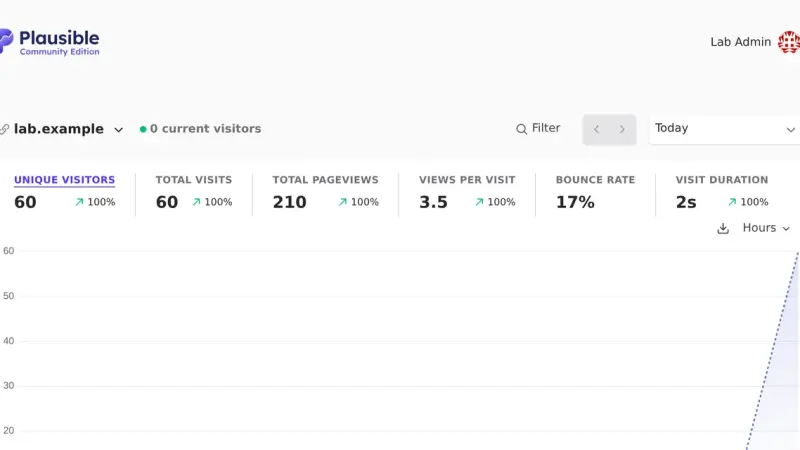
To upgrade Plausible CE from 2.1.5 to 3.2.2 with Docker, stop the stack, archive the db-data and event-data volumes and check out the v3.2.2 branch of the community-edition repository. If you only bump ClickHouse to 24.12, Plausible fails with Code: 516 Authentication failed until you add CLICKHOUSE_SKIP_USER_SETUP=1. To roll back, restore the archives.
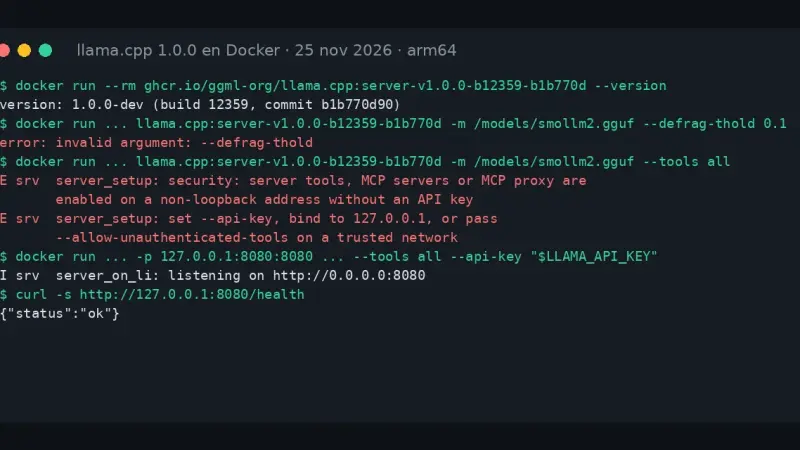
llama.cpp 1.0.0 deleted --defrag-thold: llama-server exits with error: invalid argument: --defrag-thold and the fix is to remove the option. On top of that, --tools, --agent and MCP servers no longer start in Docker without an API key. Set LLAMA_API_KEY and publish the port on 127.0.0.1; --host 127.0.0.1 inside the container leaves the port unanswered.
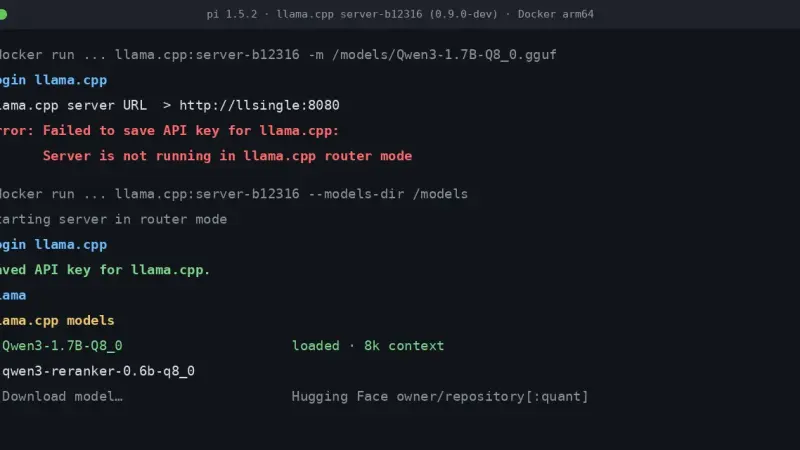
pi answers Server is not running in llama.cpp router mode because its /login llama.cpp only accepts llama-server in router mode, and your server was started with -m, --model or -hf. Start it with no model and --models-dir, or keep the server as it is and add an OpenAI-compatible provider in models.json.
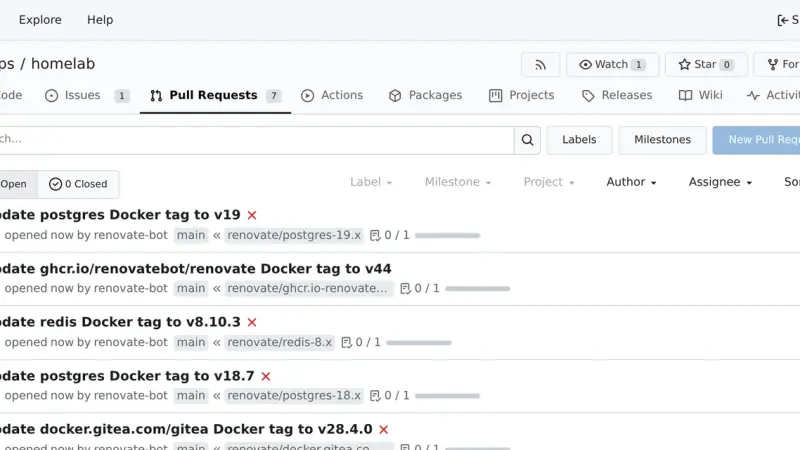
When you move a self-hosted Renovate from 42 to Renovate 44, postUpgradeTasks stop running inside a shell: a pipe fails with grep: |: No such file or directory and the pull request gets an Artifact update problem comment. Enable allowShellExecutorForPostUpgradeCommands in the global config or move the command into a script, then tick the retry checkbox.
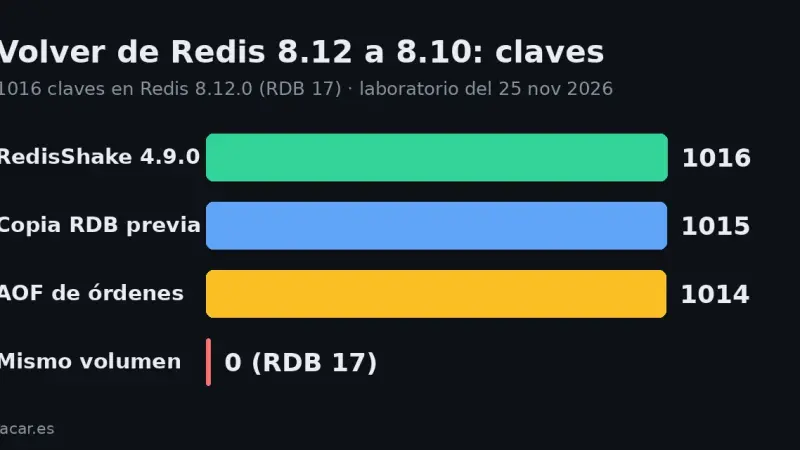
Redis 8.12.0 saves data in RDB format 17, and Redis 8.10 or Valkey 9.2 reject it with Can't handle RDB format version 17. Pin the image to redis:8.12 to start right away. To go back to 8.10 or move to Valkey, restore the pre-upgrade backup or copy the data with RedisShake 4.9.0: I tested it with 1016 keys.
If ghcr.io answers denied when you pull a public image, Docker is sending an expired or revoked GitHub token you saved long ago, and the registry rejects it before checking whether the image is public. Run docker logout ghcr.io, confirm with curl that the package is public, then pull again.
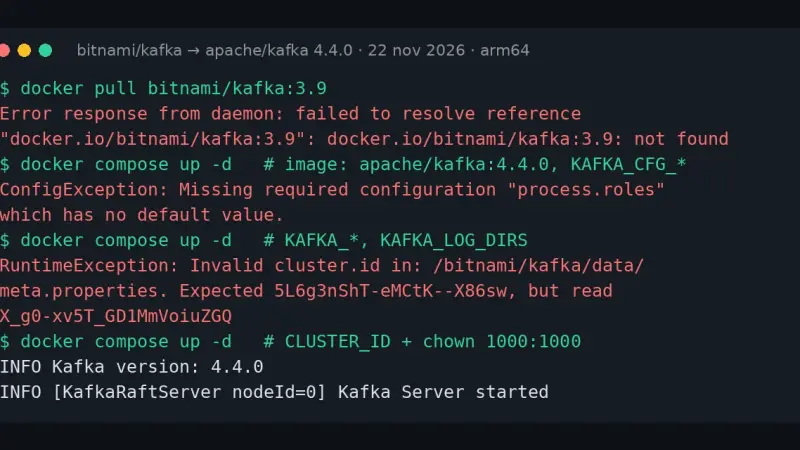
The docker.io/bitnami/kafka: not found error appears because Bitnami emptied that Docker Hub repository. The way out is the official apache/kafka 4.4.0 image in KRaft mode: rename KAFKA_CFG_* to KAFKA_*, set CLUSTER_ID and KAFKA_LOG_DIRS, hand the data to user 1000, and your topics and offsets are still there.
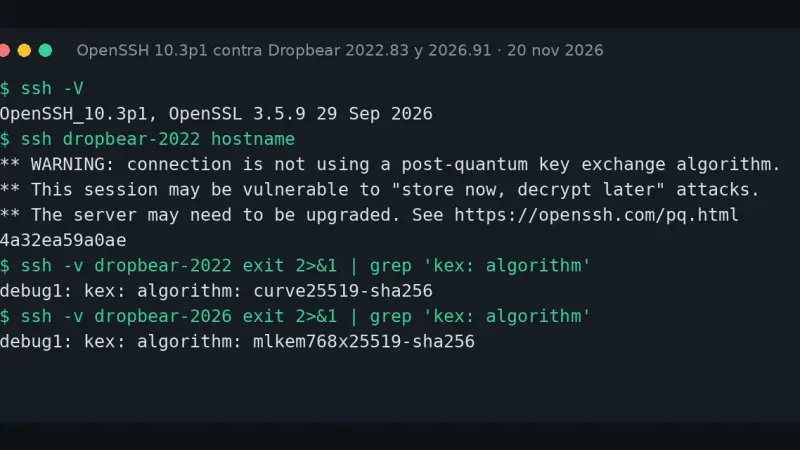
OpenSSH 10.1 and later print connection is not using a post-quantum key exchange algorithm when the server offers neither mlkem768x25519-sha256 nor sntrup761x25519-sha512. The fix is to update the server or add those algorithms to KexAlgorithms. Only on a router or NAS you cannot update should you silence it per host with WarnWeakCrypto no-pq-kex.
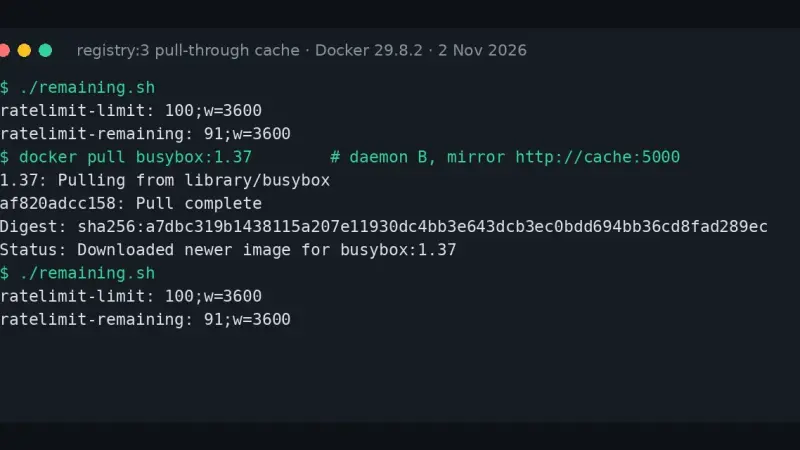
The toomanyrequests error appears when your IP runs out of anonymous Docker Hub pulls: 100 every 6 hours according to the docs. Measure what you have left with a token and a HEAD request, which costs no pulls, then run registry:3 as a pull-through cache behind registry-mirrors: the second pull comes from your cache and the counter stays put.
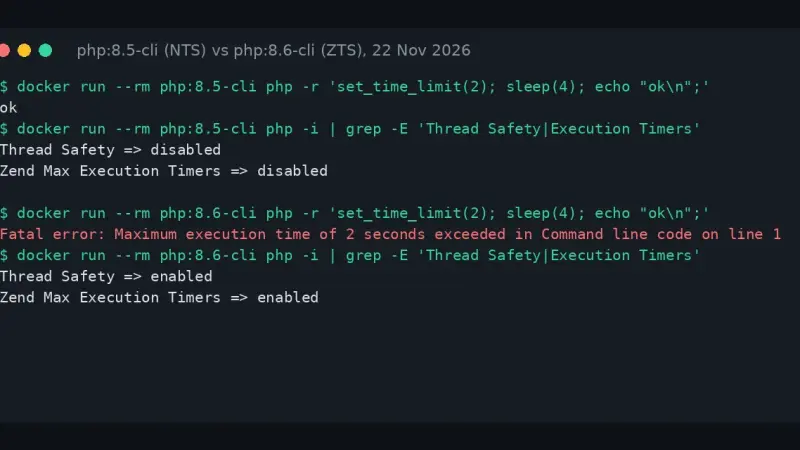
The official php:8.6 Docker images are built in ZTS mode, where max_execution_time counts wall-clock time instead of CPU time. A slow query, a sleep or an HTTP call now uses up the limit and the request dies with Maximum execution time of 30 seconds exceeded. Raise the limit or pin php:8.5.
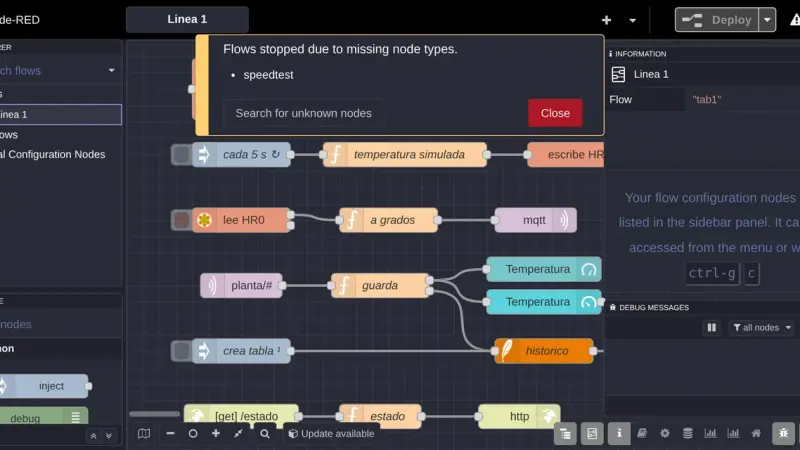
The nodered/node-red:5.0.10 image ships Node.js 24, and the native modules you installed into /data under Node.js 20 stop loading. A single broken node halts every flow with Flows stopped due to missing node types. Running npm rebuild inside /data and restarting fixes it. Archive the volume first so you can go back to 4.1.
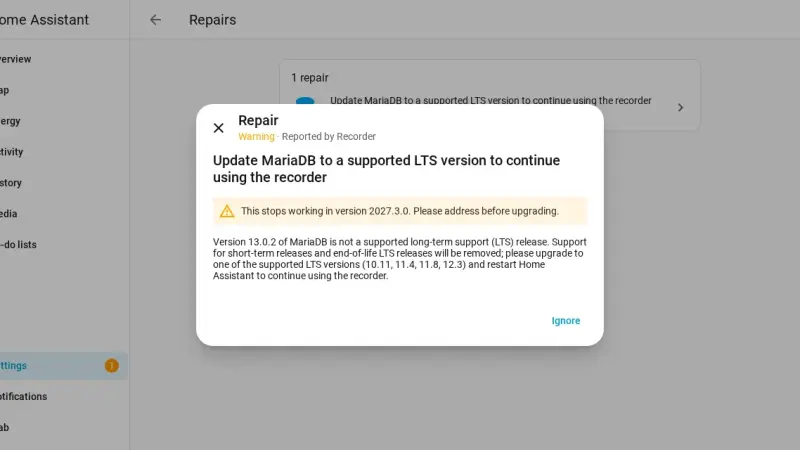
Home Assistant 2026.10 warns that MariaDB 13.0 is not an LTS release and that the recorder stops working with it in 2027.3.0. It hits anyone running mariadb:latest in Docker. The fix is to dump the database with mariadb-dump, start mariadb:12.3 on an empty data directory and restore the dump; with a million states it took 11 seconds.
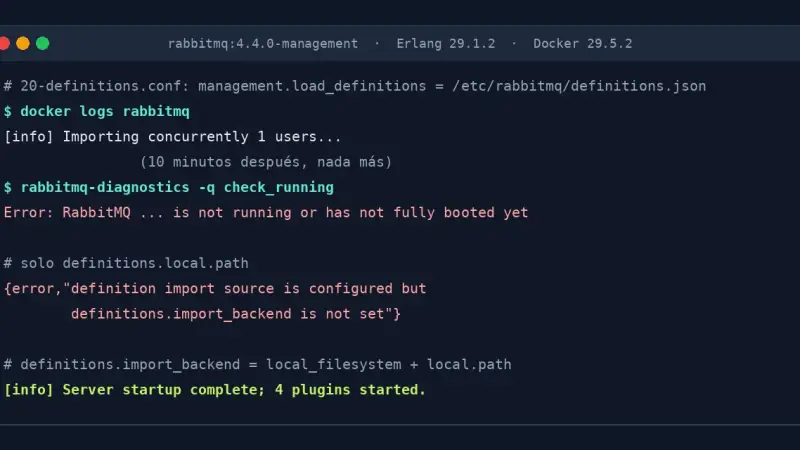
RabbitMQ 4.4.0 on Erlang 29 stalls on boot if you import definitions with management.load_definitions: the last message is Importing concurrently 1 users and the broker never finishes. Version 4.4.1 fixes it. If you stay on 4.4.0, replace that key with definitions.import_backend = local_filesystem and definitions.local.path, both together.
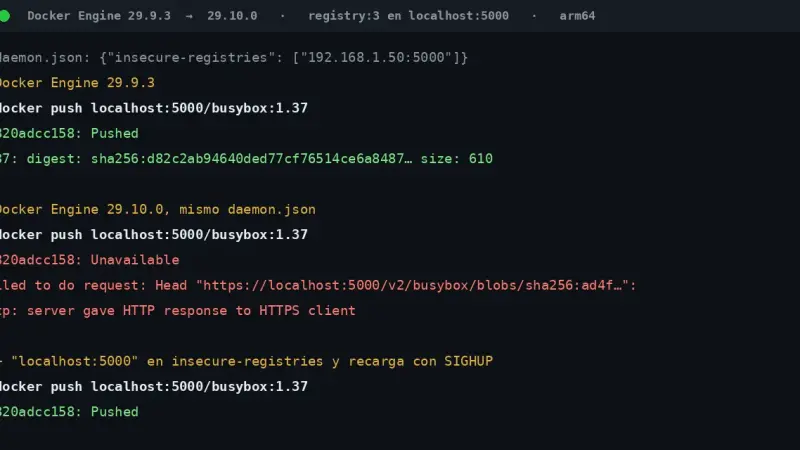
Since Docker Engine 29.10.0, when daemon.json declares insecure-registries, the daemon no longer adds 127.0.0.0/8 or ::1/128 to the list. A push to an HTTP registry on localhost:5000 then fails with server gave HTTP response to HTTPS client. Add localhost:5000 to your list and reload the daemon, or set up TLS with a trusted certificate.
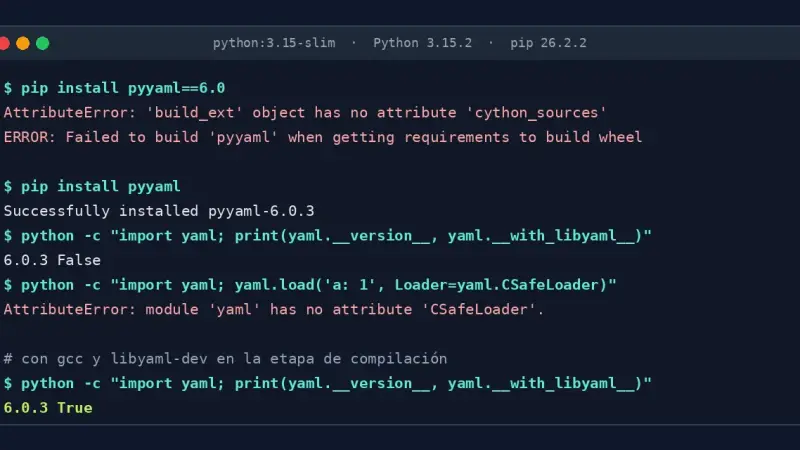
PyYAML 6.0.4 now ships wheels for Python 3.15: move to it and pip stops building from source. With older pins, 6.0 and 5.4.1 fail with AttributeError: cython_sources, and 6.0.3 installs on python:3.15-slim without libyaml, so CSafeLoader does not exist. If you cannot move, install gcc and libyaml-dev while building the image.
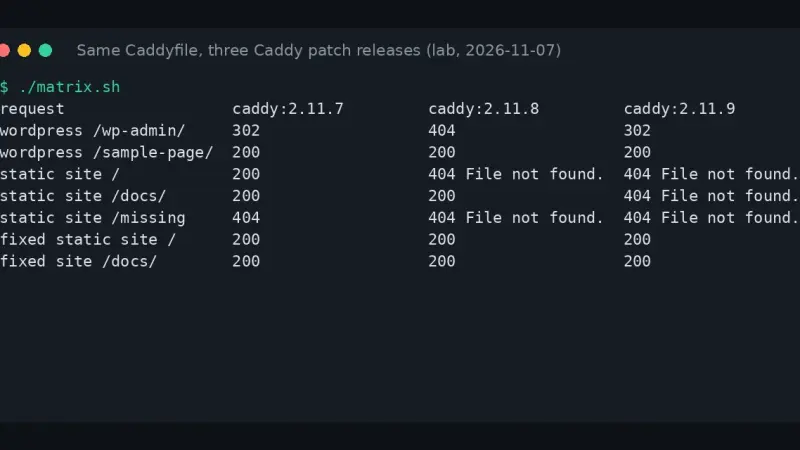
If Caddy 2.11 answers File not found on your home page, your site uses php_fastcgi without an index.php: since 2.11.8 those requests go to PHP-FPM. Add a try_files with no final fallback. If /wp-admin/ fails with an empty 404 instead, you are on 2.11.8: move to 2.11.9.
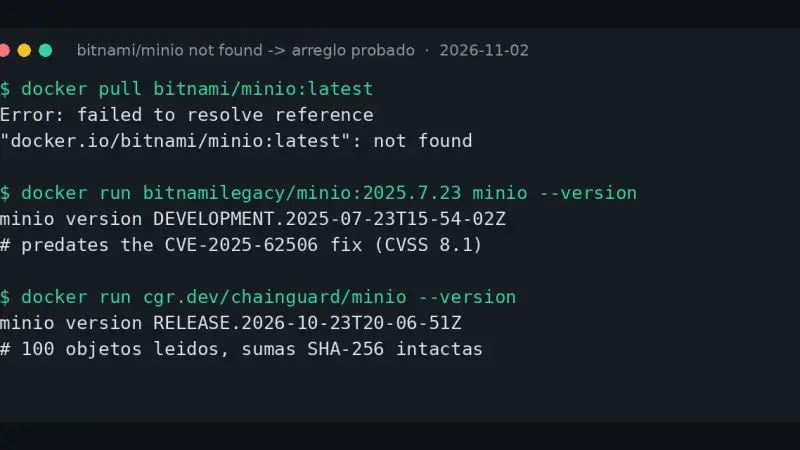
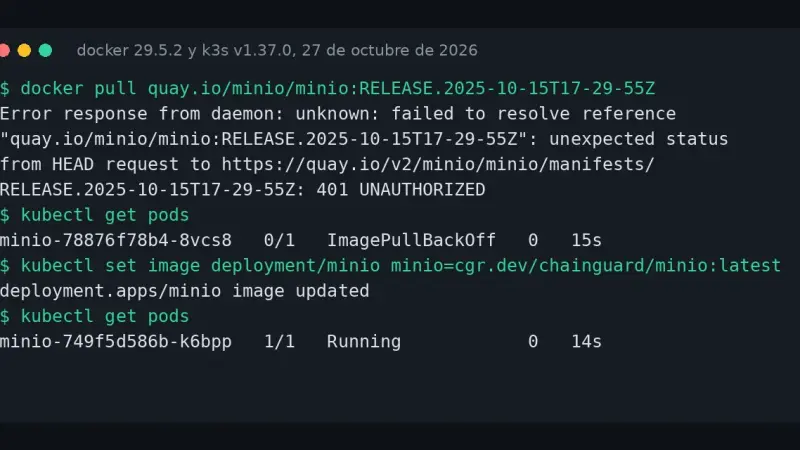
The bitnami/minio not found error appears because Bitnami deleted that repository from Docker Hub and left it with zero tags. Switching to bitnamilegacy/minio is not the fix: its binary is a July 2025 build that predates the CVE-2025-62506 patch. Move to cgr.dev/chainguard/minio or pgsty/silo, maintained images that start on your existing data.
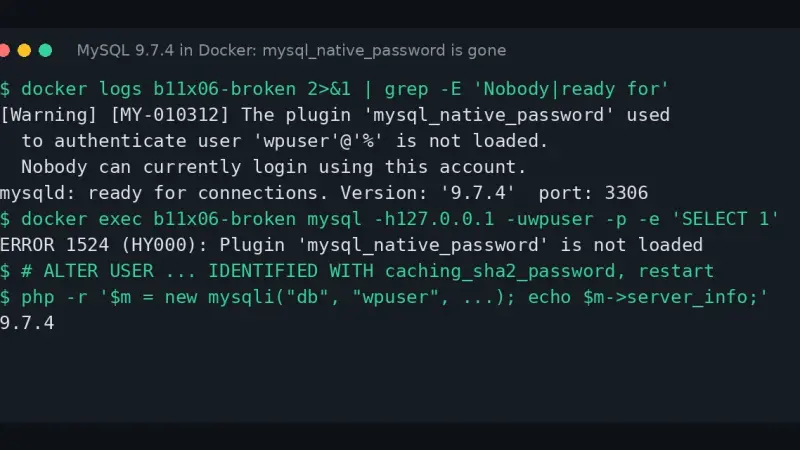
The Plugin 'mysql_native_password' is not loaded error appears because MySQL 8.4 disables that authentication method and 9.x removes it, and mysql:lts is now 9.7.4. Start 8.4 with --mysql-native-password=ON, convert every account to caching_sha2_password with ALTER USER, then move to 9.7.
The unknown storage type file error appears because OpenBao 2.7 removed the file backend, and the server stops as soon as it reads that configuration. Stop the container, back up the volume, migrate the data to PebbleDB with the 2.7.2 bao operator migrate and change the storage block: your unseal keys and token stay the same.
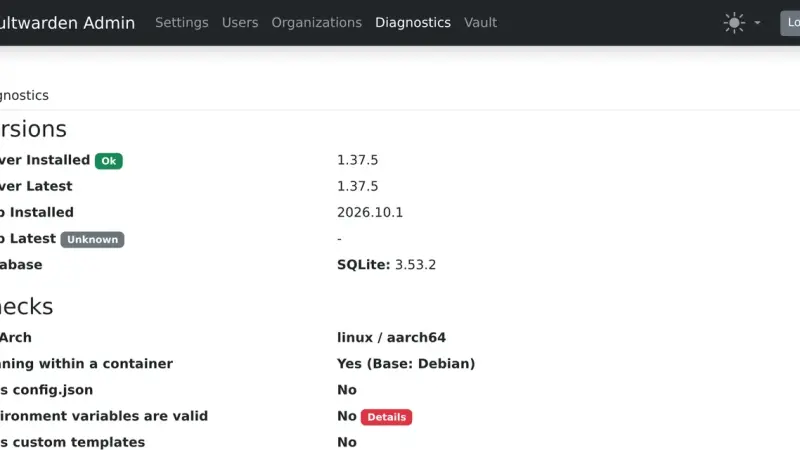
Vaultwarden 1.37.5 stops with Error loading config if your .env sets a rate limit or a database timeout to 0, or if a purge schedule is not a valid cron. Fix each variable the log names; out-of-range numbers do not stop it, but they are silently replaced by defaults.
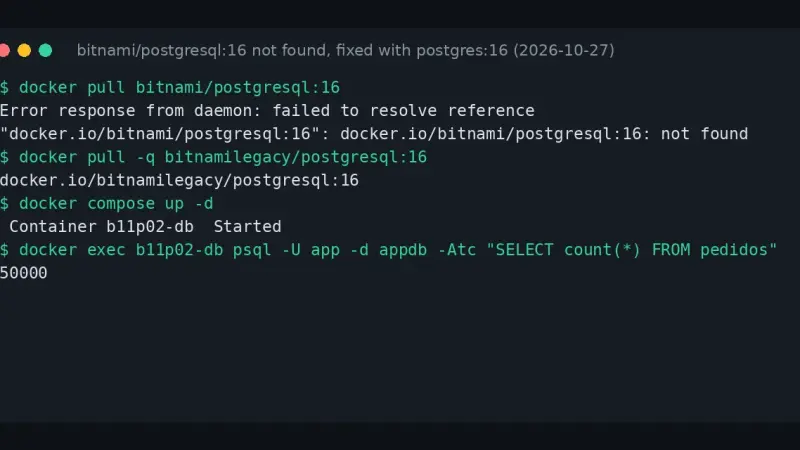
The docker.io/bitnami/postgresql:16: not found error appears because Bitnami removed its versioned tags from Docker Hub and only keeps latest. As a stop-gap, switch to bitnamilegacy/postgresql. The real fix is the official postgres image, pointing PGDATA at the Bitnami directory, creating postgresql.conf and pg_hba.conf and refreshing the collation version.
The No vector extension found error appears when Immich v3 starts on the old tensorchord/pgvecto-rs image, because version 3 no longer supports pgvecto.rs. Switch the Postgres image to ghcr.io/immich-app/postgres:14-vectorchord0.4.3-pgvectors0.2.0, let Immich migrate to VectorChord, and you keep smart search and faces.
The quay.io/minio/minio 401 UNAUTHORIZED error is not a credentials problem: MinIO took public access away from that repository in September 2026 and it fails for every tag. Switch the image to cgr.dev/chainguard/minio or pgsty/silo in Compose, Kubernetes or Helm; the AIStor image on Quay still pulls, but without a license it refuses every request.
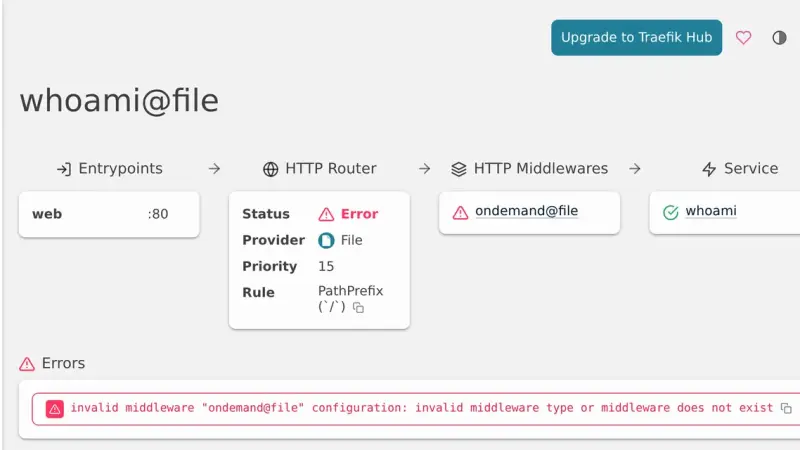
Traefik logged plugin integrity check failed because its plugin catalog served one zip and validated another. It hit Pangolin's Badger v1.8.0 and Sablier v1.3.1. Traefik fixed it on 30 October 2026: if you pinned the zip hash, remove that line or pin the new hash.
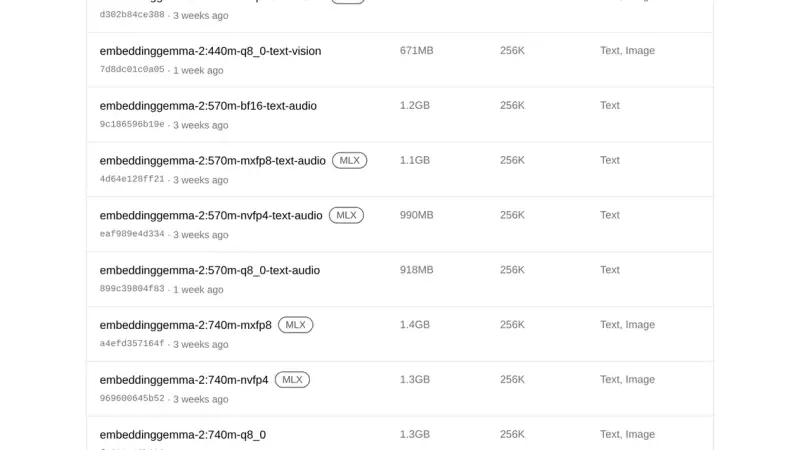
Ollama prints this model requires MLX support, but the MLX runtime is not available when you pull a tag that only exists as MLX safetensors, such as embeddinggemma-2:740m-bf16 or phonon, on a machine without MLX: Linux arm64, Linux without an NVIDIA GPU, or Windows. Pull the GGUF variant (q8_0) with Ollama 0.40.4 or later.
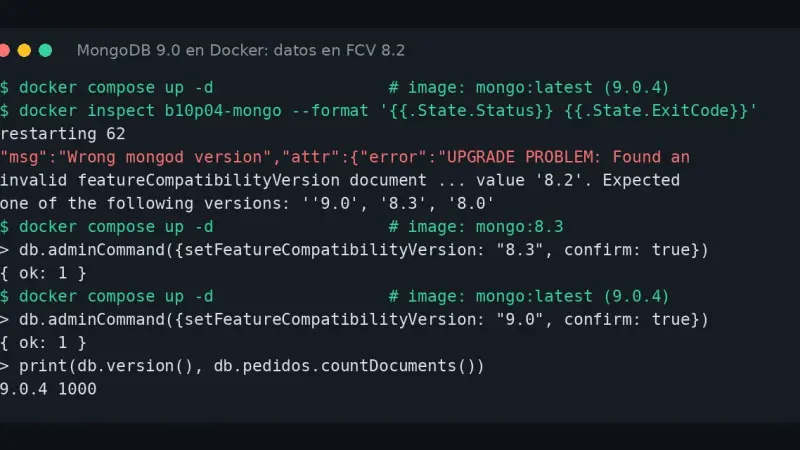
The UPGRADE PROBLEM: Found an invalid featureCompatibilityVersion document error appears because mongo:latest has pointed at MongoDB 9.0 since 1 October 2026, and 9.0 only opens data at FCV 8.0 or 8.3. Go back to your previous image, move to mongo:8.3, set the FCV to 8.3 and only then switch to 9.0.
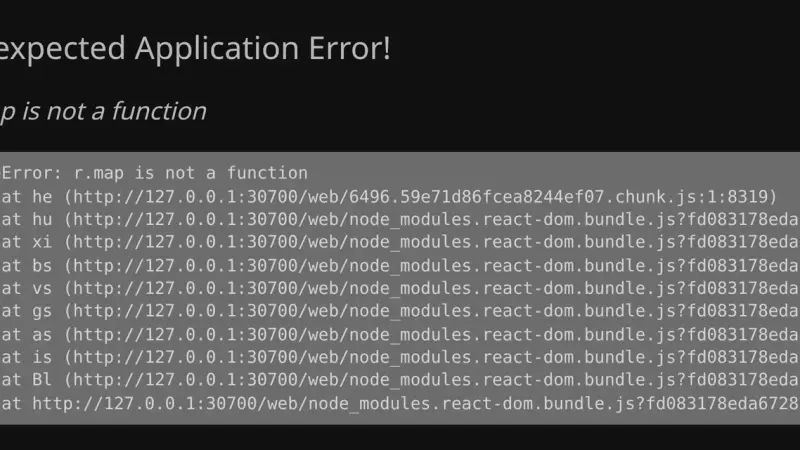
The Jellyfin 12 dashboard error r.map is not a function appears when /web/ConfigurationPages returns HTML or an empty body instead of JSON, and the web client keeps that answer in IndexedDB for 24 hours. Fix the reverse proxy, then delete the jellyfin-query-cache key and the browser's cached files.
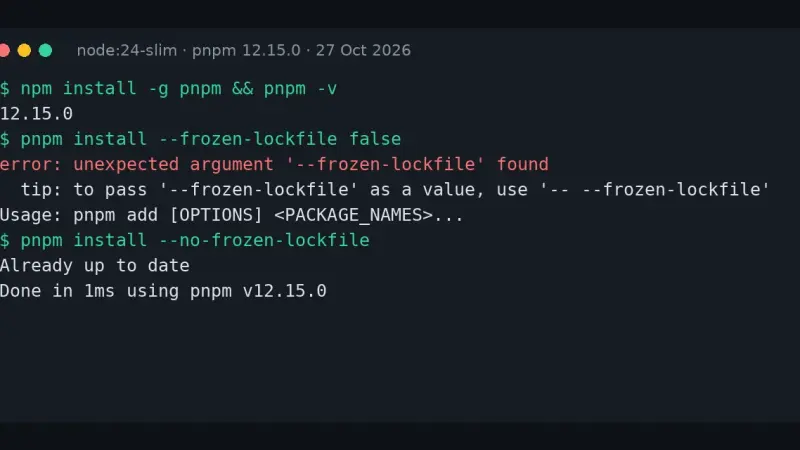
The unexpected argument '--frozen-lockfile' found error appears because npm install -g pnpm now installs pnpm 12, rewritten in Rust, and its CLI no longer takes a space-separated value. Replace --frozen-lockfile false with --no-frozen-lockfile, and pin pnpm in your Dockerfile and in packageManager so the next major does not surprise you.
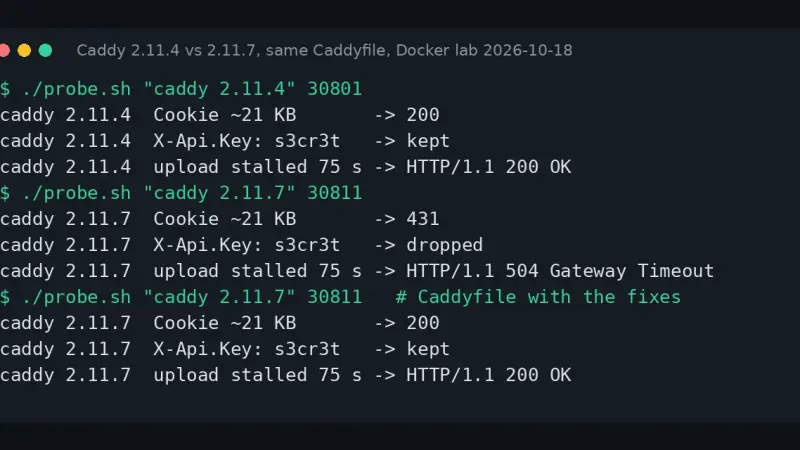
Since Caddy 2.11.6, request headers are capped at 16 KiB and anything larger gets 431 Request Header Fields Too Large. Raise the cap with max_header_size in the servers block. The same release silently drops headers that contain a dot, cuts stalled uploads after 60 s and stops inheriting client_auth from a wildcard site.
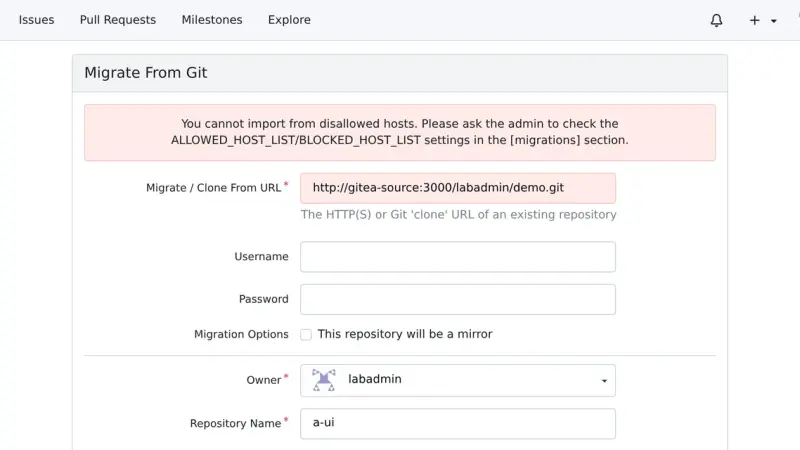
Gitea 28 shows You cannot import from disallowed hosts when you migrate or mirror from a private IP, such as another container on your Docker network. A hostname is no longer enough: add the source IP or subnet with its port to [migrations] ALLOWED_HOST_LIST, for example 172.31.105.0/24:3000, and the migration goes through.
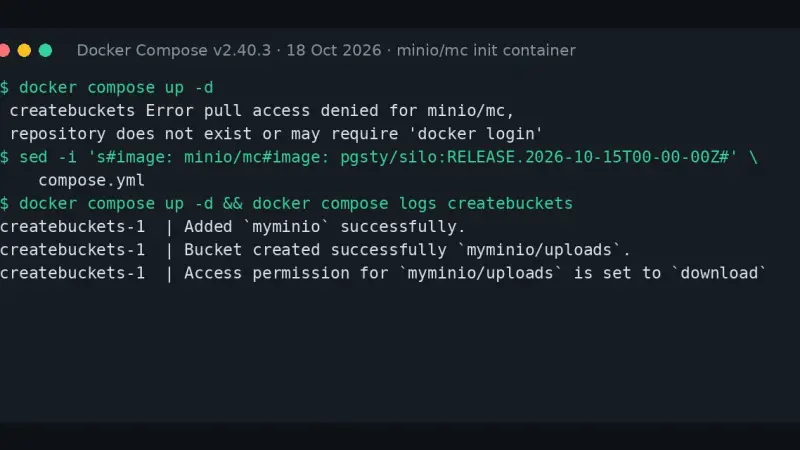
The pull access denied for minio/mc error appears because MinIO deleted that image from Docker Hub in September 2026, and it stops the whole compose stack even though only the bucket-creation container uses it. Swap it for pgsty/silo, the Chainguard image or aws-cli, or drop the service if your buckets already exist.
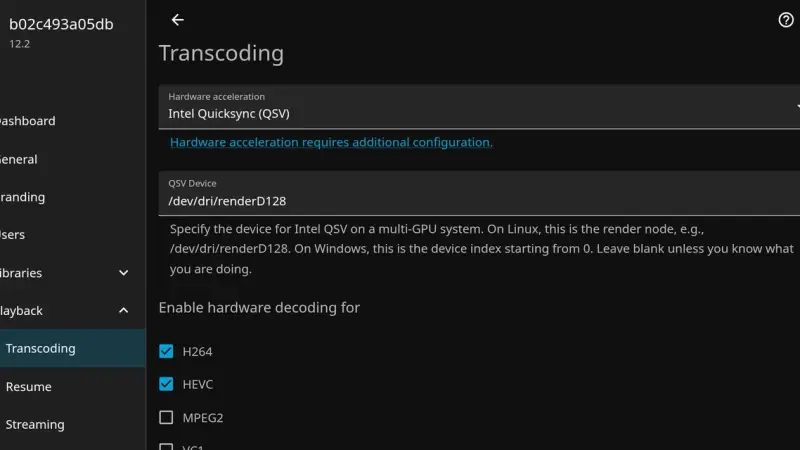
The Error loading configuration file: /config/config/encoding.xml message in Jellyfin 12.0 and 12.1 comes from the EncoderPreset xsi:nil line that 10.11 writes by default. The server starts, but transcoding falls back to defaults and QSV is gone. Jump to 12.2 before migrating, or change that line to auto.
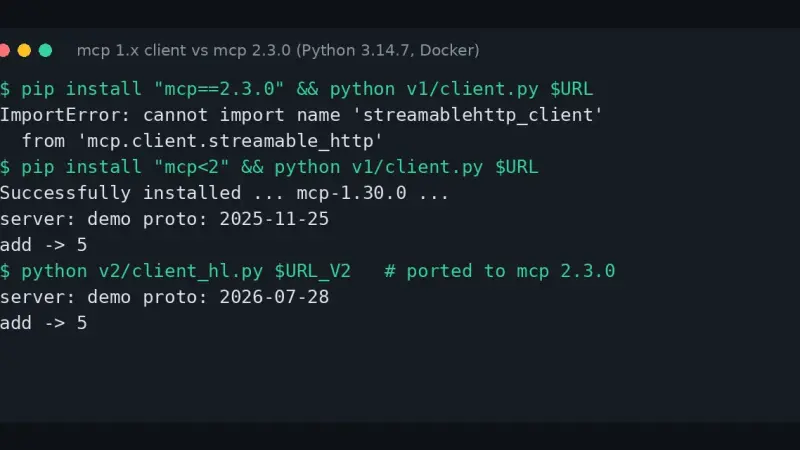
The cannot import name streamablehttp_client error appears because the Python mcp package 2.x deleted that function, and McpError was renamed MCPError. To get unblocked, pin mcp
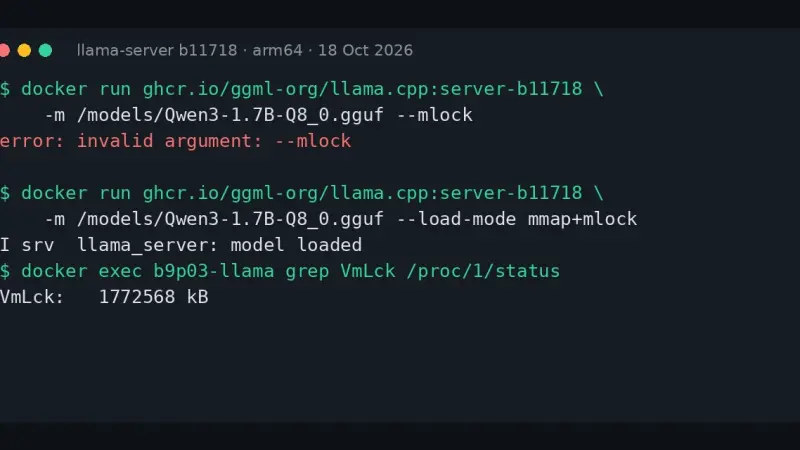
llama-server prints error: invalid argument: --mlock because build b10875, from 9 September 2026, deleted --mmap, --no-mmap, --mlock and --direct-io. Replace them with --load-mode: --mlock becomes mmap+mlock, --no-mmap becomes none and --direct-io becomes dio. The LLAMA_ARG_MLOCK and LLAMA_ARG_MMAP variables now do nothing, with no warning.
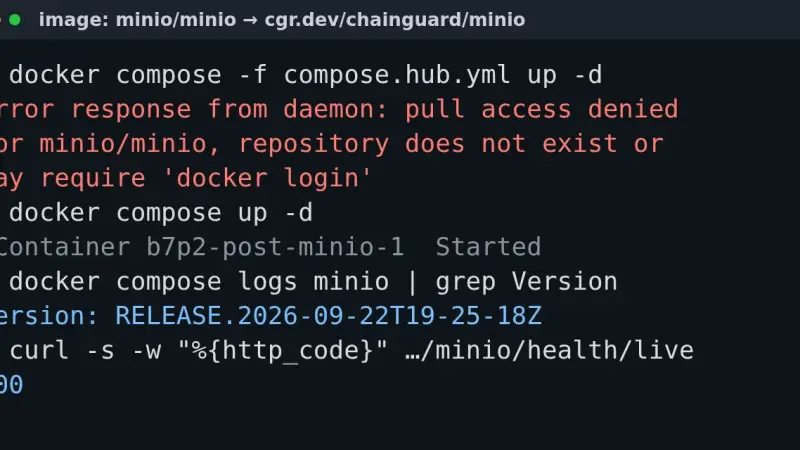
The pull access denied for minio/minio error appears because MinIO removed its Docker Hub images in September 2026, and quay.io has required an account since the 24th. Point your compose file at cgr.dev/chainguard/minio, at the pgsty/silo fork or at an image built from source: your existing data keeps working.
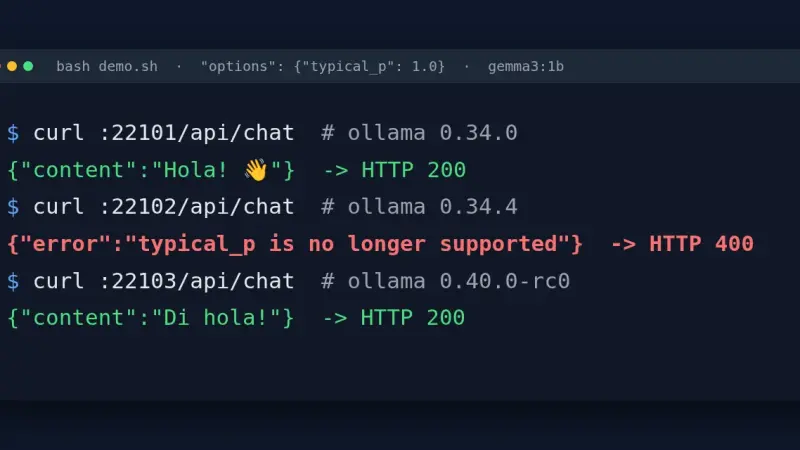
Ollama 0.34.1 through 0.34.4 reject with HTTP 400 any request to /api/chat or /api/generate that carries typical_p in options, even at 1.0. The fix is to drop the field in the client, go back to 0.34.0, use the /v1 endpoint, or move to 0.40.0, which only logs a warning.
12 min53
We use first- and third-party cookies to analyze site traffic. You can accept them, reject them, or configure your choice.
Learn more about cookies
Cookie preferences
NecessaryEssential for the site to work. Always on.
AnalyticsHelp us understand how the site is used (Google Analytics).