Artificial Intelligence
How to install and tune oMLX on M5 Max 128 GB
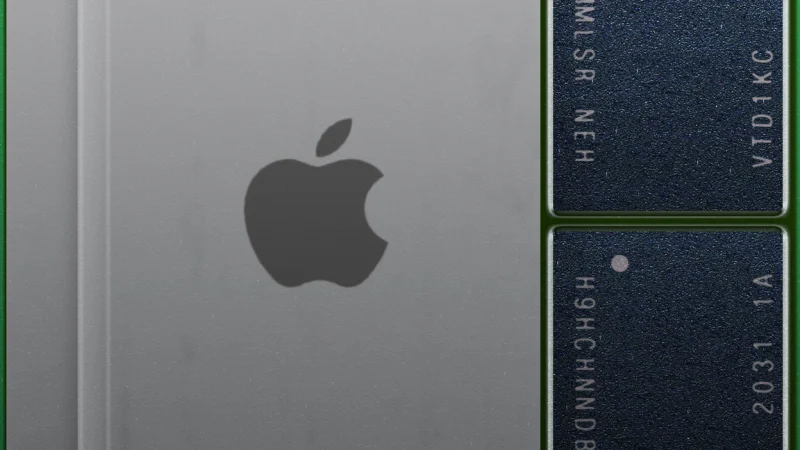
Tested May 2026 recipe: oMLX 0.3.8 on Mac M5 Max with 128 GB, TurboQuant at 3.5-bit, Qwen 3.6 35B-A3B model stack, Claude Code wiring and real benchmarks.
Category
AI without the hype: models, agents and use cases that work in production.
Tested May 2026 recipe: oMLX 0.3.8 on Mac M5 Max with 128 GB, TurboQuant at 3.5-bit, Qwen 3.6 35B-A3B model stack, Claude Code wiring and real benchmarks.
Hybrid RAG in 2026 combines dense and lexical search fused with RRF, cross-encoder reranking over the top-50 candidates, structure-aware chunking, and continuous evaluation with Ragas or TruLens. It is the pattern that survives in serious production systems three years after the initial embeddings boom.
Opus 4.7 launched as Anthropic's most capable model, with emphasis on long-horizon agentic work. After two months of intensive use, these are the practical changes versus Opus 4.6.
While OpenAI and Anthropic dominate headlines with rounds worth hundreds of millions, a growing group of niche AI startups generates one to ten million dollars in revenue with teams of two to ten people. They share five patterns: narrow vertical focus, 70-80% margins, community distribution, iteration cycles in days, and AI as an internal lever.
Direct Preference Optimization (DPO) and its variants, IPO, KTO, and SimPO, have displaced RLHF as the preferred alignment method for language models: they drop the separate reward model, cut training cost, and are easier to reproduce. RLHF still has an edge only for frontier models with very large budgets.
The Model Context Protocol, proposed by Anthropic in late 2024 and adopted through 2025-2026 by Anthropic, OpenAI, Google, and the open-source community, already has proven operational patterns: separating generic servers from custom ones, explicit per-tool policies, credentials kept outside the model, prefixed composition, and contract tests. This is the state of the art in 2026.
Using an LLM to judge another LLM became widespread in 2024 and remains, in 2026, the only scalable way to evaluate qualitative quality in LLM systems. It is reliable when judge-human correlation exceeds 0.7 on 30 cases and gets recalibrated quarterly; below that threshold, do not trust the number.
AI agents fail in production, and what matters is how you respond in the first twenty minutes. This runbook covers severity classification, isolating before investigating, purging contaminated memory, communicating without inventing facts, and turning every incident into a regression test before closing it as done.
Prompt engineering has moved from viral tricks to a discipline with reproducible patterns: few-shot, chain-of-thought, and structured output with function calling. Teams treating prompts like code (versioned, tested, and monitored) get consistently better results than those who improvise.
Durante 2025 cientos de equipos pusieron agentes IA en producción real. A principios de 2026, con datos suficientes, emergen lecciones consistentes sobre qué falla, qué funciona, cuánto cuesta y qué tareas no encajan. Repaso ordenado para equipos que empiezan ahora.
A selection of postmortems published between 2025 and 2026 by teams running AI systems in production reveals repeated patterns: guardrail failures, silent model drift, hidden vendor dependency, and a collection of near-misses worth distilling.
After two years watching every product invent its own interface for talking to an agent, by January 2026 a stable design consensus is emerging about which patterns work, which do not, and what the average user already expects. Time to write down what has settled.
Phi-3 es la familia de modelos pequeños de lenguaje que Microsoft viene puliendo desde abril de 2024 con variantes de 3.800 millones, 7.000 millones y 14.000 millones de parámetros. Después de año y medio, el panorama del edge con SLM abiertos se ha vuelto serio y Phi-3 ocupa un sitio claro.
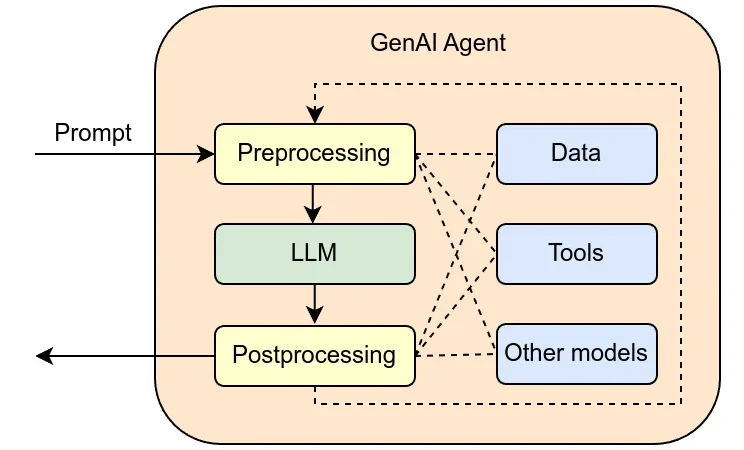
The term Agent OS has spent a year gaining traction across research and product circles. It describes a layer that goes well beyond an agent library: request scheduling, context management, persistent memory, and isolation. A look at the real state of that concept.
Redis 8.2 ships vector search as a native data type. The real question is whether it replaces a dedicated engine like Qdrant, Weaviate, or pgvector on workloads with millions of vectors and tight latency budgets, or only works as a bonus on top of the cache you already run.
Casi nueve meses después del lanzamiento de Computer Use, algunos equipos lo han llevado a producción para tareas reales. Dónde funciona, dónde todavía no conviene, y qué patrones están emergiendo para que un agente que maneja ratón y teclado no acabe siendo más problema que solución.
Los editores de código han empezado a incorporar MCP como cliente nativo: VS Code, Zed, Cursor y varios forks de Neovim. Esto cambia la forma en que el agente accede al contexto del proyecto y abre preguntas prácticas sobre qué servidores activar y cómo configurarlos sin abrir puertas.
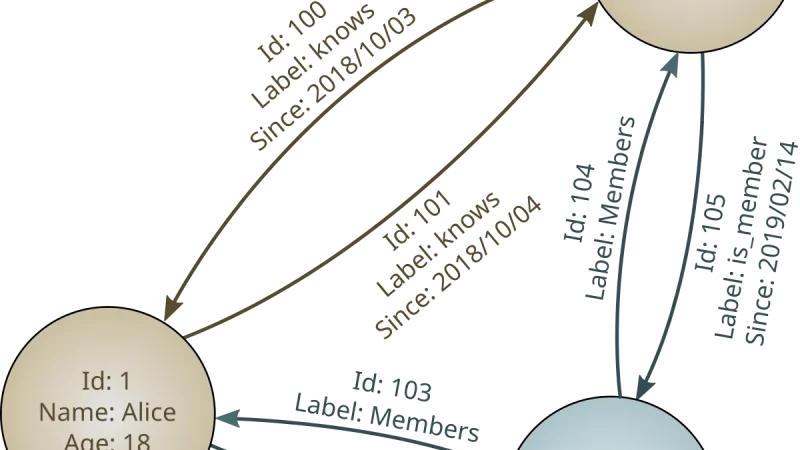
For a decade, knowledge graphs were an academic idea with few real use cases, held back by the cost of building and maintaining the schema. LLMs have changed that equation: they now extract entities automatically and help anchor answers, audit reasoning, and support agents without hallucinating.
La mitad del ecosistema IA de 2024 era una capa fina sobre la API de OpenAI. Dos años después, unos cuantos se han convertido en producto y el resto ha desaparecido. Revisión de qué separa un wrapper serio de un agujero por donde se va el dinero.
Desde que Microsoft abrió GraphRAG, el patrón de usar grafos sobre tus propios datos ha pasado de experimento académico a técnica con aplicaciones prácticas. Reflexión sobre cuándo compensa, cómo se monta y qué errores se repiten.
Google ha lanzado Gemini 2.0 con un énfasis claro en uso de herramientas y agentes. Repaso de qué aporta, dónde está por detrás de la competencia y en qué tipo de aplicaciones encaja mejor.
Meta publicó Llama 3.2 con modelos tan pequeños como 1B y 3B, pensados específicamente para ejecutarse en dispositivos. Análisis de qué pueden hacer realmente y cómo se comparan con las alternativas.
Qualcomm, Intel and AMD Copilot+ processors have normalised the presence of an NPU in everyday PCs. A 40 TOPS NPU can run quantised Phi-3 Mini drawing just 5-10 W, versus 40-50 W for a laptop GPU doing the same task. What actually changes for running AI models locally, and when it is worth it.
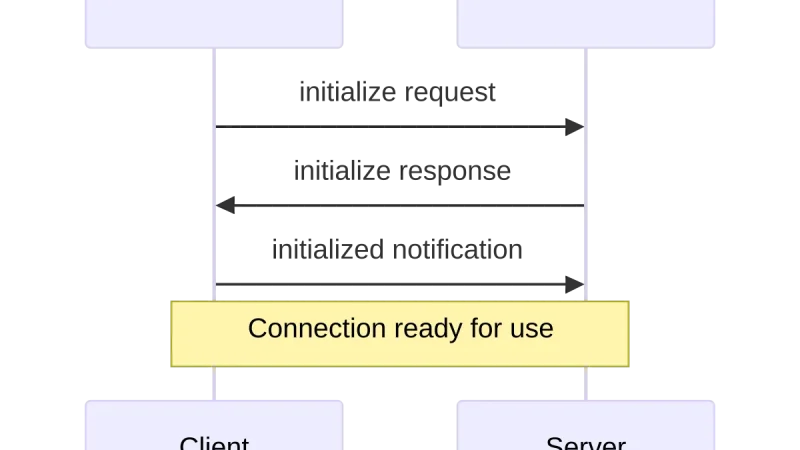
Model Context Protocol (MCP) is the open standard Anthropic published on 25 November 2024 to connect language models with external data and tools over JSON-RPC 2.0. It does not replace function calling: it standardises the server side, aiming to become for context what the Language Server Protocol is for code editors.