Artificial Intelligence
How to install and tune oMLX on M5 Max 128 GB
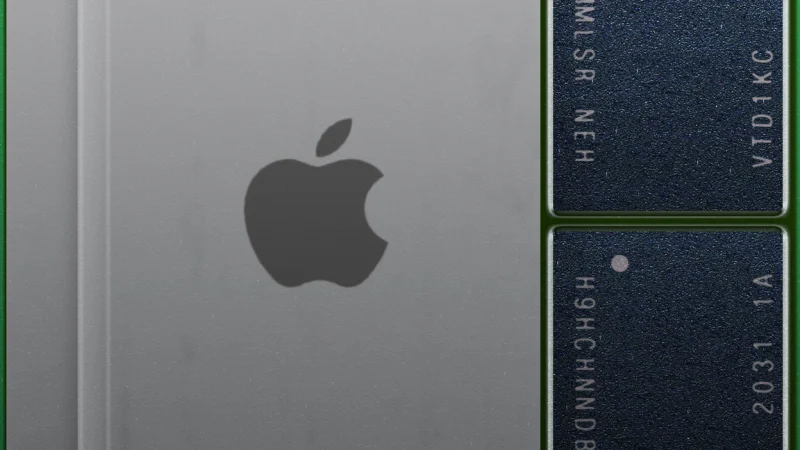
Tested May 2026 recipe: oMLX 0.3.8 on Mac M5 Max with 128 GB, TurboQuant at 3.5-bit, Qwen 3.6 35B-A3B model stack, Claude Code wiring and real benchmarks.
Category
AI without the hype: models, agents and use cases that work in production.
Tested May 2026 recipe: oMLX 0.3.8 on Mac M5 Max with 128 GB, TurboQuant at 3.5-bit, Qwen 3.6 35B-A3B model stack, Claude Code wiring and real benchmarks.
Durante 2025 cientos de equipos pusieron agentes IA en producción real. A principios de 2026, con datos suficientes, emergen lecciones consistentes sobre qué falla, qué funciona, cuánto cuesta y qué tareas no encajan. Repaso ordenado para equipos que empiezan ahora.
A selection of postmortems published between 2025 and 2026 by teams running AI systems in production reveals repeated patterns: guardrail failures, silent model drift, hidden vendor dependency, and a collection of near-misses worth distilling.
After two years watching every product invent its own interface for talking to an agent, by January 2026 a stable design consensus is emerging about which patterns work, which do not, and what the average user already expects. Time to write down what has settled.
Casi nueve meses después del lanzamiento de Computer Use, algunos equipos lo han llevado a producción para tareas reales. Dónde funciona, dónde todavía no conviene, y qué patrones están emergiendo para que un agente que maneja ratón y teclado no acabe siendo más problema que solución.
Los editores de código han empezado a incorporar MCP como cliente nativo: VS Code, Zed, Cursor y varios forks de Neovim. Esto cambia la forma en que el agente accede al contexto del proyecto y abre preguntas prácticas sobre qué servidores activar y cómo configurarlos sin abrir puertas.
La mitad del ecosistema IA de 2024 era una capa fina sobre la API de OpenAI. Dos años después, unos cuantos se han convertido en producto y el resto ha desaparecido. Revisión de qué separa un wrapper serio de un agujero por donde se va el dinero.
Desde que Microsoft abrió GraphRAG, el patrón de usar grafos sobre tus propios datos ha pasado de experimento académico a técnica con aplicaciones prácticas. Reflexión sobre cuándo compensa, cómo se monta y qué errores se repiten.
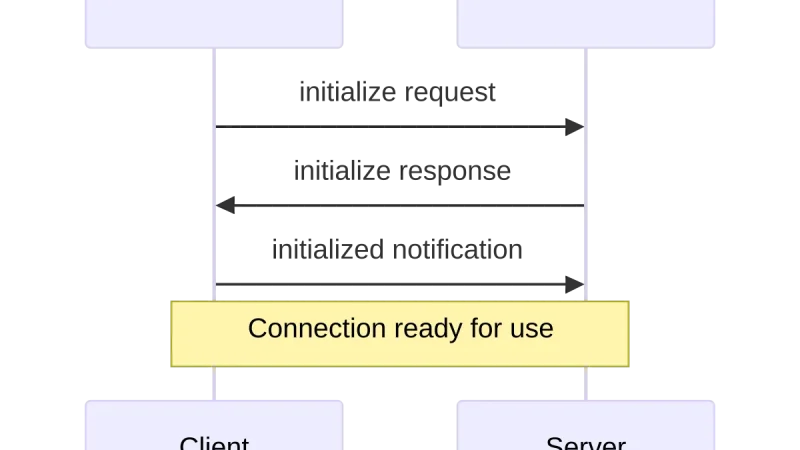
Model Context Protocol (MCP) is the open standard Anthropic published on 25 November 2024 to connect language models with external data and tools over JSON-RPC 2.0. It does not replace function calling: it standardises the server side, aiming to become for context what the Language Server Protocol is for code editors.
LoRA cuts fine-tuning cost for large language models by training only small low-rank adaptation matrices instead of every parameter in the base model. QLoRA adds 4-bit quantization on top, cutting required GPU memory by 65-75%, with quality loss of just 1-3% versus full fine-tuning.
CrewAI modela agentes como un equipo con roles y tareas. Cómo se compara con LangGraph y AutoGen, y cuándo merece la pena adoptar un patrón multi-agente.
Embeddings retrieve fast but rank poorly. A reranker over the top-100 lifts precision 15–30 %. When it pays off and when it does not.
An ensemble combines the predictions of several models, through bagging, boosting, or stacking, to reach a more accurate and stable result than any single model. Random Forest and XGBoost dominate tabular data because they exploit that idea: diversity between models reduces error, as long as their mistakes are not correlated with each other.