Retool and Appsmith cut internal tool development time from weeks to days. Retool leads the commercial SaaS market with polished components and enterprise permissions; Appsmith brings open source self-hosting at low or zero cost. Low-code works for dashboards, forms, and simple workflows, and breaks on complex logic or highly custom interfaces.
containerd is the runtime that runs containers in most modern Kubernetes clusters, and almost nobody notices. It manages the full container lifecycle: pulling the image, starting it, networking, and mounting the filesystem. It became the default runtime after Kubernetes 1.24 removed dockershim in May 2022.
eBPF is a Linux kernel technology that lets you load and run verified, high-performance programs without recompiling the kernel or rebooting the system. It runs safely inside a virtual machine in the kernel and underpins tools such as Cilium, Pixie, Falco, and Tetragon for real-time tracing, networking, and security.
Vector databases have gone from an experimental curiosity to the central component of most LLM-based products. This comparison covers Qdrant, Pinecone, and Weaviate: architecture, strengths, limitations, and a decision tree for choosing the right option based on your operational priorities and budget.
PostgreSQL 16, released in September 2023, adds logical replication from a standby, the pg_stat_io view for breaking down I/O by operation type and context, and parallel FULL OUTER JOIN support. Upgrading from 15 is straightforward; 13 loses support in November 2025, so plan the update soon.
LangChain is a Python framework that unifies building LLM applications: prompt templates, retrievers over vector databases, function-calling agents, and conversational memory. It earns its keep in fast prototypes and multi-model systems, but for a single well-defined production use case, direct code usually stays more maintainable.
Chroma is the easiest vector database to get started with embeddings and semantic search: install it with pip install chromadb, no extra infrastructure required, and it exposes a minimal API (add, query, delete). It suits prototypes and mid-sized RAG systems well; past a few million vectors, Qdrant or Milvus scale better.
Micro-frontends bring the microservices idea to the UI: split the frontend into pieces that separate teams can develop and deploy independently. They pay off when coordination costs across four or more teams in the same SPA exceed the added technical overhead; without a mature design system and platform team, they tend to multiply problems.
Platform engineering formalizes the internal product development teams need. An Internal Developer Platform (IDP) centralises deployment, observability and self-service behind a unified interface so product teams deliver value without becoming infrastructure experts. Investment pays off from around 30 to 50 developers.
Redis alone isn't a caching strategy, just an ingredient: picking the right pattern among cache-aside, read-through, write-through, and write-behind, sizing TTL to how fast data actually changes, invalidating explicitly for critical data, and mitigating thundering herd with jitter and locking are the decisions that actually matter in production.
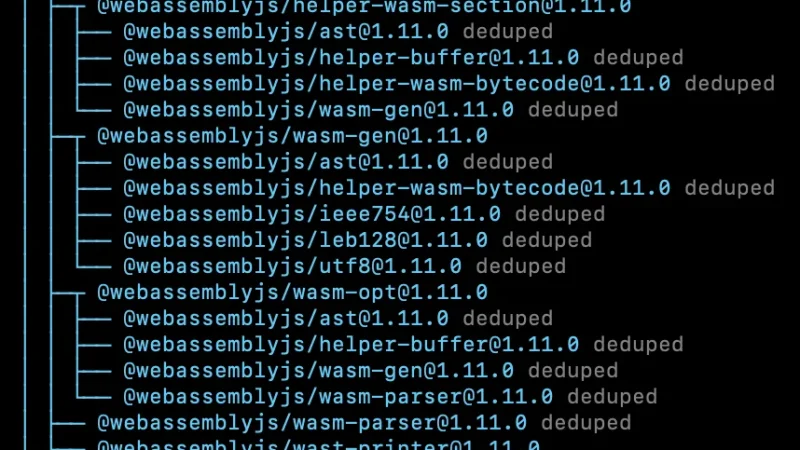
WebAssembly is moving beyond the browser through WASI, the standard system interface, and the component model, which defines declarative WIT interfaces so modules written in different languages can compose with each other. Cold start lands around 1 ms versus roughly 500 ms for a container, a key difference for serverless and edge computing teams.
A practical guide for development teams who need to meet WCAG 2.1 without turning accessibility into an endless project. Three layers, a set of proven tools, and 2-3 months of disciplined work are enough for most teams.
Migrating from monolith to microservices means splitting a single system into independent services that deploy and scale on their own. It gains granular scalability and team autonomy, but adds real operational complexity: stable interfaces, Kubernetes orchestration, and a mature DevOps culture are conditions, not optional extras, for the migration to pay off.
4 min2574.2
We use first- and third-party cookies to analyze site traffic. You can accept them, reject them, or configure your choice.
Learn more about cookies
Cookie preferences
NecessaryEssential for the site to work. Always on.
AnalyticsHelp us understand how the site is used (Google Analytics).