Kubernetes 1.35 GA consolidates three releases of work: native sidecars with full lifecycle management, generalised DRA for FPGAs and NPUs, and a scheduler that cuts resource waste by 15-25% in heterogeneous clusters. An operations-side balance sheet: what to enable now, what to watch before migrating, and what path to follow from 1.30.
NVIDIA still dominates frontier-model training in 2026, but inference tells a different story. AMD MI300X/MI325X with mature ROCm, Intel Gaudi 3, Google TPU v6, and AWS Trainium/Inferentia deliver 20 to 50% lower cost per token without sacrificing quality. Here is when to choose each option.
NPUs stopped being an accessory and became the component that defines real performance in laptops, phones, and small servers. A practical look at the hardware that rules 2026, which workloads pay off, and where the traditional GPU still wins.
Garnet es el servidor de caché abierto por Microsoft Research que habla el protocolo de Redis pero está escrito en .NET 8 con un núcleo de almacenamiento orientado a hardware moderno. Tras casi dos años en público, muestra números interesantes y una arquitectura que merece mirarse con calma, aunque el ecosistema Redis siga siendo más maduro.
OSV-Scanner se ha convertido en una referencia silenciosa para escanear dependencias open source. Su valor no está en el escaneo en sí, que muchas herramientas ofrecen, sino en su conexión directa con OSV.dev como fuente de verdad. Un análisis de por qué esto importa más de lo que parece.
Unikernels were promised as the future of cloud deployment back in 2015, then faded into obscurity soon after. Ten years later, Unikraft has reached a stable release and reads like a more mature, more useful take on that same idea. A review of what has changed.
Kubernetes 1.34 ships with Dynamic Resource Allocation (DRA) graduating to stable, scheduler improvements, and CEL-based mutating admission policies that replace webhooks. A practical rundown of what is safe to upgrade now, what can wait, and what actually changes for teams running production clusters.
Kubernetes 1.32 Penelope shipped in December and has been running in clusters for several months. It is a good time to look at which changes have aged well, which created extra work, and what lessons to carry into the jump to 1.33.
Rust entered the Linux kernel as an experiment in 2022. Three years on it has stable in-tree drivers, an increasingly polished internal API, and a first wave of contributors who treat the language as the default choice for new code.
Meta publicó Llama 3.2 con modelos tan pequeños como 1B y 3B, pensados específicamente para ejecutarse en dispositivos. Análisis de qué pueden hacer realmente y cómo se comparan con las alternativas.
Qualcomm, Intel and AMD Copilot+ processors have normalised the presence of an NPU in everyday PCs. A 40 TOPS NPU can run quantised Phi-3 Mini drawing just 5-10 W, versus 40-50 W for a laptop GPU doing the same task. What actually changes for running AI models locally, and when it is worth it.
IEC 62443 is the international cybersecurity standard for industrial control systems (ICS) and OT networks. Its four series blocks define security zones and conduits, four protection levels (SL 1-4) and seven foundational requirements. NIS2 pressure is accelerating adoption across Europe. IT teams need to master it to coordinate network segmentation, monitoring and incident response with OT environments.
OpenTofu reached GA in January 2024 as an open-source Terraform fork under MPL 2.0, with Linux Foundation governance. Six months later, it is a stable drop-in replacement: same configs, same state format, same CLI. Version 1.7 adds native state encryption, the first real technical edge over Terraform.
Carbon-aware computing runs flexible workloads when grid electricity emits less CO2, cutting emissions 10-30% without changing infrastructure. Grid carbon intensity varies up to 16x by hour and region; tools like Electricity Maps, WattTime and the Carbon Aware SDK make that scheduling possible with real grid data.
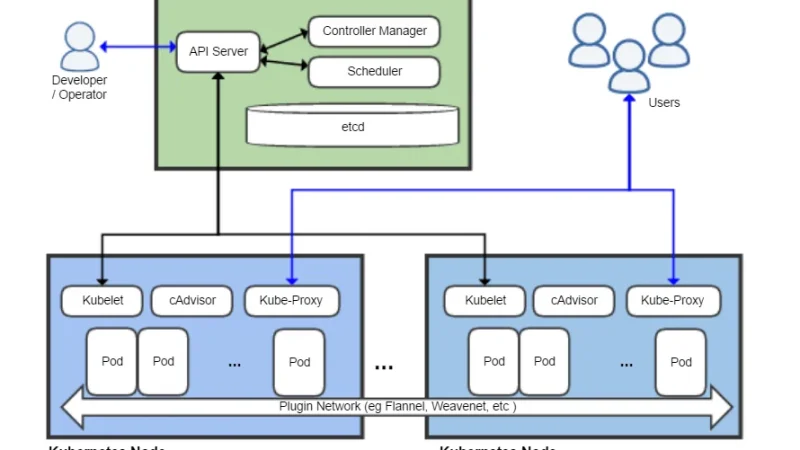
cAdvisor is still embedded in kubelet and covers surface metrics, but falls short for production Kubernetes. The modern minimum stack pairs it with kube-state-metrics, node-exporter, Prometheus, and Grafana as a base, eBPF for deep network and syscall visibility, and OpenTelemetry for application context.
Sigstore has become the standard signing layer for OCI artefacts. GHCR is the best-integrated registry; Harbor 2.5+ and Quay offer native support; AWS ECR pushes its own KMS scheme. Verification earns its keep at three points: the cluster admission controller, the GitOps layer, and the CI/CD pipeline. The public Rekor has rate limits that force self-hosting past a certain build volume.
Deno Deploy is the serverless-edge platform from the team that built Deno: native TypeScript without a transpile step, standard Web APIs, and global deployment to ~35 regions. Cold start runs ~50ms vs Cloudflare Workers (~5ms). Best for lightweight APIs and Fresh/Astro SSR; less ideal when your project needs the full Cloudflare infrastructure stack.
Installing Docker on Debian 12 means replacing the Debian docker.io package with the official repository: import the GPG key into /etc/apt/keyrings, install the five packages docker-ce, docker-ce-cli, containerd.io, docker-buildx-plugin and docker-compose-plugin, then set log rotation and live-restore in daemon.json before exposing the server to production.
A digital twin is a software replica of a physical asset (machine, production line, or whole plant) synchronised in real time with IoT sensors. It enables failure prediction, energy optimisation, and operator training without risk. It returns real value when the asset is critical, the data is reliable, and the team can maintain the model long-term.
Rust has been in the Linux kernel since version 6.1, though adoption is measured and deliberate. The Apple AGX GPU driver for Asahi Linux is the most prominent real upstream example. The goal is to eliminate an entire class of memory-safety bugs in new drivers without rewriting existing C code.
On 10 August 2023, HashiCorp changed Terraform from MPL 2.0 to Business Source License v1.1, which prohibits building competing products. For 95% of teams using Terraform internally, the practical impact is nil. Teams building SaaS products on top of Terraform need to review their situation or consider OpenTofu.
Kubernetes 1.27 ("Chill Vibes"), released in April 2023, makes SeccompDefault stable so pods get safer syscall defaults automatically, moves KMS v2 to beta with rotatable encryption keys for etcd secrets, and stabilises scheduling gates. It also removes PodSecurityPolicy for good: without migrating to Pod Security Admission first, the upgrade is blocked entirely.
OpenTelemetry is the CNCF project, graduated in May 2026, that unifies logs, metrics, and traces under one SDK and the OTLP protocol, without locking you into a single backend. Traces have been stable since 2021 and metrics since 2023; logs are still maturing, but already worth adopting on new projects.
Cilium replaces iptables with eBPF programs loaded directly into the Linux kernel, substituting O(n) linear chains with O(1) hash lookups. Documented benchmarks show up to 50% lower p95 latency, 2-3x more throughput, and 70% less kernel CPU in large Kubernetes clusters.
Five months after launch, GPT-4 excels at chained reasoning, technical writing, and medium-complexity code, but still fails at arithmetic, post-cutoff information, and cross-conversation consistency. Claude 2 wins on long context; LLaMA 2 wins on cost and privacy.
Meta released LLaMA 2 on July 18, 2023 with a royalty-free commercial licence, in three sizes (7B, 13B, 70B parameters). The 70B model matches or beats GPT-3.5 on standard benchmarks. For 99.9% of organisations the licence allows download, modification, and production use with full data privacy and no fine-tuning restrictions.
Kafka gets the headlines as the byword for modern messaging, but RabbitMQ remains the better choice for task queues with retries, asynchronous RPC, and pub/sub with complex routing. This guide compares both against NATS, walks through classic patterns and production mistakes, and helps you decide based on the actual use case rather than the trend.
Kubernetes 1.28 introduces native sidecar containers in alpha via KEP-753: adding restartPolicy Always to initContainers ensures correct startup and shutdown ordering. It fixes Jobs that never terminate. Istio, Linkerd, and observability agents like Fluent Bit are the primary beneficiaries.
Google launched Bard in February 2023 with PaLM 2 as its answer to ChatGPT, unveiling the model in May the same year in four sizes: Gecko, Otter, Bison, and Unicorn. PaLM 2 competes with GPT-3.5 and GPT-4 on benchmarks like MMLU and BIG-bench, but Google's real edge is Workspace integration, not the model itself.
The CIO role has been under growing pressure for years. Automation cuts the operational load, merging with the CDO and CTO creates ambiguity over who leads what, and digital transformation demands skills that were not previously required. The CIO who evolves remains indispensable; the one who does not gets left behind.
The financial sector is undergoing a deep transformation: blockchain, artificial intelligence, mobile payments, open banking, and big data are redefining who provides financial services and how. The World Bank estimates 76% of adults worldwide now hold a bank or mobile-money account, up from 51% in 2011, and these five technologies explain much of that progress.
Big Data lets companies analyse huge volumes of data to make faster, better-informed decisions. Tools such as Apache Hadoop, Spark, and Kafka process information in near real time, though the real value depends on data quality, governance, and the questions teams choose to ask.
Industry 4.0 is the Fourth Industrial Revolution: the convergence of IoT, artificial intelligence, big data, advanced robotics, and cybersecurity that connects factories to digital networks. The goal is the smart factory, able to adjust its production in real time from the data it collects, gaining productivity, quality, and energy efficiency.
5 min1744.5
We use first- and third-party cookies to analyze site traffic. You can accept them, reject them, or configure your choice.
Learn more about cookies
Cookie preferences
NecessaryEssential for the site to work. Always on.
AnalyticsHelp us understand how the site is used (Google Analytics).