After two years watching every product invent its own interface for talking to an agent, by January 2026 a stable design consensus is emerging about which patterns work, which do not, and what the average user already expects. Time to write down what has settled.
Generative AI helps user research most in transcription, where it reliably saves hours, and in early note synthesis and discussion guide drafting. It does not replace real participants: synthetic personas return plausible answers rather than the genuine surprises interviews produce. Verify every quote in a final deliverable against the original transcript before anyone acts on it.
A year after chat stopped being the only acceptable way to talk to an agent, UI patterns built specifically for agent tasks are emerging. I go through the ones starting to stick and the ones that are just cycle fashion.
Graph RAG layers an explicit graph of entities and relationships on top of retrieval, so a question can be answered by traversing connections rather than by vector similarity alone. Microsoft Research published the GraphRAG paper in April 2024 and open-sourced the code that July. Lighter variants such as LightRAG and HippoRAG followed, running on Neo4j or Memgraph.
The AI features Figma has rolled out since Config 2024 are changing how product design teams work. A look at what each feature delivers, what remains human work, and which habits are taking hold across teams.
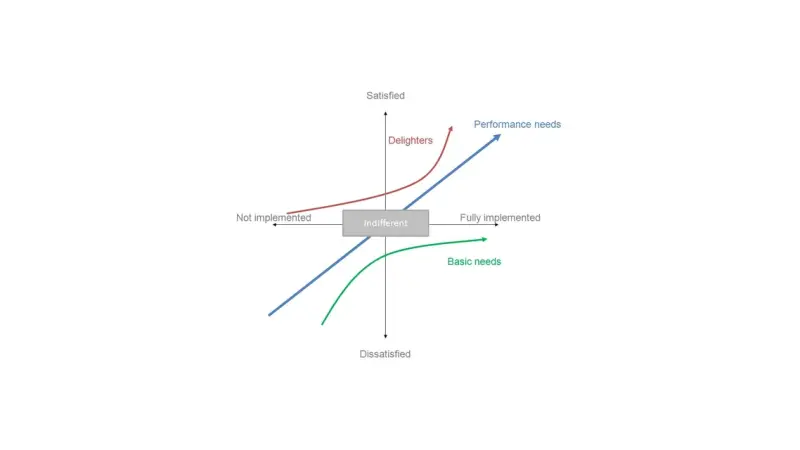
The Kano model classifies product features into three types: basics (what customers take for granted), performance (where more investment yields more satisfaction), and emotional delighters (unexpected extras that build loyalty). Knowing which category each feature belongs to sharpens every roadmap decision.
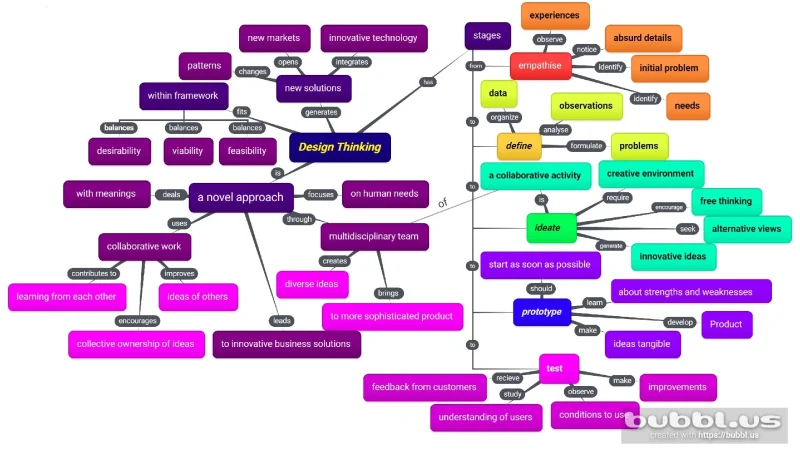
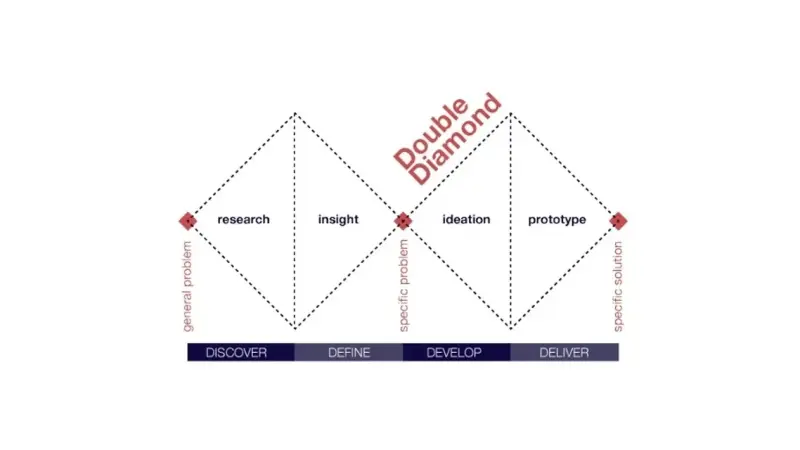
Design thinking is a user-centred problem-solving methodology structured around five iterative phases: empathise, define, ideate, prototype, and test. Following the Design Council Double Diamond model, it first identifies the right problem, then designs the right solution. Applicable to digital products, internal processes, and business models alike.
Useful startup metrics are the data points that let you evaluate a company's real performance: general performance metrics (MRR, retention, churn), area KPIs (CAC, LTV, NPS), and the AARRR framework, always prioritising retention and the LTV:CAC ratio over vanity metrics.
6 min2024.6
We use first- and third-party cookies to analyze site traffic. You can accept them, reject them, or configure your choice.
Learn more about cookies
Cookie preferences
NecessaryEssential for the site to work. Always on.
AnalyticsHelp us understand how the site is used (Google Analytics).