The idea of UI generated on the fly instead of pre-built reached production in 2025. After a year of real-world use, the balance is more nuanced than the initial enthusiasm suggested.
After fourteen months testing AI-integrated DevOps tools across several teams, the stack that stays is small: Claude Code, Cursor, and Aider for code; PagerDuty AIOps, Datadog Bits AI, and Grafana Assistant for alert triage; and OpenTofu with OPA for infrastructure generation bounded by policy rules.
Direct Preference Optimization (DPO) and its variants, IPO, KTO, and SimPO, have displaced RLHF as the preferred alignment method for language models: they drop the separate reward model, cut training cost, and are easier to reproduce. RLHF still has an edge only for frontier models with very large budgets.
Kubernetes 1.35 GA consolidates three releases of work: native sidecars with full lifecycle management, generalised DRA for FPGAs and NPUs, and a scheduler that cuts resource waste by 15-25% in heterogeneous clusters. An operations-side balance sheet: what to enable now, what to watch before migrating, and what path to follow from 1.30.
Claude Code leads long-horizon agentic work, Cursor wins for fast daily interactive editing, Aider dominates CI-pipeline automation, and GitHub Copilot fits teams built around GitHub PRs; Windsurf competes with fresh traction. After a year using all five hard, the most productive combination for most people is still Claude Code plus Cursor.
Skills package reusable capabilities; subagents isolate bounded-task execution. Together they form the most effective pattern for composing complex agents in 2026.
NVIDIA still dominates frontier-model training in 2026, but inference tells a different story. AMD MI300X/MI325X with mature ROCm, Intel Gaudi 3, Google TPU v6, and AWS Trainium/Inferentia deliver 20 to 50% lower cost per token without sacrificing quality. Here is when to choose each option.
Synthetic data has moved from a precarious substitute for real data to a central component of modern model training: the most reliable pattern expands a real core of 500 examples with thousands of synthetic paraphrases, provided you validate diversity, correctness, and distribution, and keep at least 30% real data to avoid model collapse.
The Model Context Protocol, proposed by Anthropic in late 2024 and adopted through 2025-2026 by Anthropic, OpenAI, Google, and the open-source community, already has proven operational patterns: separating generic servers from custom ones, explicit per-tool policies, credentials kept outside the model, prefixed composition, and contract tests. This is the state of the art in 2026.
Using an LLM to judge another LLM became widespread in 2024 and remains, in 2026, the only scalable way to evaluate qualitative quality in LLM systems. It is reliable when judge-human correlation exceeds 0.7 on 30 cases and gets recalibrated quarterly; below that threshold, do not trust the number.
Claude Sonnet 4.6 is the default model for most 2026 production workloads: it covers 80% of traffic with quality indistinguishable from Opus 4.7 in blind tests, at roughly 60% of Opus per-token price. Opus is still needed for complex reasoning and agentic coding on large codebases.
Hybrid RAG in 2026 combines dense and lexical search fused with RRF, cross-encoder reranking over the top-50 candidates, structure-aware chunking, and continuous evaluation with Ragas or TruLens. It is the pattern that survives in serious production systems three years after the initial embeddings boom.
Coolify is a self-hosted deployment platform that runs on top of Docker: it manages Git applications, databases, and SSL certificates from its own web panel. It installs with an official script that brings up Docker and the Coolify containers in 2 to 5 minutes on Ubuntu 24.04 or Debian 13, with no additional manual steps.
Capital concentration in frontier labs makes the first round harder for founders without a Silicon Valley network, but alternatives have multiplied: revenue-based financing for recurring ARR, improved venture debt after the SVB collapse, public grants like ENISA and CDTI Neotec, and AI-leveraged bootstrapping that shrinks the team you need.
Opus 4.7 launched as Anthropic's most capable model, with emphasis on long-horizon agentic work. After two months of intensive use, these are the practical changes versus Opus 4.6.
The first invoice for a production agent usually runs double or triple the estimate. This article walks through five real levers, in priority order, caching, routing, context control, batching, and telemetry, to cut cost without touching perceived quality.
While OpenAI and Anthropic dominate headlines with rounds worth hundreds of millions, a growing group of niche AI startups generates one to ten million dollars in revenue with teams of two to ten people. They share five patterns: narrow vertical focus, 70-80% margins, community distribution, iteration cycles in days, and AI as an internal lever.
AI agents fail in production, and what matters is how you respond in the first twenty minutes. This runbook covers severity classification, isolating before investigating, purging contaminated memory, communicating without inventing facts, and turning every incident into a regression test before closing it as done.
LLM red teaming has gone from an esoteric activity to a mandatory practice. With the OWASP Agentic Top 10 and the CSA Agentic AI Red Teaming Guide converging on shared vocabulary, this is the operational playbook any team deploying agents needs to have.
Cobots have been promising the fenceless factory for almost fifteen years. In 2026, with the market heading toward eleven billion dollars and 70% of orders coming from outside automotive, it is time to review what has delivered and what remains open.
Reliable agents come from measurement, not from better models or prompts. A production agent evaluation setup starts with a golden dataset of 30 to 200 cases, split roughly 60 percent normal usage, 30 percent edge cases and 10 percent adversarial, and it never uses the same model as both worker and judge.
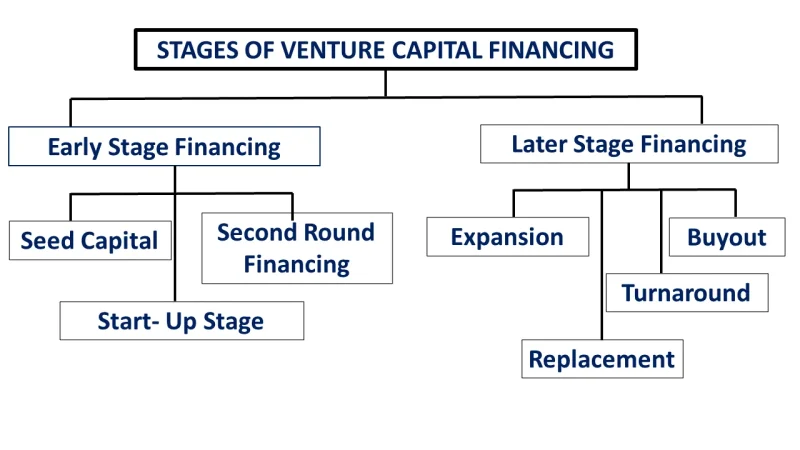
After the 2021 historic peak and the 2022 correction, startup funding in 2023 has been redefined: Series A rounds dropping from $15M to $8-10M, due diligence extending to 14 weeks, and metrics like the real Rule of 40 and NRR above 110% as the new minimum.
Kubernetes won the orchestration battle, but Docker Swarm stays maintained inside Docker Engine and makes real sense for small teams without dedicated SRE, self-hosted stacks on 1-5 VPS, and edge mini-clusters. In those contexts, Swarm's minimal learning curve and low operational cost outweigh Kubernetes's advanced features.
You install Portainer with Docker Compose by writing a single compose.yaml file and running two commands. Portainer CE 2.40 STS supports Docker Compose v2 natively, enables HTTPS on port 9443 out of the box, and manages Docker Engine, Swarm, Kubernetes and ACI from one panel. It runs on Ubuntu 24.04 or Debian 13.
The RICE framework is a prioritization methodology created by Intercom that produces a score by combining four factors: Reach, Impact, Confidence, and Effort. It divides the product of the first three by the estimated effort in person-months, so it can compare unrelated initiatives using one objective number.
Prompt engineering has moved from viral tricks to a discipline with reproducible patterns: few-shot, chain-of-thought, and structured output with function calling. Teams treating prompts like code (versioned, tested, and monitored) get consistently better results than those who improvise.
An Agent OS is a runtime layer built to run AI agents rather than ordinary applications, and after six months of production deployments the trade-off is clear. A dedicated agent stack starts slower but stays stable; Kubernetes with orchestration bolted on top moves faster early, then hits observability and policy limits. It pays off from five active agents.
Ollama 0.5 or newer runs Llama 3.3 70B and Mistral Large 2 locally on Ubuntu 24.04: Q4_K_M quantization lets a single NVIDIA GPU with 24 GB of VRAM, an RTX 4090 for example, handle the full model. This guide installs the drivers, sets up Open WebUI, and exposes the service behind Traefik with TLS.
Two years after the final NIST standards, post-quantum migration is no longer hypothetical. What has actually been migrated, what remains stuck, where the real operational problems lie, and how the timelines look from April 2026.
A year after GraphRAG left the lab, one statistic holds: it works where corporate information has dense relational structure, fails where there are only loose documents. Patterns, ingestion costs, and architectural decisions that have survived a year of real deployment.
The Model Context Protocol has gone from proposal to de facto standard for connecting editors with external tools. This practical guide walks through standing up a local MCP server, wiring it into VS Code or your client of choice, and understanding exactly what you are exposing.
After two years of pilots and a year of agents in production, governance has moved from an aspirational committee to an operational control. What audits ask for, what broke in 2025, and which guardrails absorb most incidents.
8 min2994.4
We use first- and third-party cookies to analyze site traffic. You can accept them, reject them, or configure your choice.
Learn more about cookies
Cookie preferences
NecessaryEssential for the site to work. Always on.
AnalyticsHelp us understand how the site is used (Google Analytics).