Docker Agent is a Docker CLI plugin for building and running AI agents from a declarative YAML file, no code required: you define one or more agents, give them MCP tools, run them with docker agent run, and share them through any OCI registry, on OpenAI, Anthropic, Gemini or other providers.
Open GSD (Git. Ship. Done.) is an open-source, MIT-licensed toolkit for steering coding agents without losing context: it splits work into five phases (discuss, plan, execute, verify and ship) and delegates the heavy lifting to subagents that each start with a clean context. Its core is the gsd-core engine and the gsd-pi terminal agent.
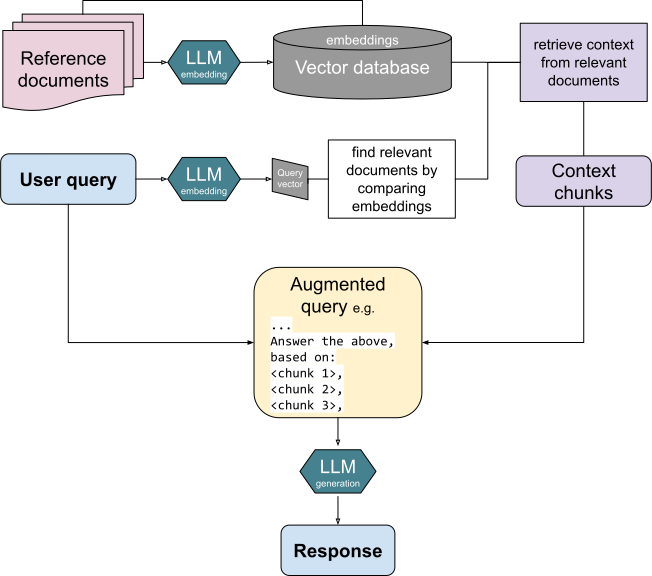
A vector embedding is a list of real numbers that represents the semantic meaning of a piece of text, an image, or any other data. Two sentences with the same meaning produce vectors that are close together; two unrelated ones produce vectors that are far apart. Semantic search, RAG, and recommendation systems are all built on this principle.
Tested May 2026 recipe: oMLX 0.3.8 on Mac M5 Max with 128 GB, TurboQuant at 3.5-bit, Qwen 3.6 35B-A3B model stack, Claude Code wiring and real benchmarks.
This guide shows how to build a production-ready agent with the Anthropic SDK in Python: the tool-use loop with the Messages API, streaming with backpressure via a bounded queue, prompt caching with cache_control, your own MCP server registered with the Claude Agent SDK, OTel GenAI traces, and a non-root Docker container ready for production.
After eighteen months of multi-vendor adoption, MCP is the de facto standard for connecting models to tools. The complete guide: architecture, servers, policies, authentication, composition, and the antipatterns we’ve already seen in production.
The idea of UI generated on the fly instead of pre-built reached production in 2025. After a year of real-world use, the balance is more nuanced than the initial enthusiasm suggested.
Direct Preference Optimization (DPO) and its variants, IPO, KTO, and SimPO, have displaced RLHF as the preferred alignment method for language models: they drop the separate reward model, cut training cost, and are easier to reproduce. RLHF still has an edge only for frontier models with very large budgets.
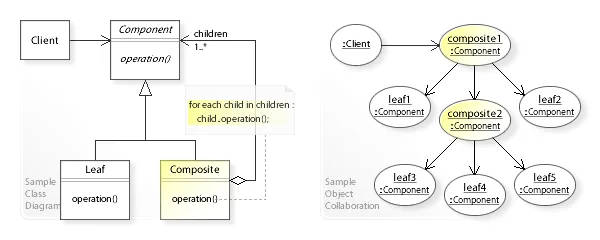
Skills package reusable capabilities; subagents isolate bounded-task execution. Together they form the most effective pattern for composing complex agents in 2026.
Synthetic data has moved from a precarious substitute for real data to a central component of modern model training: the most reliable pattern expands a real core of 500 examples with thousands of synthetic paraphrases, provided you validate diversity, correctness, and distribution, and keep at least 30% real data to avoid model collapse.
The Model Context Protocol, proposed by Anthropic in late 2024 and adopted through 2025-2026 by Anthropic, OpenAI, Google, and the open-source community, already has proven operational patterns: separating generic servers from custom ones, explicit per-tool policies, credentials kept outside the model, prefixed composition, and contract tests. This is the state of the art in 2026.
Using an LLM to judge another LLM became widespread in 2024 and remains, in 2026, the only scalable way to evaluate qualitative quality in LLM systems. It is reliable when judge-human correlation exceeds 0.7 on 30 cases and gets recalibrated quarterly; below that threshold, do not trust the number.
Claude Sonnet 4.6 is the default model for most 2026 production workloads: it covers 80% of traffic with quality indistinguishable from Opus 4.7 in blind tests, at roughly 60% of Opus per-token price. Opus is still needed for complex reasoning and agentic coding on large codebases.
Hybrid RAG in 2026 combines dense and lexical search fused with RRF, cross-encoder reranking over the top-50 candidates, structure-aware chunking, and continuous evaluation with Ragas or TruLens. It is the pattern that survives in serious production systems three years after the initial embeddings boom.
Opus 4.7 launched as Anthropic's most capable model, with emphasis on long-horizon agentic work. After two months of intensive use, these are the practical changes versus Opus 4.6.
The first invoice for a production agent usually runs double or triple the estimate. This article walks through five real levers, in priority order, caching, routing, context control, batching, and telemetry, to cut cost without touching perceived quality.
While OpenAI and Anthropic dominate headlines with rounds worth hundreds of millions, a growing group of niche AI startups generates one to ten million dollars in revenue with teams of two to ten people. They share five patterns: narrow vertical focus, 70-80% margins, community distribution, iteration cycles in days, and AI as an internal lever.
AI agents fail in production, and what matters is how you respond in the first twenty minutes. This runbook covers severity classification, isolating before investigating, purging contaminated memory, communicating without inventing facts, and turning every incident into a regression test before closing it as done.
LLM red teaming has gone from an esoteric activity to a mandatory practice. With the OWASP Agentic Top 10 and the CSA Agentic AI Red Teaming Guide converging on shared vocabulary, this is the operational playbook any team deploying agents needs to have.
6 min2264.2
We use first- and third-party cookies to analyze site traffic. You can accept them, reject them, or configure your choice.
Learn more about cookies
Cookie preferences
NecessaryEssential for the site to work. Always on.
AnalyticsHelp us understand how the site is used (Google Analytics).