Artificial Intelligence
RAG with Postgres and pgvector in production: from PoC to SLO
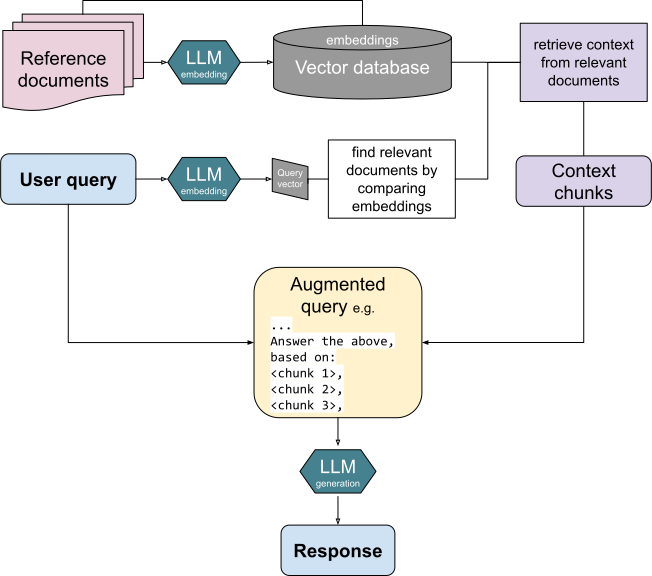
Embeddings, HNSW indexing, reranking, evaluation, context window, latency under load. Full stack with code and measurable SLOs.
Category
AI without the hype: models, agents and use cases that work in production.
Embeddings, HNSW indexing, reranking, evaluation, context window, latency under load. Full stack with code and measurable SLOs.
The OTel GenAI spec stabilizes attributes for LLMs, tools, and agents. Practical Python implementation with Anthropic + Grafana Tempo.
Tested May 2026 recipe: oMLX 0.3.8 on Mac M5 Max with 128 GB, TurboQuant at 3.5-bit, Qwen 3.6 35B-A3B model stack, Claude Code wiring and real benchmarks.
Three frameworks, three mental models. When to use each and why — with a real orchestration case.
This guide shows how to build a production-ready agent with the Anthropic SDK in Python: the tool-use loop with the Messages API, streaming with backpressure via a bounded queue, prompt caching with cache_control, your own MCP server registered with the Claude Agent SDK, OTel GenAI traces, and a non-root Docker container ready for production.
After eighteen months of multi-vendor adoption, MCP is the de facto standard for connecting models to tools. The complete guide: architecture, servers, policies, authentication, composition, and the antipatterns we’ve already seen in production.
LLM red teaming has gone from an esoteric activity to a mandatory practice. With the OWASP Agentic Top 10 and the CSA Agentic AI Red Teaming Guide converging on shared vocabulary, this is the operational playbook any team deploying agents needs to have.
Después de año y medio llenando tableros con agentes en producción, la pregunta que separa equipos que envían fiable de los que van a ciegas sigue siendo la misma: ¿cómo mides que el agente está funcionando?
El concepto de Agent OS pasó del slide al despliegue en 2025. Seis meses en producción dejan patrones visibles: qué arquitecturas funcionan, dónde se rompe el modelo y qué aporta frente a correr agentes sobre pila existente.
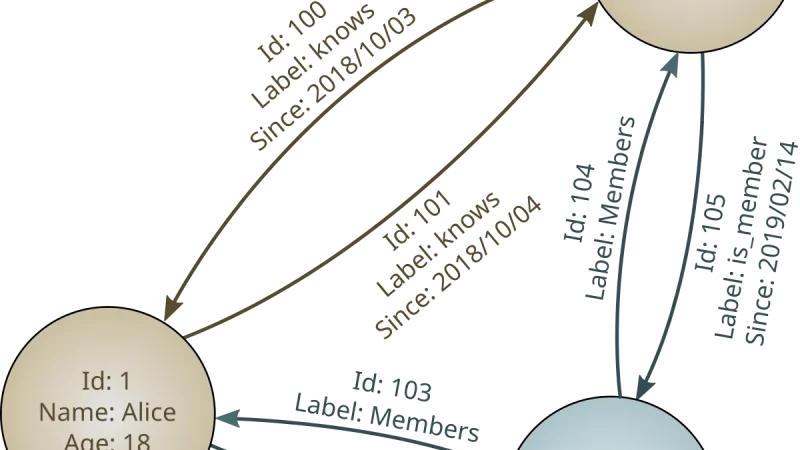
A year after GraphRAG left the lab, one statistic holds: it works where corporate information has dense relational structure, fails where there are only loose documents. Patterns, ingestion costs, and architectural decisions that have survived a year of real deployment.
The Model Context Protocol has gone from proposal to de facto standard for connecting editors with external tools. This practical guide walks through standing up a local MCP server, wiring it into VS Code or your client of choice, and understanding exactly what you are exposing.
After two years of pilots and a year of agents in production, governance has moved from an aspirational committee to an operational control. What audits ask for, what broke in 2025, and which guardrails absorb most incidents.
Durante 2025 cientos de equipos pusieron agentes IA en producción real. A principios de 2026, con datos suficientes, emergen lecciones consistentes sobre qué falla, qué funciona, cuánto cuesta y qué tareas no encajan. Repaso ordenado para equipos que empiezan ahora.
Twenty months after the initial announcement, Model Context Protocol went from curiosity to de-facto standard among agent clients and servers. What is available, which servers are worth it, which problems remain open, and how it compares to earlier protocol maps.
Sixteen months after Anthropic first shipped computer use, with browser-use, OpenAI Operator and Gemini Computer Use all pushing in parallel, agents that drive the browser and desktop have moved from demo to real workflows. Time to review which patterns survive when you run them daily in production.
A selection of postmortems published between 2025 and 2026 by teams running AI systems in production reveals repeated patterns: guardrail failures, silent model drift, hidden vendor dependency, and a collection of near-misses worth distilling.
Tres años de valoraciones vertiginosas han empezado a corregirse sin estrépito pero con firmeza: rondas abajo, despidos selectivos y consolidación en torno a propuestas con ingresos reales. Una lectura ordenada de qué sobrevive, qué se quema y qué aprende el ecosistema.
Anthropic publicó Haiku 4.5 en octubre de 2025 y el modelo ha madurado rápido: rendimiento cercano a Sonnet 4 en tareas estructuradas a un tercio del coste, ventana amplia y latencia baja. Es la pieza que faltaba para desplegar agentes a escala sin quemar presupuesto.
Knowledge graphs spent two decades waiting for their moment. With LLMs now bridging free text and formal ontology, and the GraphRAG pattern already mature, the technology is back in the spotlight. Time to look at why it finally fits and where it actually pays off.
After two years watching every product invent its own interface for talking to an agent, by January 2026 a stable design consensus is emerging about which patterns work, which do not, and what the average user already expects. Time to write down what has settled.
European sovereign AI discourse has spent three years fueling headlines, public investment, and interstate agreements. We are starting to see which part of the promise has real technical substance and what a technical team expecting alternatives outside the US ecosystem can actually count on.
Large language models have spent two years promising effortless documentation for code, APIs and architecture. After watching dozens of projects try it, clear patterns emerge for where it works and where it just becomes more debt.
Agents that chain calls to models, tools and memory are hard to debug without instrumentation designed for them. After a long year running agents in production, I cover what to measure first, which standards are consolidating, and which costly mistakes are avoided by getting the traces right from the start.
A caching proxy in front of a language model can cut the token bill significantly, but it introduces subtle risks if the design is not careful. Which cache types work in production, where the usual traps sit, and how to add them without degrading the experience.
Model Context Protocol turns ten months old since Anthropic's announcement, and it is no longer just a proposal: hundreds of servers, cross-vendor implementations and a public registry now back it. A look at what has worked, what is still weak, and why 2025 marks the shift from curiosity to basic infrastructure.
Since 2 August 2025 the EU AI Act obligations for general-purpose models, national authorities, and the penalty regime are enforceable. A practical look at what changes for those of us deploying AI in Europe.
Small language models have become genuinely useful. Phi-3.5, Gemma 2, and Llama 3.2 fit on modest hardware and solve bounded tasks without reaching the cloud. A look at where they fit on the factory floor and when skipping the large model pays off.
El RAG de 2023 era búsqueda vectorial con un LLM detrás. El de 2025 es un sistema híbrido que combina vectores, búsqueda léxica y grafos de conocimiento. Qué ha cambiado, dónde funciona cada pieza y qué decisiones marcan la diferencia entre un RAG útil y uno decepcionante.
Casi nueve meses después del lanzamiento de Computer Use, algunos equipos lo han llevado a producción para tareas reales. Dónde funciona, dónde todavía no conviene, y qué patrones están emergiendo para que un agente que maneja ratón y teclado no acabe siendo más problema que solución.
Los editores de código han empezado a incorporar MCP como cliente nativo: VS Code, Zed, Cursor y varios forks de Neovim. Esto cambia la forma en que el agente accede al contexto del proyecto y abre preguntas prácticas sobre qué servidores activar y cómo configurarlos sin abrir puertas.
AI agents are starting to earn a real place in continuous integration pipelines: reviewing diffs, proposing fixes, generating missing tests. Six months of real-world use to separate the patterns that work from the ones that end up costing more time than they save.
Google publicó Gemini 2.5 Pro en vista previa en marzo y la versión general llegó en junio. El salto respecto a Gemini 2.0 no está solo en puntuaciones sino en dos frentes prácticos: ventana de contexto utilizable en serio y multimodalidad que deja de ser demostración para convertirse en herramienta.
A year after chat stopped being the only acceptable way to talk to an agent, UI patterns built specifically for agent tasks are emerging. I go through the ones starting to stick and the ones that are just cycle fashion.
Seis meses después de que MCP se volviera el protocolo común de integración de agentes, el catálogo comunitario supera el millar de servidores. Repaso cuáles uso a diario, cuáles son ruido y cómo separarlos sin caer en la trampa de la novedad.
Prompt injection is the most common vulnerability in LLM applications, and many teams defend against it with filters that do not work. We review defense layers backed by evidence, what actually works, and what is security theater.
In AI systems the real cost is not EC2 instances but input tokens in RAG and agents, chained tool calls, and frequent reindexing; those vectors, plus unattributed experimental spend, concentrate most of the monthly production bill.
Un sistema RAG sin evaluación continua se degrada en silencio. Los índices cambian, los modelos se actualizan, los usuarios preguntan cosas nuevas. Este es un repaso práctico de qué métricas vigilar y cómo montar el cuadro de mando que avisa antes del incidente.
Crunchbase and CB Insights first-quarter data confirm that global startup funding has rebounded, but nearly all of the growth is concentrated in startups presenting themselves as AI. The rest of the ecosystem remains in correction.
La mitad del ecosistema IA de 2024 era una capa fina sobre la API de OpenAI. Dos años después, unos cuantos se han convertido en producto y el resto ha desaparecido. Revisión de qué separa un wrapper serio de un agujero por donde se va el dinero.
Cuando un LLM pasa de contestar texto a ejecutar herramientas, la superficie de ataque cambia de categoría. La inyección de prompts, la contaminación de memoria y el abuso de protocolos entre agentes son el nuevo OWASP Top 10.
AI agents have moved from a lab curiosity to serious SDKs from three major providers. A reflection on moving from the flashy demo to an internal use case that shifts a real, measurable metric.
Desde que Microsoft abrió GraphRAG, el patrón de usar grafos sobre tus propios datos ha pasado de experimento académico a técnica con aplicaciones prácticas. Reflexión sobre cuándo compensa, cómo se monta y qué errores se repiten.
The AI features Figma has rolled out since Config 2024 are changing how product design teams work. A look at what each feature delivers, what remains human work, and which habits are taking hold across teams.
Con las primeras obligaciones del AI Act europeo ya en vigor, la gobernanza de la IA en empresa deja de ser teórica. Qué comités montar, qué políticas escribir y qué auditar, desde la experiencia de varias implantaciones.
Hybrid search combines BM25 and vector retrieval to cover what each misses alone. Vectors fail on exact identifiers like SKUs or CVEs; BM25 fails when query and document use different vocabulary for the same idea. Reciprocal Rank Fusion (RRF) merges both rankings without depending on their score scales.
llama.cpp is the C++ library that powers Ollama and much of the local-LLM ecosystem. 2024 added speculative decoding with two- to three-fold speedups, an RPC server for sharding layers across machines, and a stable GGUF format. Ollama covers 90% of cases; going direct pays off with uncommon hardware or specific flags.
Ollama became the standard for running large language models locally in 2024. It wraps llama.cpp in a single binary with Docker-style CLI and an OpenAI-compatible API. Phi-3 Mini runs in 4 GB; Llama 3.1 8B Q4 needs 6 GB. For production traffic at scale, vLLM remains the correct choice.
Model Context Protocol (MCP) is the open standard Anthropic published on 25 November 2024 to connect language models with external data and tools over JSON-RPC 2.0. It does not replace function calling: it standardises the server side, aiming to become for context what the Language Server Protocol is for code editors.