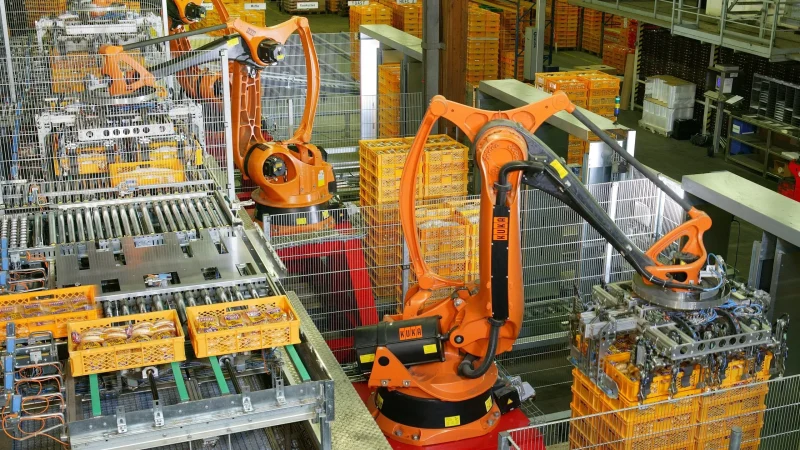
Cobots have been promising the fenceless factory for almost fifteen years. In 2026, with the market heading toward eleven billion dollars and 70% of orders coming from outside automotive, it is time to review what has delivered and what remains open.
Fully connecting the plant to global clouds now collides with European regulators and CFOs who no longer tolerate dependence on foreign providers; 2026 is the year we rethink where industrial data actually lives.
The dark factory, with no human workers on shift, has been promised for years but is only now starting to multiply in earnest. The Chinese and Japanese cases show a mature model; in Europe and Spain the reality is different. An honest look at what works and what is still hype.
Small language models have become genuinely useful. Phi-3.5, Gemma 2, and Llama 3.2 fit on modest hardware and solve bounded tasks without reaching the cloud. A look at where they fit on the factory floor and when skipping the large model pays off.
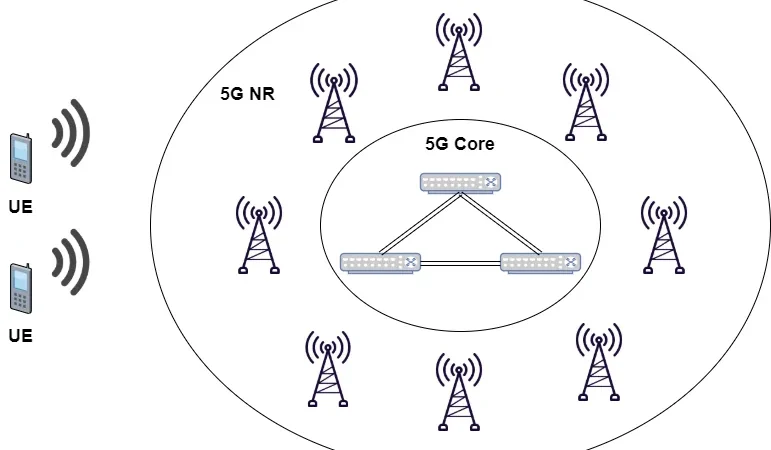
After years of pilots, private 5G is starting to show up in plants, ports, and warehouses with cases that actually work. What changed in 2025, which deployments make sense, and where WiFi 6E or a wired network still win the comparison.
We've spent a decade talking about digital twins on the factory floor, and today real plants in Spain have twins that actually work. Of the four typologies (asset, process, plant, and product), three have proven return; the product twin remains more promise than reality. A look at which platforms are winning, where the twin pays for itself, and what is still hype.
Printing steel, titanium, or aluminum parts is no longer a lab experiment. Metal additive manufacturing has spent a decade maturing, with stable aerospace certifications and service providers across Europe. The question is no longer whether it works, but for which parts it pays off against machining, casting, or forging.
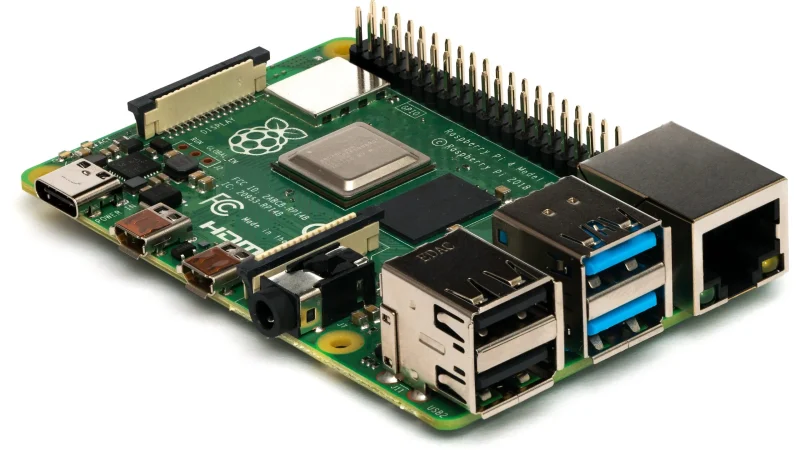
Industrial edge computing moves processing capacity from the centralised cloud to the plant floor, the machine, or the robotic cell. Local latency (10-50 ms) is critical for process control, machine vision, and safety systems: it is a physical limit that bandwidth alone cannot solve. OPC UA, K3s, and private 5G now form a proven production-ready stack.
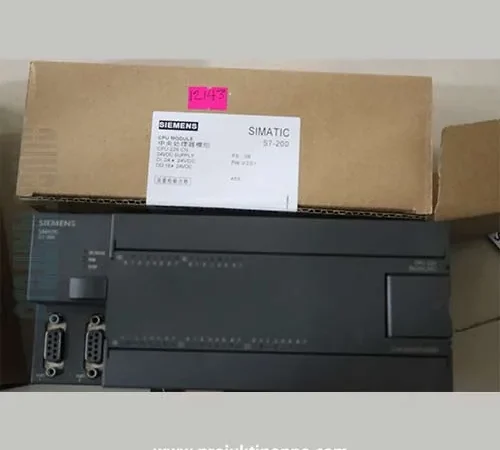
OPC UA is the standard protocol (IEC 62541) that connects industrial PLCs to IT systems, with built-in security and rich information models that Modbus or Profibus cannot match. Incremental adoption in phases, starting with an observer-mode gateway that leaves existing PLCs untouched, lets a plant running decades-old equipment modernise without stopping production.
6 min2334.4
We use first- and third-party cookies to analyze site traffic. You can accept them, reject them, or configure your choice.
Learn more about cookies
Cookie preferences
NecessaryEssential for the site to work. Always on.
AnalyticsHelp us understand how the site is used (Google Analytics).