DuckDB es el motor analítico embebido que ha cambiado el panorama. Lee Parquet y CSV directamente, vectoriza la ejecución y cabe dentro de tu proceso Python. Un repaso a cuándo sustituye de verdad a un data warehouse.
Figma Dev Mode is the developer-facing view inside a Figma file: it generates ready CSS, exposes exact measurements, maps variables to tokens, and, with Code Connect, links each component to the real codebase snippet. It solves most of the design-to-code handoff friction, but it does not replace human judgment on accessibility, performance, or responsive behavior.
GitHub Copilot Workspace, in technical preview since April 2024, proposes task-oriented development: describe the problem in a GitHub issue and the AI reads the codebase, generates an editable multi-file plan, and implements it. It competes with Cursor Composer, though with more latency; its edge is native integration with PRs, issues, and GitHub history.
Kubernetes 1.30, released in April 2024, brings ValidatingAdmissionPolicy to general availability, eliminating the need for external webhooks for CEL-based admission policies. It adds pod scheduling readiness to control when a pod enters the scheduling cycle, and job success policy to define which index combination counts as success in distributed indexed Jobs.
vLLM serves language models on GPU using PagedAttention and continuous batching, two techniques that multiply throughput compared with a naive server. It exposes an OpenAI-compatible API, so migrating an existing application only requires changing the base URL and deploying the right binary.
Qwik bets on resumability instead of hydration: the server serialises state into the HTML itself and the client downloads nothing until the user actually interacts, so the initial application bundle is zero kilobytes. In Lighthouse that means a TTI below 0.5 seconds, though it does not pay off for teams already invested in React or for apps with heavy realtime collaborative state.
OpenAI's Assistants API offers persistent threads, sandboxed code execution, and managed document search, but OpenAI is shutting it down completely on August 26, 2026 in favor of the Responses API. We look at when it used to pay off against Chat Completions with your own infrastructure, and what to do if your project still depends on it.
Kubecost and OpenCost map real costs to namespaces, deployments, and labels in Kubernetes. OpenCost, the Apache 2.0 open-source core, covers essentials for free. Kubecost adds multi-cluster visibility and advanced cloud billing. For clusters spending over $5,000/month the ROI is clear: identified savings typically exceed software cost within the first month.
Almost two years after 1.0, SvelteKit works in production: 30-50% lighter bundles than React, file-based routing, and no-lock-in deployment. It wins for small teams with stack freedom; it loses to Next.js when a team has heavy existing React investment or needs to hire fast.
Litestream is an open-source tool that replicates a SQLite database to an S3 bucket in near real time by reading the WAL SQLite already writes. It offers point-in-time recovery, overhead of only 1 to 3% CPU, and replaces the need for a separate database server in small apps.
Cloudflare Workers is no longer an isolated edge function. In 2024, together with KV, D1, R2, and Durable Objects, it forms a complete platform that matches AWS on latency and drops egress fees, though it still falls short on long-running compute and the mature managed databases AWS offers.
Kubernetes 1.31 brings no fireworks, but it closes old debts: AppArmor reaches GA, native sidecars now run enabled by default on their way to stable in 1.33, and DRA moves through alpha toward beta. A practical review from the perspective of someone operating clusters in production.
Aider is an open-source CLI that connects your Git repository to an LLM to refactor code, add features and fix bugs without leaving the terminal. Works with GPT-4o, Claude and local models via Ollama. Every change generates an automatic commit with a descriptive message, integrating natively into the Git workflow.
OpenTelemetry declared logs signals stable in July 2024. The third pillar of modern observability finally joins metrics and traces under a single protocol and a shared data model.
HTMX returns HTML instead of JSON and makes the server the source of truth for the interface. Where it fits, where it does not, and why version 2.0 leaves it ready for serious projects.
Astro renders static HTML by default and only ships JavaScript for the interactive islands that actually need it. On blogs, docs and content sites, the bundle drops from 100-200 KB to roughly 5-10 KB versus Next.js SSG or Gatsby. It is the wrong choice for SaaS dashboards or apps with state shared across routes.
Rust joined Linux mainline in version 6.1 (2022), and by 6.9 (2024) it already ships experimental drivers, including Asahi's GPU driver for Apple Silicon. In C/C++ projects like Chromium, around 70 percent of serious security bugs are memory-safety bugs, the real reason kernel maintainers are debating whether to adopt it.
WASI 0.2 reached GA in January 2024, bringing WebAssembly's Component Model into production: typed WIT interfaces that let Rust, Go, and JavaScript code compose without manual glue code. That shift makes edge functions with sub-1 ms cold start, secure plugins, and untrusted-code sandboxing viable today, though it does not replace containers for traditional apps.
Remix v2 doubles down on native web standards against Next.js App Router. This guide covers what version 2 adds, how it compares to App Router in real projects, and why convergence with React Router 7 expands the project ecosystem for small teams building portable, form-heavy applications.
In 2024, the sidecar-or-not debate has an answer: Istio Ambient Mesh and Cilium Service Mesh bring sidecarless architecture to production, while Linkerd keeps ultra-light Rust sidecars. The right choice depends on your current CNI, the features you need, and the size of your ops team, not on which project wins in the abstract.
SGLang adds a Python DSL for controlling LLM generation with constrained decoding, parallel branching, and RadixAttention, the structure that indexes the KV cache as a radix trie to reuse shared prefixes across requests. When that pattern exists, speedups over vLLM reach up to 5 times; without it, the advantage shrinks.
Redis moved to dual SSPL/RSAL licensing in March 2024, no longer meeting the OSI open-source definition. Valkey emerged as a BSD 3-Clause fork backed by AWS, Google Cloud, Oracle, and the Linux Foundation, fully protocol-compatible with Redis 7.2. Migrating is almost always trivial: swap the binary or the Docker image.
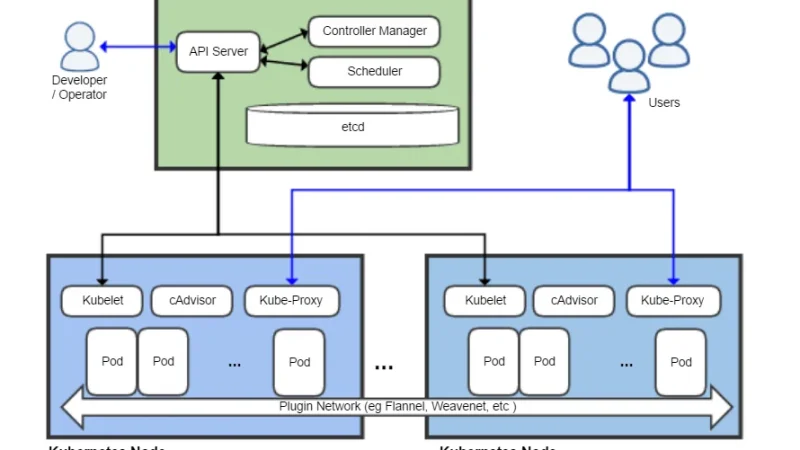
cAdvisor is still embedded in kubelet and covers surface metrics, but falls short for production Kubernetes. The modern minimum stack pairs it with kube-state-metrics, node-exporter, Prometheus, and Grafana as a base, eBPF for deep network and syscall visibility, and OpenTelemetry for application context.
PostgreSQL 17, released in September 2024, cuts vacuum memory use by up to 20x, adds slot synchronization so logical replication survives a failover without a full resync, ships JSON_TABLE as standard SQL:2023 syntax, and introduces streaming I/O to speed up sequential scans. Teams running Postgres in production should start testing it in staging.
App Router went stable in Next.js 13.4 (May 2023), bringing Server Components, layered caching, and Server Actions, but it demands rethinking the application's mental model. Migrating from Pages Router pays off for new projects and read-only routes; for large applications, the realistic path is incremental, route by route, over several months.
PostgreSQL 16 closes the historical gaps in logical replication: parallel apply near 2x faster, logical slots served from physical standbys, and the scaffolding for bidirectional replication. The result is a first-line tool for cross-version migrations and CDC pipelines.
LangGraph modela agentes LLM como grafos de estados explícitos. Cuándo supera al bucle tradicional de LangChain y cómo estructurar flujos que no se desmoronan en producción.
Containerising SCADA makes sense for the upper architecture layers: HMI, historians, and data gateways. PLCs still control hardware with hard determinism. The biggest risk is cultural: applying DevOps patterns without adapting to OT context causes incidents. NIS2 requires managing containers as any other critical infrastructure asset.
Outlines, Guidance e Instructor obligan al modelo a emitir JSON válido en el propio paso de generación. Cuándo ganan frente a reintentos y function calling.
Go 1.22, released in February 2024, fixes the long-standing loop variable capture bug, brings method-aware routing to the standard ServeMux, and finalizes managed toolchain support. Small changes, thoroughly tested across the 1.21 release cycle, with real impact on concurrent Go code.
Cilium Service Mesh replaces Istio or Linkerd sidecars with eBPF in the kernel: it handles policy, WireGuard encryption, and Hubble observability without a per-pod proxy, cutting memory overhead from roughly 100 GB to about 5 GB in a 100-node cluster. It suits large clusters with teams comfortable with eBPF.
SQLite in production is more viable than most teams assume. WAL mode removes read contention, Litestream replicates the WAL to S3 in near-realtime, and LiteFS adds multi-node replication. Without a separate database server, apps like Tailscale and PocketBase already do this in production. This article explains when it makes sense and its real limits.
WCAG 2.2 (W3C, October 5, 2023) adds 9 criteria to WCAG 2.1: Target Size requires clickable targets of at least 24 by 24 pixels, and Accessible Authentication bans logins that require memorising complex passwords without an alternative. Upgrading from 2.1 AA typically takes 1 to 2 sprints for a medium-size product.
Linkerd is the pragmatic service mesh for Kubernetes, prioritizing simplicity over feature catalogues. Its Rust proxy uses ~10 MB RAM per sidecar versus 50-100 MB for Envoy under Istio. This comparison explains when adopting it pays off, what it costs to operate, and when Istio makes more sense.
TypeScript 5.4, released March 6 2024, adds NoInfer to pin generic type inference without the two-parameter workaround, preserves narrowing inside synchronous callbacks like forEach and map, and ships typed Object.groupBy and Map.groupBy. Three everyday workarounds quietly retired in one incremental release.
Zed is the editor built by Atom's creators, rebuilt in Rust with a native GPU-rendering UI framework and no Electron. It delivers ~8 ms latency, real-time collaboration with integrated voice and shared cursors, and an open license (GPL v3 + Apache 2.0). A serious VS Code alternative for pairs and small teams.
This guide installs PostgreSQL 16 with pgvector on Debian or Ubuntu using the official PGDG repository, creates a dedicated role and database, tunes memory for production, and explains when the HNSW index beats IVFFlat depending on vector volume and the available maintenance window.
An Internal Developer Platform (IDP) centralises service discovery, provisioning and observability in a single portal, so developers stop depending on stale wikis and Slack channels. Backstage, Port and Cortex dominate the market: Backstage is open source with a dedicated team, Port is fast low-code SaaS, and Cortex focuses on scorecards for measurable technical discipline based on team size.
pgvector matured in 2023-2024 with the HNSW index type and parallel construction that arrived in version 0.6. For projects already running PostgreSQL, a dedicated vector database is not needed in most cases: this guide explains when PostgreSQL is enough, how to configure the index, and where it starts to fall short.
La EAA entra en vigor en junio de 2025 y afecta a más productos de los que parece. Qué cambia, quién está obligado y cómo planificar con margen suficiente.
SQLite and DuckDB are both embedded databases that work from a single file, no server needed. Their architecture differs: SQLite stores rows and excels at short transactions (OLTP); DuckDB stores columns and shines at large-scale analytics (OLAP). Choosing the right one, or combining both, delivers a genuine technical edge.
Cursor is a VS Code fork that puts artificial intelligence at the core of the editor instead of bolting it on as a plugin. It offers inline completion, a chat that understands full project context, and Composer, multi-file editing from a short brief. The Pro plan costs $20 a month and it competes directly with GitHub Copilot.
Retool and Appsmith cut internal tool development time from weeks to days. Retool leads the commercial SaaS market with polished components and enterprise permissions; Appsmith brings open source self-hosting at low or zero cost. Low-code works for dashboards, forms, and simple workflows, and breaks on complex logic or highly custom interfaces.
ArgoCD has established GitOps as the standard deployment practice for Kubernetes: the Git repository is the single source of truth for the desired state, and the agent continuously reconciles the cluster. This guide covers the four formal GitOps principles, sync policies, common production mistakes, and a comparison with Flux.
A service mesh adds mTLS, uniform observability, and traffic management between microservices without modifying application code. The ecosystem has consolidated: Istio is the most complete and complex, Linkerd prioritises simplicity with Rust proxies, and Cilium delivers sidecarless service mesh via eBPF.
containerd is the runtime that runs containers in most modern Kubernetes clusters, and almost nobody notices. It manages the full container lifecycle: pulling the image, starting it, networking, and mounting the filesystem. It became the default runtime after Kubernetes 1.24 removed dockershim in May 2022.
Event-driven architecture decouples services through message brokers. Each component publishes events when something changes, instead of calling other services directly. It reduces coupling and improves resilience. It adds real value in domains with multiple consumers and natural asynchronous processing, but introduces operational complexity worth evaluating before adoption.
WASI Preview 2 redefines how WebAssembly interacts with the operating system. It introduces the Component Model with typed WIT interfaces and granular capabilities, enabling modules written in different languages to compose without manual serialisation. The full standard arrives in 2024 with direct impact on edge functions, plugins, and serverless.
Backstage is the open-source platform from Spotify for building Internal Developer Platforms: a web portal (Node.js + React) that centralises service catalogs, scaffolding, and technical documentation. Adopted by Netflix, American Airlines, and hundreds of companies since 2020, it needs 1-3 dedicated engineers and pays off for organisations with more than 50 developers.
eBPF is a Linux kernel technology that lets you load and run verified, high-performance programs without recompiling the kernel or rebooting the system. It runs safely inside a virtual machine in the kernel and underpins tools such as Cilium, Pixie, Falco, and Tetragon for real-time tracing, networking, and security.
Vector databases have gone from an experimental curiosity to the central component of most LLM-based products. This comparison covers Qdrant, Pinecone, and Weaviate: architecture, strengths, limitations, and a decision tree for choosing the right option based on your operational priorities and budget.
PostgreSQL 16, released in September 2023, adds logical replication from a standby, the pg_stat_io view for breaking down I/O by operation type and context, and parallel FULL OUTER JOIN support. Upgrading from 15 is straightforward; 13 loses support in November 2025, so plan the update soon.
pgvector turns PostgreSQL into a fully functional vector database without adding a separate service to the stack. It extends Postgres with the vector type, IVFFlat indexes for approximate nearest-neighbour search (ANN), and the ability to combine relational SQL filters with vector ranking in a single query. For most RAG projects and internal chatbots, those limits never become a problem.
LangChain is a Python framework that unifies building LLM applications: prompt templates, retrievers over vector databases, function-calling agents, and conversational memory. It earns its keep in fast prototypes and multi-model systems, but for a single well-defined production use case, direct code usually stays more maintainable.
Chroma is the easiest vector database to get started with embeddings and semantic search: install it with pip install chromadb, no extra infrastructure required, and it exposes a minimal API (add, query, delete). It suits prototypes and mid-sized RAG systems well; past a few million vectors, Qdrant or Milvus scale better.
Rust has been in the Linux kernel since version 6.1, though adoption is measured and deliberate. The Apple AGX GPU driver for Asahi Linux is the most prominent real upstream example. The goal is to eliminate an entire class of memory-safety bugs in new drivers without rewriting existing C code.
Rust is no longer just a systems language: with tokio as the async runtime and axum as the HTTP framework, teams build high-performance backend services with compile-time type checking. It pays off in gateways, proxies and event processors; for typical CRUD over Postgres, Go or Node.js remain more productive.
Micro-frontends bring the microservices idea to the UI: split the frontend into pieces that separate teams can develop and deploy independently. They pay off when coordination costs across four or more teams in the same SPA exceed the added technical overhead; without a mature design system and platform team, they tend to multiply problems.
Platform engineering formalizes the internal product development teams need. An Internal Developer Platform (IDP) centralises deployment, observability and self-service behind a unified interface so product teams deliver value without becoming infrastructure experts. Investment pays off from around 30 to 50 developers.
Redis alone isn't a caching strategy, just an ingredient: picking the right pattern among cache-aside, read-through, write-through, and write-behind, sizing TTL to how fast data actually changes, invalidating explicitly for critical data, and mitigating thundering herd with jitter and locking are the decisions that actually matter in production.
Kubernetes 1.27 ("Chill Vibes"), released in April 2023, makes SeccompDefault stable so pods get safer syscall defaults automatically, moves KMS v2 to beta with rotatable encryption keys for etcd secrets, and stabilises scheduling gates. It also removes PodSecurityPolicy for good: without migrating to Pod Security Admission first, the upgrade is blocked entirely.
Apache Kafka has consolidated in 2023 as the enterprise event backbone thanks to KRaft, now GA and removing the ZooKeeper dependency. The most mature patterns are CDC with Debezium, event sourcing, and stream processing with Kafka Streams or Flink, while Redpanda and Pulsar compete as real alternatives depending on the case.
OpenTelemetry is the CNCF project, graduated in May 2026, that unifies logs, metrics, and traces under one SDK and the OTLP protocol, without locking you into a single backend. Traces have been stable since 2021 and metrics since 2023; logs are still maturing, but already worth adopting on new projects.
WebAssembly is moving beyond the browser through WASI, the standard system interface, and the component model, which defines declarative WIT interfaces so modules written in different languages can compose with each other. Cold start lands around 1 ms versus roughly 500 ms for a container, a key difference for serverless and edge computing teams.
Cilium replaces iptables with eBPF programs loaded directly into the Linux kernel, substituting O(n) linear chains with O(1) hash lookups. Documented benchmarks show up to 50% lower p95 latency, 2-3x more throughput, and 70% less kernel CPU in large Kubernetes clusters.
Kafka gets the headlines as the byword for modern messaging, but RabbitMQ remains the better choice for task queues with retries, asynchronous RPC, and pub/sub with complex routing. This guide compares both against NATS, walks through classic patterns and production mistakes, and helps you decide based on the actual use case rather than the trend.
With 30 or more microservices, end-to-end tests become slow, fragile and impractical. Pact implements consumer-driven contract testing: the consumer defines what it expects, the provider verifies it in its own CI pipeline, with no shared environment needed. The result is integration proof in seconds, not minutes.
Kubernetes 1.28 introduces native sidecar containers in alpha via KEP-753: adding restartPolicy Always to initContainers ensures correct startup and shutdown ordering. It fixes Jobs that never terminate. Istio, Linkerd, and observability agents like Fluent Bit are the primary beneficiaries.
Fine-tuning your own LLM pays off in three cases: you need a very specific style or voice, a rigid structured output format, or you want lower cost and latency from a small specialised model. LoRA and QLoRA have cut the GPU cost, but preparing data and running the model in production are still expensive. For everything else, RAG and prompt engineering are usually enough.
4 min2564.6
We use first- and third-party cookies to analyze site traffic. You can accept them, reject them, or configure your choice.
Learn more about cookies
Cookie preferences
NecessaryEssential for the site to work. Always on.
AnalyticsHelp us understand how the site is used (Google Analytics).