SGLang: Fine Control Over LLM Execution
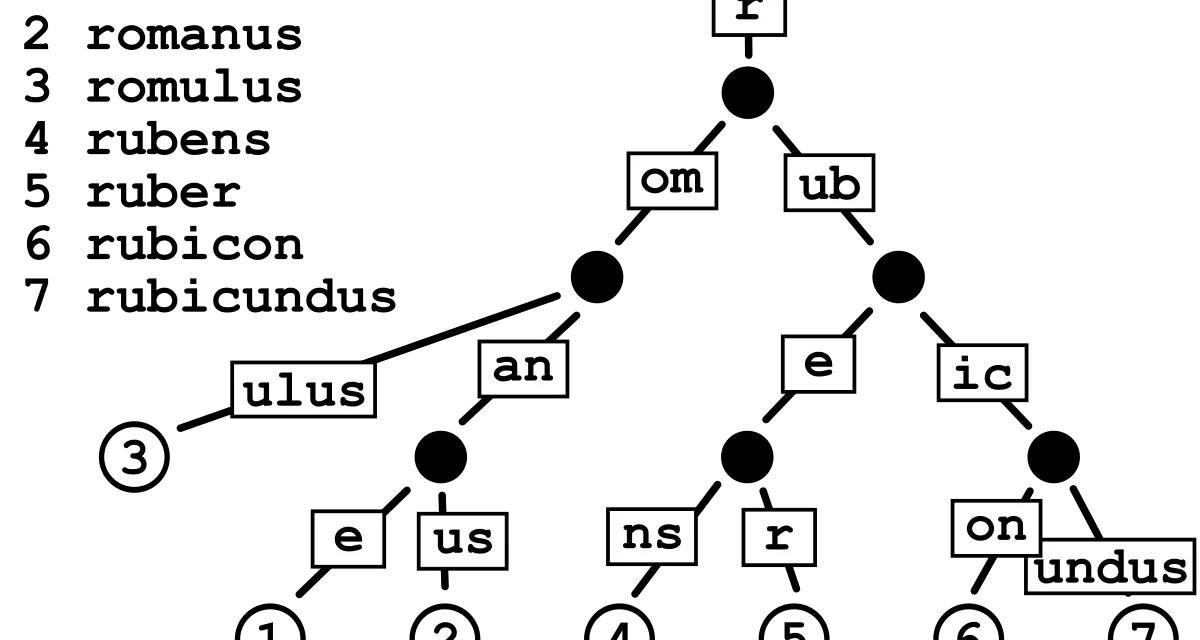
Table of contents
- Key takeaways
- The problem it actually solves
- RadixAttention as a value proposition
- The DSL and why it matters
- Constrained decoding
- SGLang vs vLLM
- Honest limitations
- Conclusion
- Frequently asked questions
- When does SGLang pay off over vLLM?
- What happens if my requests share no prefix?
- Can I guarantee the output is valid JSON without a defensive parser?
- Sources
SGLang[1] (Structured Generation Language) showed up in early 2024 as an alternative to vLLM and TGI in the LLM inference layer, but its ambition goes beyond serving tokens fast. It proposes a small Python-embedded language for describing programs over LLMs, with explicit branching, constrained decoding, and aggressive cache reuse. Its differentiating contribution is RadixAttention: a data structure indexing the KV cache in a radix trie so distinct requests can share prefixes without recomputing them.
The interesting question is not whether SGLang is better than vLLM in the abstract (it is not), but which workloads make its execution model pay off.
Key takeaways
-
RadixAttention indexes the KV cache as a radix trie: shared prefixes are computed once.
-
On workloads with long shared prefixes (thousand-token system prompts, few-shot, repetitive RAG), speedups vs vLLM sit between 3 and 5 times.
-
The DSL enables parallel branching and constrained decoding without HTTP round-trips.
-
Where no shared prefix exists, SGLang behaves similarly to vLLM with additional overhead.
-
For a basic chatbot behind a public API, vLLM remains the correct default.
The problem it actually solves
A server like vLLM is optimised for a stream of heterogeneous, independent requests that arrive over HTTP and get resolved through continuous batching and PagedAttention. That design is excellent when users send prompts that are dissimilar from one another.
But a good share of modern LLM traffic does not have that shape:
-
Multi-step agents reuse a system prompt of thousands of tokens on every loop iteration.
-
Few-shot pipelines prepend the same examples to every query.
-
Chatbots with memory accumulate context that grows through the session but changes only at the tail.
-
A RAG flow injects retrieved documents that, by construction, repeat across users.
In all these cases, the shared prefix is not a curiosity: it is most of the prompt. Recomputing the KV for those tokens every time is work thrown away.
RadixAttention as a value proposition
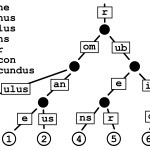
The idea is conceptually simple. When two or more requests share a prefix, their K and V vectors for those tokens are identical by construction. A trie (radix tree) indexed by tokens lets the system find, in logarithmic time, the longest reusable cache suffix and continue generation from there.
The practical consequence: the amortised cost of a ten-thousand-token prefix shared by a hundred requests approaches the cost of generating it once. In workloads like agent loops, benchmark evaluations where all items share the same template, or iterative tool-calling, reported speedups vs vLLM sit between 3 and 5 times. Not marketing numbers: they come from work that genuinely no longer happens.
The original SGLang paper[2] (arXiv:2312.07104, December 2023) reports up to 6.4 times higher throughput than other inference systems on agent, reasoning, and RAG tasks. The LMSYS Org announcement[3] from January 17, 2024 grounds that figure against vLLM 0.2.5, Guidance 0.1.8, and TGI 1.3.0: up to 5 times higher throughput. The measurement covers Llama-7B (1 A10G GPU, 24 GB) and Mixtral-8x7B (8 A10G GPUs) across nine distinct workloads, including MMLU, HellaSwag, JSON extraction, and DSPy-based RAG.
Where no shared prefix exists, RadixAttention degenerates into individual caches and SGLang behaves similarly to vLLM with additional overhead from the extra machinery.
The DSL and why it matters
The other component is the language. SGLang embeds in Python a set of primitives (gen, select, fork, user, assistant) that the runtime interprets with semantic awareness. It is not just syntactic sugar: it lets the scheduler see the program’s dependency graph and decide what to execute in parallel.
A typical program chains turns, forks generation into parallel branches, and applies regex or grammar constraints:
import sglang as sgl

@sgl.function
def analyze(s, topic):
    s += sgl.system("Concise technical analyst.")
    s += sgl.user(f"Analyze {topic} along three axes.")

    forks = s.fork(3)
    forks[0] += "Pros: " + sgl.gen("pros", max_tokens=200)
    forks[1] += "Cons: " + sgl.gen("cons", max_tokens=200)
    forks[2] += "Cost: " + sgl.gen("cost", max_tokens=200)
    forks.join()

    s += sgl.user("Give me a JSON verdict.")
    s += sgl.gen("verdict", regex=r'{"decision":"(yes|no)","reason":"[^"]{10,200}"}')

runtime = sgl.Runtime(model_path="meta-llama/Meta-Llama-3-8B-Instruct")
sgl.set_default_backend(runtime)
state = analyze.run(topic="migrating to Kubernetes")
The scheduler launches the three branches in parallel, sharing the prefix of the system and initial user turns, and the trie resolves that. The regex constraint on the verdict compiles to a state machine that filters logits at every step. It all happens inside the same process, without HTTP round-trips.
Constrained decoding
SGLang integrates constrained decoding similar to libraries like Outlines. It builds an automaton that recognises the desired grammar, and at every sampling step it zeroes out the logits of tokens that would lead to an invalid state. The output is valid by construction, not by hope. When you need extractable JSON without a defensive parser, or responses that meet a strict format, it pays off.
SGLang vs vLLM
| Aspect | vLLM | SGLang |
|---|---|---|
| Primary use case | Generic, API-compatible serving | Workloads with long shared prefixes |
| Prefix caching | Basic | RadixAttention (central) |
| DSL | No | Yes (embedded Python) |
| Maturity | High | Medium-high |
| Model catalogue | Wide | Narrower |
| Learning curve | Very low (OpenAI API) | Medium |
vLLM remains the sensible choice for a generic inference service. SGLang enters when the problem changes shape: when whoever orchestrates the generation and whoever serves it are the same piece.
Honest limitations
SGLang is younger, its API shifts between releases, the model catalogue with optimised kernels is narrower, and the documentation is what you would expect from a project at that stage. The runtime consumes a CUDA GPU just like vLLM. And the DSL, elegant as it is, adds a layer the team has to learn and the code has to depend on.
Conclusion
SGLang deserves serious attention if your workload has long shared prefixes, parallel branching, or a need for structured output with in-generation validation. In those cases the benefit is not marginal: it is the difference between a GPU busy recomputing the same system prompt a thousand times and one busy generating new tokens. If your workload does not have that shape, vLLM will remain the correct default, and SGLang will be a tool worth knowing for when the problem actually fits.
This article is also available in Spanish: SGLang: control fino sobre la ejecución de LLM.
Frequently asked questions
When does SGLang pay off over vLLM?
When your workload has long shared prefixes: system prompts of thousands of tokens reused on every agent loop iteration, or few-shot pipelines that prepend the same examples. Also RAG with documents that repeat across users, or benchmark evaluations sharing one template. There RadixAttention computes the prefix once and reported speedups vs vLLM sit between 3 and 5 times. For a basic chatbot behind a public API with dissimilar prompts, vLLM remains the correct default.
What happens if my requests share no prefix?
RadixAttention degenerates into individual caches and SGLang behaves similarly to vLLM, but with additional overhead from the extra machinery. You also pay for its other limitations: it is a younger project, its API shifts between releases, and the model catalogue with optimised kernels is narrower. The documentation is what you would expect at that stage, and the DSL adds a layer the team has to learn. The runtime consumes a CUDA GPU just like vLLM.
Can I guarantee the output is valid JSON without a defensive parser?
Yes, through the integrated constrained decoding, similar to libraries like Outlines. You pass a regex or grammar to sgl.gen and the runtime compiles it into an automaton. At every sampling step it zeroes out the logits of tokens that would lead to an invalid state, so the output is valid by construction. It all happens inside the same process, without HTTP round-trips, and combines with fork to launch parallel branches that share the system prompt prefix.