We've spent a decade talking about digital twins on the factory floor, and today real plants in Spain have twins that actually work. Of the four typologies (asset, process, plant, and product), three have proven return; the product twin remains more promise than reality. A look at which platforms are winning, where the twin pays for itself, and what is still hype.
Private 5G networks deliver high capacity, low latency, and thousands of connected devices for factories that do not want to depend on a carrier or settle for Wi-Fi. They make sense in large campuses with mobility or high IoT density; for medium plants with fewer than 50 devices, Wi-Fi 6/7 remains more cost-effective.
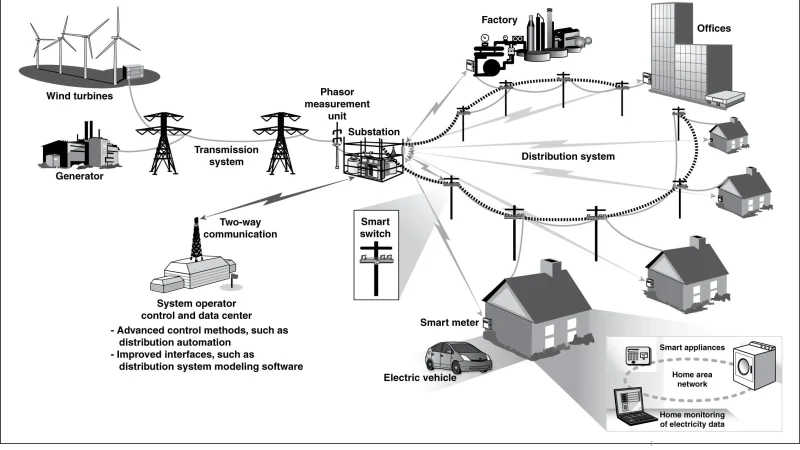
Digital twins in energy simulate transmission grids, wind farms, and conventional plants in real time. They predict failures weeks ahead, cut corrective maintenance 10-25%, and deliver payback in 18-36 months. The main obstacles are IT/OT integration and cybersecurity; not every asset justifies the investment.
Without sensors generating reliable data, Industry 4.0 is just marketing. The foundation of any real project is instrumenting machines and production lines with temperature, vibration, pressure, and flow sensors, connecting them via Modbus, OPC-UA, or MQTT through a gateway, and starting with 5-10 sensors on a pilot line before buying at scale.
6 min2644.4
We use first- and third-party cookies to analyze site traffic. You can accept them, reject them, or configure your choice.
Learn more about cookies
Cookie preferences
NecessaryEssential for the site to work. Always on.
AnalyticsHelp us understand how the site is used (Google Analytics).