After years of pilots, private 5G is starting to show up in plants, ports, and warehouses with cases that actually work. What changed in 2025, which deployments make sense, and where WiFi 6E or a wired network still win the comparison.
Industrial edge computing moves processing capacity from the centralised cloud to the plant floor, the machine, or the robotic cell. Local latency (10-50 ms) is critical for process control, machine vision, and safety systems: it is a physical limit that bandwidth alone cannot solve. OPC UA, K3s, and private 5G now form a proven production-ready stack.
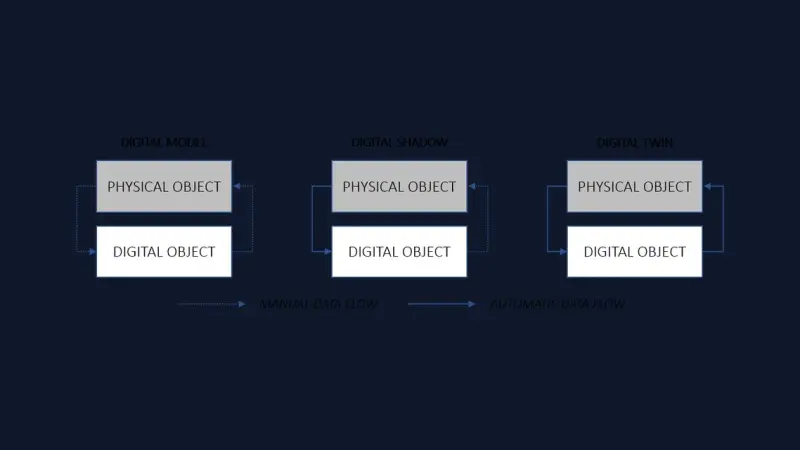
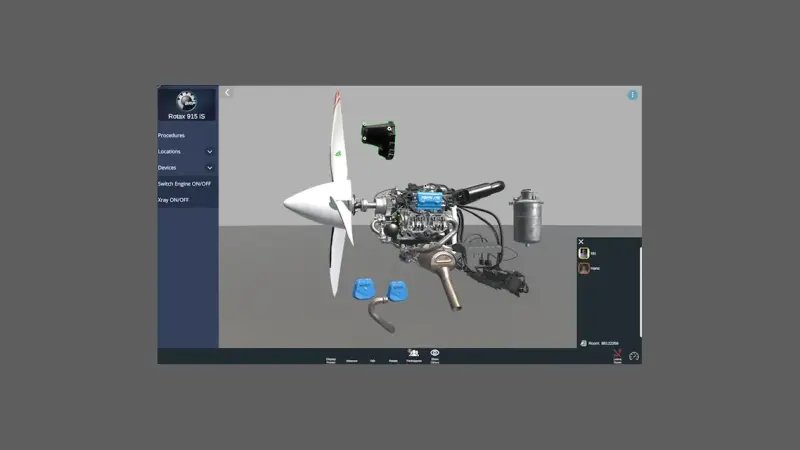
A digital twin is a software replica of a physical asset (machine, production line, or whole plant) synchronised in real time with IoT sensors. It enables failure prediction, energy optimisation, and operator training without risk. It returns real value when the asset is critical, the data is reliable, and the team can maintain the model long-term.
Industrial predictive maintenance rarely needs deep learning: classic models such as random forests, SVMs, or survival models solve 80% of cases. The key lies in feature engineering over vibration, temperature, and power-consumption signals, with pipelines that run on as little as 50 MB of RAM without a GPU.
The Internet of Things (IoT) is a network of sensors, actuators, and internet-connected devices that collect data from the physical world, transmit it through protocols like MQTT or Zigbee, and trigger automatic actions. It already transforms industrial maintenance, precision irrigation, and the smart home.
The Digital Twin of the Organization (DTO), a term coined by Gartner, is a virtual replica of the entire company that synchronises with real data to simulate scenarios, detect problems before they happen, and optimise production, supply chain, and decision-making without risking physical operations.
Industry 4.0 is the Fourth Industrial Revolution: the convergence of IoT, artificial intelligence, big data, advanced robotics, and cybersecurity that connects factories to digital networks. The goal is the smart factory, able to adjust its production in real time from the data it collects, gaining productivity, quality, and energy efficiency.
5 min1924.5
We use first- and third-party cookies to analyze site traffic. You can accept them, reject them, or configure your choice.
Learn more about cookies
Cookie preferences
NecessaryEssential for the site to work. Always on.
AnalyticsHelp us understand how the site is used (Google Analytics).