While OpenAI and Anthropic dominate headlines with rounds worth hundreds of millions, a growing group of niche AI startups generates one to ten million dollars in revenue with teams of two to ten people. They share five patterns: narrow vertical focus, 70-80% margins, community distribution, iteration cycles in days, and AI as an internal lever.
Direct Preference Optimization (DPO) and its variants, IPO, KTO, and SimPO, have displaced RLHF as the preferred alignment method for language models: they drop the separate reward model, cut training cost, and are easier to reproduce. RLHF still has an edge only for frontier models with very large budgets.
The Model Context Protocol, proposed by Anthropic in late 2024 and adopted through 2025-2026 by Anthropic, OpenAI, Google, and the open-source community, already has proven operational patterns: separating generic servers from custom ones, explicit per-tool policies, credentials kept outside the model, prefixed composition, and contract tests. This is the state of the art in 2026.
Using an LLM to judge another LLM became widespread in 2024 and remains, in 2026, the only scalable way to evaluate qualitative quality in LLM systems. It is reliable when judge-human correlation exceeds 0.7 on 30 cases and gets recalibrated quarterly; below that threshold, do not trust the number.
Hybrid RAG in 2026 combines dense and lexical search fused with RRF, cross-encoder reranking over the top-50 candidates, structure-aware chunking, and continuous evaluation with Ragas or TruLens. It is the pattern that survives in serious production systems three years after the initial embeddings boom.
Opus 4.7 launched as Anthropic's most capable model, with emphasis on long-horizon agentic work. After two months of intensive use, these are the practical changes versus Opus 4.6.
AI agents fail in production, and what matters is how you respond in the first twenty minutes. This runbook covers severity classification, isolating before investigating, purging contaminated memory, communicating without inventing facts, and turning every incident into a regression test before closing it as done.
Prompt engineering has moved from viral tricks to a discipline with reproducible patterns: few-shot, chain-of-thought, and structured output with function calling. Teams treating prompts like code (versioned, tested, and monitored) get consistently better results than those who improvise.
Phi-3 es la familia de modelos pequeños de lenguaje que Microsoft viene puliendo desde abril de 2024 con variantes de 3.800 millones, 7.000 millones y 14.000 millones de parámetros. Después de año y medio, el panorama del edge con SLM abiertos se ha vuelto serio y Phi-3 ocupa un sitio claro.
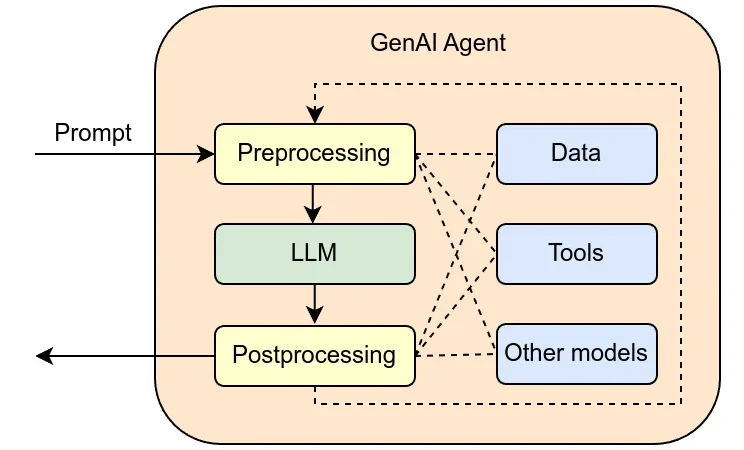
The term Agent OS has spent a year gaining traction across research and product circles. It describes a layer that goes well beyond an agent library: request scheduling, context management, persistent memory, and isolation. A look at the real state of that concept.
Redis 8.2 ships vector search as a native data type. The real question is whether it replaces a dedicated engine like Qdrant, Weaviate, or pgvector on workloads with millions of vectors and tight latency budgets, or only works as a bonus on top of the cache you already run.
For a decade, knowledge graphs were an academic idea with few real use cases, held back by the cost of building and maintaining the schema. LLMs have changed that equation: they now extract entities automatically and help anchor answers, audit reasoning, and support agents without hallucinating.
Google ha lanzado Gemini 2.0 con un énfasis claro en uso de herramientas y agentes. Repaso de qué aporta, dónde está por detrás de la competencia y en qué tipo de aplicaciones encaja mejor.
Meta publicó Llama 3.2 con modelos tan pequeños como 1B y 3B, pensados específicamente para ejecutarse en dispositivos. Análisis de qué pueden hacer realmente y cómo se comparan con las alternativas.
Qualcomm, Intel and AMD Copilot+ processors have normalised the presence of an NPU in everyday PCs. A 40 TOPS NPU can run quantised Phi-3 Mini drawing just 5-10 W, versus 40-50 W for a laptop GPU doing the same task. What actually changes for running AI models locally, and when it is worth it.
Claude 3.5 Sonnet (Anthropic, June 2024) matches Claude 3 Opus quality at Sonnet pricing, with a 200k-token context window and 92% on HumanEval. It stands out in coding and complex instruction-following, and introduced the Artifacts workspace feature on Claude.ai.
Mistral Large 2, released by French startup Mistral AI in July 2024, is a 123-billion-parameter model with a 128k-token context window that rivals GPT-4o and Claude 3.5 Sonnet on several benchmarks. Its EU data residency and its 3 EUR per million input tokens pricing make it the most serious European alternative to US providers.
GPT-4 Turbo, released in November 2023, expanded GPT-4's context to 128,000 tokens and cut the input price threefold, down to 10 dollars per million tokens. GPT-4o now beats it on price, speed and answer quality, but Turbo still holds up in stable production apps, contracts pinned to a specific version, and deterministic tests that depend on its exact behaviour.
Evaluating a RAG system without metrics is pure guesswork. Ragas measures four core signals: faithfulness, answer relevancy, context precision and context recall, using an LLM as judge. TruLens, DeepEval and other frameworks cover similar ground. Wiring evaluation into CI from day one catches regressions in prompts, chunking or model choice before they reach production.
Outlines, Guidance e Instructor obligan al modelo a emitir JSON válido en el propio paso de generación. Cuándo ganan frente a reintentos y function calling.
Anthropic launched the Claude 3 family on March 4, 2024 with three models: Haiku, Sonnet, and Opus, all with 200k-token context. Haiku costs $0.25 per million tokens; Opus matches GPT-4 Turbo on benchmarks. This comparison explains when to choose each tier and how to combine them in production to cut costs without sacrificing quality where it matters.
LM Studio is a desktop app for Mac, Windows, and Linux that downloads and runs large language models on your own machine, with a polished chat interface and no terminal required. It includes an OpenAI-compatible API and RAG with your documents. For individual use it beats Ollama on user experience; for teams or production, OpenWebUI, vLLM, or TGI are the better fit.
OpenAI released text-embedding-3 on 25 January 2024 in two variants: small and large. It improves MTEB quality over ada-002, adds variable dimensions you can truncate without retraining, and lowers the price for small. Migration pays off for most serious RAG setups, but measure real recall on your own corpus before reindexing everything.
Claude 2, launched by Anthropic in July 2023, offers a 100,000-token context window and safety grounded in Constitutional AI. Against GPT-4 it wins on long-document analysis and wide-context code; GPT-4 remains ahead on complex mathematical reasoning and its tooling ecosystem.
With quantization, model weights are stored with fewer bits (4, 5, or 8 instead of 16), so Llama 2 13B shrinks from 26 GB to about 7.5 GB. With llama.cpp it runs on an ordinary 16GB-RAM laptop with no dedicated GPU, and the quality loss is smaller than intuition suggests.
A text embedding is a numeric vector that encodes the meaning of a word or phrase, so that semantically similar pieces of text produce nearby vectors measured by cosine distance. The models most used in production are OpenAI ada-002, Sentence Transformers, and BGE, and they mainly serve semantic search, RAG systems, and text classification without training a classic classifier.
Five months after launch, GPT-4 excels at chained reasoning, technical writing, and medium-complexity code, but still fails at arithmetic, post-cutoff information, and cross-conversation consistency. Claude 2 wins on long context; LLaMA 2 wins on cost and privacy.
Meta released LLaMA 2 on July 18, 2023 with a royalty-free commercial licence, in three sizes (7B, 13B, 70B parameters). The 70B model matches or beats GPT-3.5 on standard benchmarks. For 99.9% of organisations the licence allows download, modification, and production use with full data privacy and no fine-tuning restrictions.
Google launched Bard in February 2023 with PaLM 2 as its answer to ChatGPT, unveiling the model in May the same year in four sizes: Gecko, Otter, Bison, and Unicorn. PaLM 2 competes with GPT-3.5 and GPT-4 on benchmarks like MMLU and BIG-bench, but Google's real edge is Workspace integration, not the model itself.
Fine-tuning your own LLM pays off in three cases: you need a very specific style or voice, a rigid structured output format, or you want lower cost and latency from a small specialised model. LoRA and QLoRA have cut the GPU cost, but preparing data and running the model in production are still expensive. For everything else, RAG and prompt engineering are usually enough.
ChatGPT plugins let the model invoke external services through an OpenAPI specification. Three months after launch, the ecosystem has around 500 plugins with a clear pattern: they work well for live data lookup and internal API exposure, but show friction in multi-plugin orchestration and real-money transactions.
OpenAI Code Interpreter extends ChatGPT Plus with an isolated Python sandbox: it runs code on demand, reads files you upload (CSV, Excel, PDF, images, ZIPs) and returns results plus charts within the same chat. Sessions are ephemeral and offline, but remarkably effective for exploratory ad-hoc analysis without spinning up a notebook.
DINOv2 is Meta AI's computer vision model, trained via self-supervision on 142 million images with no human labels. With a simple linear layer on the frozen encoder, it matches or beats supervised models on ImageNet classification, semantic segmentation and monocular depth estimation.
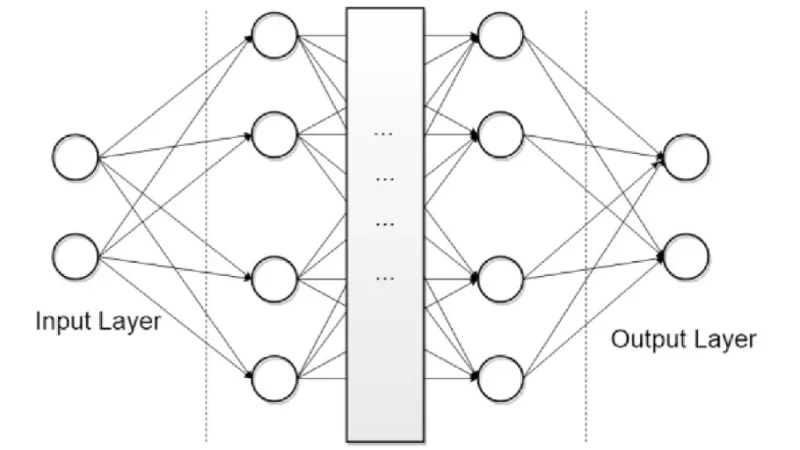
The step function, or Heaviside function, is the simplest activation function in neural networks: it converts any numeric input into a binary output, 0 or 1, depending on whether it crosses a fixed threshold. It was the central mechanism of Rosenblatt's 1958 perceptron, but because it is not differentiable, it cannot be used in modern backpropagation training.
LazyPredict is a Python library that automatically evaluates dozens of scikit-learn classification and regression models on your dataset in seconds, without writing training code for each one. LazyClassifier and LazyRegressor return a comparative metrics table that shows which models are worth tuning further.
AI optimises B2B sales through four levers: predictive lead scoring that prioritises the buyers most likely to close, conversation analysis, at-scale outreach personalisation and automating repetitive tasks. Its real impact depends on starting from clean CRM data.
Federated learning trains AI models collaboratively across many devices or organisations without moving the original data: each participant trains locally and sends only gradients to the central server. Formalised by Google in 2016, it does not guarantee privacy on its own: it needs differential privacy or secure aggregation to prevent leaks from those gradients.
Intelligent automation combines AI, machine learning, and physical robots that perceive, decide, and adapt in real time instead of following a fixed script. It is transforming manufacturing, logistics, healthcare, and food processing, and by 2024 there were already more than 4.6 million industrial robots active worldwide, per the IFR.
Computer vision is the branch of artificial intelligence that lets machines interpret digital images: detecting objects, segmenting regions and recognising patterns through convolutional neural networks. Since 2012, when AlexNet cut ImageNet classification error to 15.3%, it has spread into manufacturing, medicine, transport and precision agriculture.
Natural Language Processing (NLP) is the AI discipline that enables machines to understand, interpret, and generate human text and speech. Powered by the transformer architecture since 2017, NLP drives chatbots, automatic translation, and clinical diagnosis tools, with open challenges in causal reasoning, energy efficiency, and bias mitigation.
4 min2114.5
We use first- and third-party cookies to analyze site traffic. You can accept them, reject them, or configure your choice.
Learn more about cookies
Cookie preferences
NecessaryEssential for the site to work. Always on.
AnalyticsHelp us understand how the site is used (Google Analytics).