Google's SRE book (2016) is canonical reading, but it is written for thousands of engineers and in-house datacenters: applying it literally on a small team creates friction. Five principles do travel (SLOs, error budgets, blameless postmortems, toil management, humane on-call); what does not scale is Google's infrastructure and dedicated roles.
Kafka gets the headlines as the byword for modern messaging, but RabbitMQ remains the better choice for task queues with retries, asynchronous RPC, and pub/sub with complex routing. This guide compares both against NATS, walks through classic patterns and production mistakes, and helps you decide based on the actual use case rather than the trend.
Kubernetes 1.28 introduces native sidecar containers in alpha via KEP-753: adding restartPolicy Always to initContainers ensures correct startup and shutdown ordering. It fixes Jobs that never terminate. Istio, Linkerd, and observability agents like Fluent Bit are the primary beneficiaries.
Google launched Bard in February 2023 with PaLM 2 as its answer to ChatGPT, unveiling the model in May the same year in four sizes: Gecko, Otter, Bison, and Unicorn. PaLM 2 competes with GPT-3.5 and GPT-4 on benchmarks like MMLU and BIG-bench, but Google's real edge is Workspace integration, not the model itself.
The NIS2 Directive expands European cybersecurity from 7 to 18 sectors, mandates 10 minimum technical measures and 24-hour incident notification, and imposes fines of up to 10 million euros or 2% of global turnover, with personal liability for management bodies that fail to comply.
To write Prometheus alerts that won't get ignored, alert on customer-observable symptoms (latency, error rate, saturation) instead of internal causes like CPU or memory, define SLOs with multi-window burn rate to scale severity, add a watchdog alert that confirms the system is still alive, and review the signal-to-noise ratio every quarter.
Pixie uses eBPF to automatically instrument Kubernetes clusters without modifying application code. A per-node agent captures HTTP, gRPC, SQL, and Redis traffic at the kernel level, exposing service maps, CPU profiles, and SQL traces within minutes. It complements Prometheus for reactive diagnosis with no sidecars or redeploys.
A practical guide for development teams who need to meet WCAG 2.1 without turning accessibility into an endless project. Three layers, a set of proven tools, and 2-3 months of disciplined work are enough for most teams.
eBPF (Extended Berkeley Packet Filter) is a Linux kernel technology that runs verified programs directly inside the kernel, with no modules and no source-code changes. The kernel verifier rejects any unsafe program before it runs, letting teams monitor system calls, network traffic, and I/O at a much lower CPU cost than traditional external probes.
Migrating from monolith to microservices means splitting a single system into independent services that deploy and scale on their own. It gains granular scalability and team autonomy, but adds real operational complexity: stable interfaces, Kubernetes orchestration, and a mature DevOps culture are conditions, not optional extras, for the migration to pay off.
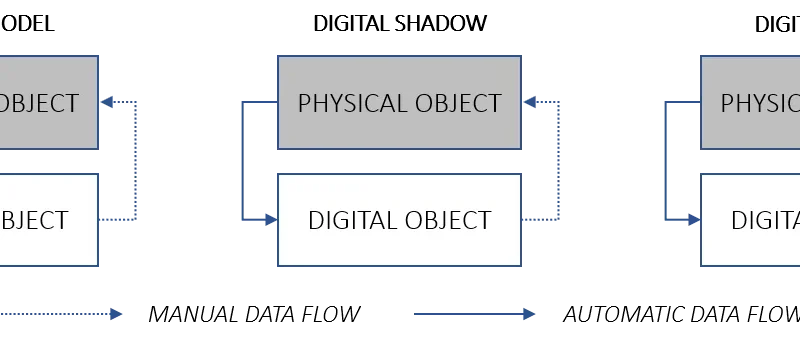
The customer digital twin is a dynamic virtual representation of a real user, built from behavioural data, preferences, and interactions and updated in real time. Unlike a static CRM profile, it anticipates needs, personalises experiences at scale, and supports proactive decisions about each customer relationship.
The CIO role has been under growing pressure for years. Automation cuts the operational load, merging with the CDO and CTO creates ambiguity over who leads what, and digital transformation demands skills that were not previously required. The CIO who evolves remains indispensable; the one who does not gets left behind.
The best RPA tools on the market are UiPath, Automation Anywhere, and Blue Prism, the three share leaders, followed by WorkFusion, Kofax, NICE RPA, Pegasystems, EdgeVerve AssistEdge, Redwood Software, and Microsoft Power Automate. The right platform depends on organisation size, the AI capabilities needed, and two-year total cost of ownership.
The financial sector is undergoing a deep transformation: blockchain, artificial intelligence, mobile payments, open banking, and big data are redefining who provides financial services and how. The World Bank estimates 76% of adults worldwide now hold a bank or mobile-money account, up from 51% in 2011, and these five technologies explain much of that progress.
3D printing, or additive manufacturing, has moved beyond the lab to become a real production technology: it builds medical prostheses, aircraft parts and entire houses layer by layer from a digital file. This guide explains FDM, SLA and SLS technologies, which industries already use them, and today's limits on speed and material certification.
Augmented reality (AR) overlays digital information onto the physical world in real time, anchors virtual objects in space using computer vision and position sensors, and is already used in industrial maintenance, guided surgery, educational labs and e-commerce product try-on, with battery life and glasses field of view as the main open challenges.
Big Data lets companies analyse huge volumes of data to make faster, better-informed decisions. Tools such as Apache Hadoop, Spark, and Kafka process information in near real time, though the real value depends on data quality, governance, and the questions teams choose to ask.
Renewable energy is now the cheapest source of electricity in much of the world. Battery storage costs have fallen 89% since 2010, commercial solar panels now exceed 22% efficiency, and onshore wind costs dropped 70% in a decade, according to IRENA and BloombergNEF data.
The Internet of Things (IoT) is a network of sensors, actuators, and internet-connected devices that collect data from the physical world, transmit it through protocols like MQTT or Zigbee, and trigger automatic actions. It already transforms industrial maintenance, precision irrigation, and the smart home.
Cybersecurity combines technical controls (encryption, MFA, network segmentation), team training and an incident response plan to reduce the risk of ransomware, phishing, malware and identity theft. No single measure is enough: effectiveness depends on applying every layer at once and auditing the system regularly.
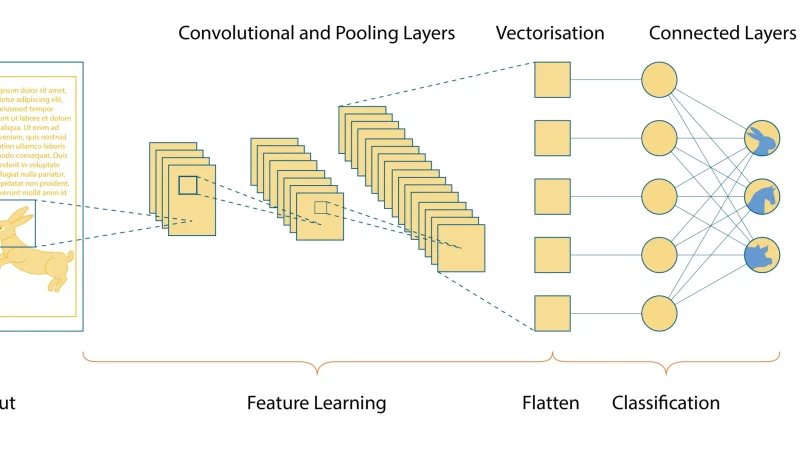
Modern artificial intelligence rests on three pillars: machine learning, deep neural networks, and natural language processing. These techniques have pushed image recognition and machine translation past human-level precision on specific tasks, though the overall system still depends on quality data and constant human oversight.
Blockchain is a distributed database that records transactions in blocks linked by cryptography, with no central authority validating them. No node can alter the history without the rest of the network noticing. This guide explains consensus, smart contracts, and where, beyond cryptocurrencies, blockchain delivers real value.
Technical analysis uses Japanese candlestick charts, indicators such as RSI and MACD, and support and resistance levels to read the historical behaviour of price. It does not eliminate risk, but it helps separate impulsive decisions from informed ones in a market as volatile as cryptocurrency.
GitHub Codespaces brings the complete development environment to the cloud: editor, dependencies, extensions, and project configuration live in a remote container. It eliminates environment divergence between developers, reduces onboarding from days to minutes, and lets you work from any device without installing anything locally.
5 min2124.4
We use first- and third-party cookies to analyze site traffic. You can accept them, reject them, or configure your choice.
Learn more about cookies
Cookie preferences
NecessaryEssential for the site to work. Always on.
AnalyticsHelp us understand how the site is used (Google Analytics).