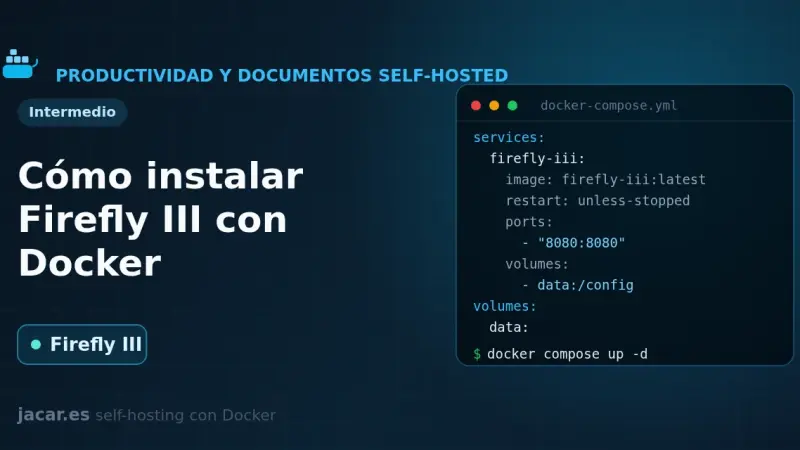
Firefly III is an open-source personal finance manager you self-host with Docker. With one docker-compose.yml file you bring up the application, a MariaDB database and the data importer, which connects to more than 6,000 banks through GoCardless. You generate the 32-character APP_KEY and keep control of all your money on your own server.
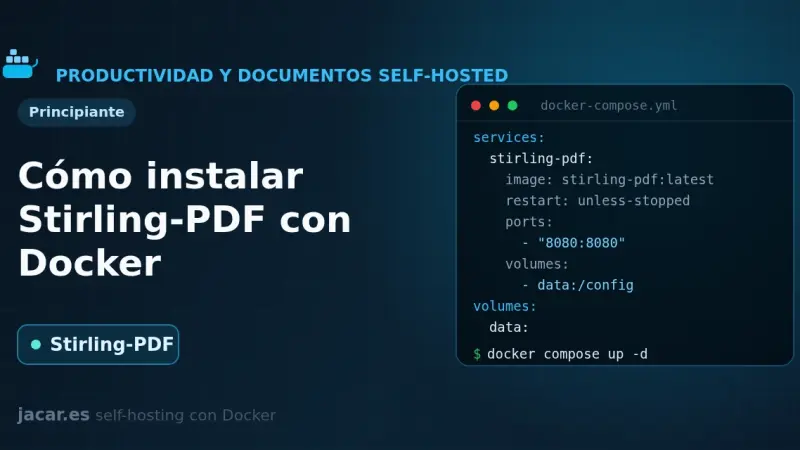
Stirling-PDF is a web-based Swiss Army knife for PDFs that you self-host with Docker in a single container. With one docker-compose.yml file you bring up more than fifty tools to merge, split, compress, convert, sign and OCR your documents, all processed on your own server and without sending anything to the cloud.
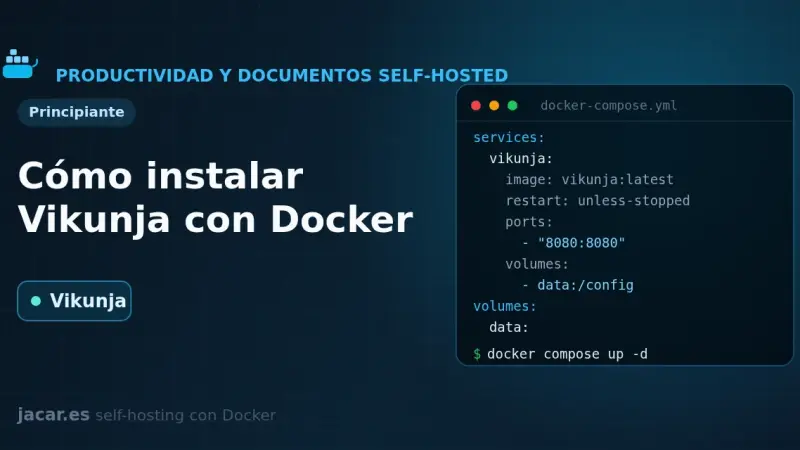
Vikunja is an open-source task manager that you self-host with Docker in a single image. With one docker-compose.yml file you bring up the application alongside a PostgreSQL database and organize your projects in list, kanban board, Gantt and table views, with all your data stored on your own server.
100 must-have apps for your M5 Mac organised into 20 categories: browser, notes, terminal, IDE, containers, AI and more. Each pick with purpose, key features, plugins, pricing in EUR and the official link.
Claude Code leads long-horizon agentic work, Cursor wins for fast daily interactive editing, Aider dominates CI-pipeline automation, and GitHub Copilot fits teams built around GitHub PRs; Windsurf competes with fresh traction. After a year using all five hard, the most productive combination for most people is still Claude Code plus Cursor.
After fourteen months testing AI-integrated DevOps tools across several teams, the stack that stays is small: Claude Code, Cursor, and Aider for code; PagerDuty AIOps, Datadog Bits AI, and Grafana Assistant for alert triage; and OpenTofu with OPA for infrastructure generation bounded by policy rules.
The AI tool stack a developer uses in 2026 looks nothing like it did eighteen months ago. Agentic editors, review tools, terminal agents, and test assistants have settled into recognizable roles. A practical guide by category.
MCP clients are now built into the editor itself: VS Code, Zed, Cursor, and several Neovim forks ship native support. The agent picks up project context in place, with no copying of files into a separate chat window. The practical questions become which servers to keep enabled and how to scope their permissions.
September 2026 review of the MCP servers I use daily: filesystem, git, fetch, and memory are still reference servers, and DBHub replaces the archived Postgres server. The official registry verifies who publishes, not the code's security, so I apply five criteria and list tools with the MCP Inspector before connecting anything.
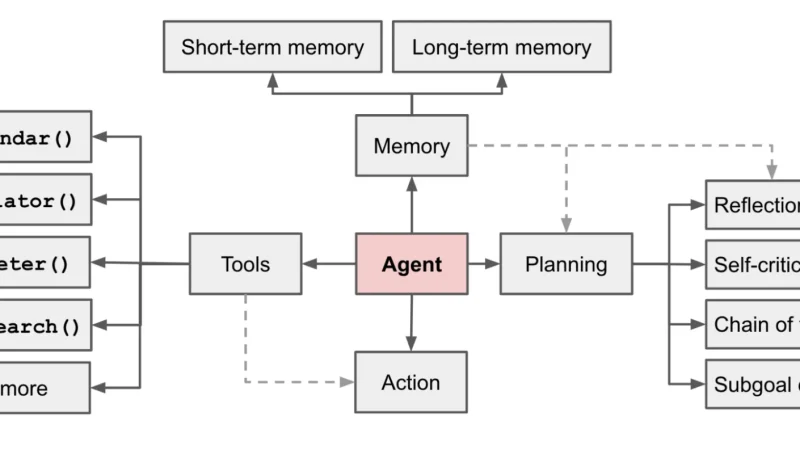
AI agents have moved from a lab curiosity to serious SDKs from three major providers. A reflection on moving from the flashy demo to an internal use case that shifts a real, measurable metric.
Two years into living with AI assistants in the editor, habits have settled. A reflection on what has changed in day-to-day coding, what has been learned, and what was still left to discover.
Cursor is a VS Code fork that puts artificial intelligence at the core of the editor instead of bolting it on as a plugin. It offers inline completion, a chat that understands full project context, and Composer, multi-file editing from a short brief. The Pro plan costs $20 a month and it competes directly with GitHub Copilot.
Microsoft PC Manager is a free, official Microsoft tool that brings temporary-file cleanup, Windows startup management, one-click access to Windows Defender, and a visual disk-usage map into a single panel. It runs on Windows 10 and Windows 11, but it does not replace a full antivirus or dedicated data-recovery tools.
GitHub Copilot is a coding assistant from GitHub and OpenAI that suggests code in real time inside the editor, trained on billions of lines of public code. It speeds up repetitive tasks such as tests, boilerplate, and documentation, but its suggestions always need human review before reaching production.
The OKR (Objectives and Key Results) methodology is a goal-management system that aligns the entire organisation, from the CEO to every team, around ambitious, measurable goals. Each qualitative objective pairs with quantifiable key results, reviewed every quarter to keep focus without the rigidity of an annual plan.
Microsoft 365 Copilot integrates large language models into Word, Excel, Teams, and Outlook to draft, summarise, and analyse data without leaving the usual workflow. It operates inside the tenant's data graph, respects the organisation's existing permissions, and never uses that data to train the base OpenAI or Anthropic model.
6 min2234.4
We use first- and third-party cookies to analyze site traffic. You can accept them, reject them, or configure your choice.
Learn more about cookies
Cookie preferences
NecessaryEssential for the site to work. Always on.
AnalyticsHelp us understand how the site is used (Google Analytics).