Docker Agent is a Docker CLI plugin for building and running AI agents from a declarative YAML file, no code required: you define one or more agents, give them MCP tools, run them with docker agent run, and share them through any OCI registry, on OpenAI, Anthropic, Gemini or other providers.
Open GSD (Git. Ship. Done.) is an open-source, MIT-licensed toolkit for steering coding agents without losing context: it splits work into five phases (discuss, plan, execute, verify and ship) and delegates the heavy lifting to subagents that each start with a clean context. Its core is the gsd-core engine and the gsd-pi terminal agent.
A vector embedding is a list of real numbers that represents the semantic meaning of a piece of text, an image, or any other data. Two sentences with the same meaning produce vectors that are close together; two unrelated ones produce vectors that are far apart. Semantic search, RAG, and recommendation systems are all built on this principle.
The idea of UI generated on the fly instead of pre-built reached production in 2025. After a year of real-world use, the balance is more nuanced than the initial enthusiasm suggested.
Direct Preference Optimization (DPO) and its variants, IPO, KTO, and SimPO, have displaced RLHF as the preferred alignment method for language models: they drop the separate reward model, cut training cost, and are easier to reproduce. RLHF still has an edge only for frontier models with very large budgets.
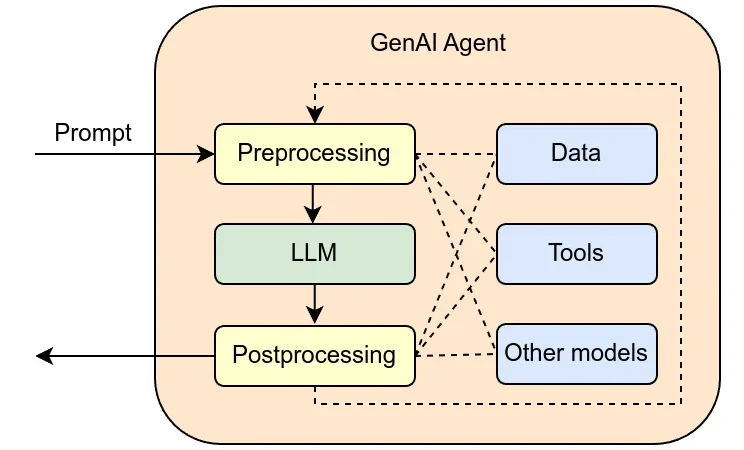
Skills package reusable capabilities; subagents isolate bounded-task execution. Together they form the most effective pattern for composing complex agents in 2026.
Synthetic data has moved from a precarious substitute for real data to a central component of modern model training: the most reliable pattern expands a real core of 500 examples with thousands of synthetic paraphrases, provided you validate diversity, correctness, and distribution, and keep at least 30% real data to avoid model collapse.
The Model Context Protocol, proposed by Anthropic in late 2024 and adopted through 2025-2026 by Anthropic, OpenAI, Google, and the open-source community, already has proven operational patterns: separating generic servers from custom ones, explicit per-tool policies, credentials kept outside the model, prefixed composition, and contract tests. This is the state of the art in 2026.
Using an LLM to judge another LLM became widespread in 2024 and remains, in 2026, the only scalable way to evaluate qualitative quality in LLM systems. It is reliable when judge-human correlation exceeds 0.7 on 30 cases and gets recalibrated quarterly; below that threshold, do not trust the number.
Claude Sonnet 4.6 is the default model for most 2026 production workloads: it covers 80% of traffic with quality indistinguishable from Opus 4.7 in blind tests, at roughly 60% of Opus per-token price. Opus is still needed for complex reasoning and agentic coding on large codebases.
Hybrid RAG in 2026 combines dense and lexical search fused with RRF, cross-encoder reranking over the top-50 candidates, structure-aware chunking, and continuous evaluation with Ragas or TruLens. It is the pattern that survives in serious production systems three years after the initial embeddings boom.
Opus 4.7 launched as Anthropic's most capable model, with emphasis on long-horizon agentic work. After two months of intensive use, these are the practical changes versus Opus 4.6.
The first invoice for a production agent usually runs double or triple the estimate. This article walks through five real levers, in priority order, caching, routing, context control, batching, and telemetry, to cut cost without touching perceived quality.
While OpenAI and Anthropic dominate headlines with rounds worth hundreds of millions, a growing group of niche AI startups generates one to ten million dollars in revenue with teams of two to ten people. They share five patterns: narrow vertical focus, 70-80% margins, community distribution, iteration cycles in days, and AI as an internal lever.
AI agents fail in production, and what matters is how you respond in the first twenty minutes. This runbook covers severity classification, isolating before investigating, purging contaminated memory, communicating without inventing facts, and turning every incident into a regression test before closing it as done.
Prompt engineering has moved from viral tricks to a discipline with reproducible patterns: few-shot, chain-of-thought, and structured output with function calling. Teams treating prompts like code (versioned, tested, and monitored) get consistently better results than those who improvise.
Ollama 0.5 or newer runs Llama 3.3 70B and Mistral Large 2 locally on Ubuntu 24.04: Q4_K_M quantization lets a single NVIDIA GPU with 24 GB of VRAM, an RTX 4090 for example, handle the full model. This guide installs the drivers, sets up Open WebUI, and exposes the service behind Traefik with TLS.
La Ley de IA europea iba a entrar en aplicación plena para sistemas de alto riesgo en agosto de 2026. El Digital Omnibus, aprobado por el Parlamento y el Consejo en junio de 2026, retrasa esa fecha 17 meses, hasta diciembre de 2027. Qué obligaciones rigen ya y qué cambia de verdad.
La factura de IA en las empresas ha dejado de ser anecdótica. Entre tokens de modelos frontera, GPUs reservadas que nadie usa y pipelines RAG con cachés mal configuradas, muchos equipos pagan diez veces lo que deberían. Guía de FinOps específico para IA sin relatos promocionales.
Six months after A2A landed at the Linux Foundation, and after several implementation cycles from Google, Microsoft, and open projects, what version 1 of the protocol means and whether it is safe to build on yet.
With MCP solving the agent-to-tool layer, a parallel problem surfaces: how do two agents from different vendors communicate with each other. Google's Agent2Agent protocol, donated to the Linux Foundation in June 2025, tries to fill that gap with an open standard.
Phi-3 es la familia de modelos pequeños de lenguaje que Microsoft viene puliendo desde abril de 2024 con variantes de 3.800 millones, 7.000 millones y 14.000 millones de parámetros. Después de año y medio, el panorama del edge con SLM abiertos se ha vuelto serio y Phi-3 ocupa un sitio claro.
Guardrails frameworks promise to filter language-model inputs and outputs to block data leaks, harmful content, or hallucinations. After evaluating four of the most popular ones in production, I cover what they actually do, what latency and billing cost they add, and when they pay off over simpler controls.
Un enrutador de inferencia decide qué modelo atiende cada petición en función de coste, latencia y complejidad. Bien diseñados reducen la factura de tokens sin que el usuario perciba degradación; mal diseñados introducen fallos sutiles difíciles de depurar.
Probar sistemas que incluyen modelos de lenguaje rompe la primera regla del testing: la misma entrada da la misma salida. Analizo las estrategias que han funcionado tras un año largo integrando IA en productos reales, por qué los tests deterministas tradicionales no bastan y cómo plantear un cinturón de pruebas que capture regresiones sin bloquearse en la varianza.
The term Agent OS has spent a year gaining traction across research and product circles. It describes a layer that goes well beyond an agent library: request scheduling, context management, persistent memory, and isolation. A look at the real state of that concept.
After months of rumors, OpenAI released GPT-5 in early August. The first weeks of real-world use show a picture less spectacular than the marketing suggested and more useful than many expected. It is worth separating what is genuinely new from what is merely incremental.
Redis 8.2 ships vector search as a native data type. The real question is whether it replaces a dedicated engine like Qdrant, Weaviate, or pgvector on workloads with millions of vectors and tight latency budgets, or only works as a bonus on top of the cache you already run.
Anthropic presentó Claude Opus 4 y Claude Sonnet 4 el 22 de mayo de 2025, el primer salto grande de nomenclatura desde la serie 3.5. Un mes de uso real en código, documentación técnica y agentes para separar lo que ha mejorado de lo que sigue igual.
For a decade, knowledge graphs were an academic idea with few real use cases, held back by the cost of building and maintaining the schema. LLMs have changed that equation: they now extract entities automatically and help anchor answers, audit reasoning, and support agents without hallucinating.
Anthropic publicó Claude 3.7 Sonnet a finales de febrero con pensamiento extendido opcional y un compañero de consola llamado Claude Code. Reflexión sobre qué cambia de verdad y qué queda para la próxima familia.
A year ago open weights were a gamble; today they are a real production option. I review what has worked, what has not, and how Llama, DeepSeek, Qwen, and Mistral are fitting into enterprise architectures that used to depend on closed APIs.
vLLM remains the reference engine for serving LLMs on GPU in 2025: automatic prefix caching sharply cuts latency for repeated prompts, speculative decoding speeds up large models, and multi-LoRA support lowers the cost of multi-tenant SaaS, though multi-GPU support and non-NVIDIA hardware remain weak points.
GraphRAG has been in real enterprise use for over a year: during indexing, an LLM builds a knowledge graph that answers global questions about a corpus well, precisely where classic RAG fails because no single chunk holds the full answer. Here I compare indexing costs, the cases where it pays off, and the hybrid pattern that teams have settled on.
Three years after RLHF became popular, the model-alignment field is far richer. A review of RLHF, DPO, and newer methods such as KTO and ORPO, with criteria for choosing between them.
Google released Gemma 2 in mid-2024, and it has since seen real production use. A look at how it competes in the open-model ecosystem, which sizes actually make sense, and where its adoption has settled in.
o3-mini, the first public release of OpenAI's o3 reasoning series, clearly improves logic, math, and complex code over GPT-4o, though it answers slower and still hallucinates facts. This analysis, based on weeks of real use, explains where it pays off and where it does not.
Google ha lanzado Gemini 2.0 con un énfasis claro en uso de herramientas y agentes. Repaso de qué aporta, dónde está por detrás de la competencia y en qué tipo de aplicaciones encaja mejor.
Two years running AI-assisted code review in a real team leave a clear balance: AI catches mechanical oversights well and writes useful pull-request summaries, but it struggles with architectural judgment and produces many false positives on subtle bugs. The single decision that helped the most was not blocking merges on its automated comments.
Meta publicó Llama 3.2 con modelos tan pequeños como 1B y 3B, pensados específicamente para ejecutarse en dispositivos. Análisis de qué pueden hacer realmente y cómo se comparan con las alternativas.
Qualcomm, Intel and AMD Copilot+ processors have normalised the presence of an NPU in everyday PCs. A 40 TOPS NPU can run quantised Phi-3 Mini drawing just 5-10 W, versus 40-50 W for a laptop GPU doing the same task. What actually changes for running AI models locally, and when it is worth it.
Measuring RAG quality rigorously takes more than skimming a handful of answers: it requires objective metrics (faithfulness, relevance, context precision, and coverage), a golden set of hundreds of curated questions, and regular human validation of the LLM judge to avoid misleading conclusions.
Product-market fit for LLM-powered products still depends on the same classic signals: cohort retention, NPS, and revenue expansion. What changes are the higher quality baseline, faster competitor iteration, and where durable moats come from: proprietary data, workflow integration, and network effects.
TensorRT-LLM is the NVIDIA inference engine that compiles each model into a binary optimized for the exact GPU and batch size it will serve. It uses hand-written CUDA kernels and native FP8 quantization on H100. Against vLLM it can run 2 to 3 times faster in the best case, at the cost of a 30 to 90 minute build.
OpenAI published Swarm as an experimental, educational framework for multi-agent systems. It reduces coordination to two concepts — agents and handoffs — and fits in under 500 lines of Python. A comparison with CrewAI and LangGraph.
Claude 3.5 Sonnet (Anthropic, June 2024) matches Claude 3 Opus quality at Sonnet pricing, with a 200k-token context window and 92% on HumanEval. It stands out in coding and complex instruction-following, and introduced the Artifacts workspace feature on Claude.ai.
Mistral Large 2, released by French startup Mistral AI in July 2024, is a 123-billion-parameter model with a 128k-token context window that rivals GPT-4o and Claude 3.5 Sonnet on several benchmarks. Its EU data residency and its 3 EUR per million input tokens pricing make it the most serious European alternative to US providers.
The EU AI Act (Regulation 2024/1689) entered force on 1 August 2024. It classifies AI systems into four risk levels with graduated deadlines: prohibitions in February 2025, GPAI obligations in August 2025, and high-risk requirements in August 2026. It applies to any company operating or selling in the EU, with fines exceeding GDPR levels.
Installing Ollama on an Apple Silicon Mac is as simple as running one Homebrew command. Then pick a model based on available RAM (Phi-3 for 8 GB, Llama 3.1 8B for 16 GB) and expose the local, OpenAI-compatible HTTP API on port 11434 to plug it into your own applications.
Meta released Llama 3.1 405B on July 23, 2024: 405 billion parameters, 128k token context, and benchmarks matching GPT-4o and Claude 3.5 Sonnet. Self-hosting needs about 220 GB of VRAM in Q4; Together.ai, Fireworks, and Groq offer per-token access.
GPT-4 Turbo, released in November 2023, expanded GPT-4's context to 128,000 tokens and cut the input price threefold, down to 10 dollars per million tokens. GPT-4o now beats it on price, speed and answer quality, but Turbo still holds up in stable production apps, contracts pinned to a specific version, and deterministic tests that depend on its exact behaviour.
Evaluating a RAG system without metrics is pure guesswork. Ragas measures four core signals: faithfulness, answer relevancy, context precision and context recall, using an LLM as judge. TruLens, DeepEval and other frameworks cover similar ground. Wiring evaluation into CI from day one catches regressions in prompts, chunking or model choice before they reach production.
SGLang adds a Python DSL for controlling LLM generation with constrained decoding, parallel branching, and RadixAttention, the structure that indexes the KV cache as a radix trie to reuse shared prefixes across requests. When that pattern exists, speedups over vLLM reach up to 5 times; without it, the advantage shrinks.
GPT-4o is the OpenAI model presented on May 13, 2024, that fuses text, image, and audio into a single native model, without separate pipelines. It delivers roughly 320-millisecond conversational latency, better multimodal understanding, and a price 50% lower than GPT-4 Turbo.
Llama 3 is the open-model family Meta released on April 18, 2024, in 8-billion and 70-billion-parameter sizes, trained on 15 trillion tokens. The 70B beat Claude Sonnet, Mistral Medium, and GPT-3.5 in Meta's own human evaluation, and its licence allows free commercial use up to 700 million monthly active users.
nomic-embed-text-v1.5 from Nomic AI is an embedding model with weights, code and training data released under Apache 2.0: 137 million parameters, up to 8192 tokens of context, and an MTEB score of 62.4, almost matching the 62.3 of OpenAI's text-embedding-3-small, at 768 dimensions instead of 1536.
LangGraph modela agentes LLM como grafos de estados explícitos. Cuándo supera al bucle tradicional de LangChain y cómo estructurar flujos que no se desmoronan en producción.
Outlines, Guidance e Instructor obligan al modelo a emitir JSON válido en el propio paso de generación. Cuándo ganan frente a reintentos y function calling.
Anthropic launched the Claude 3 family on March 4, 2024 with three models: Haiku, Sonnet, and Opus, all with 200k-token context. Haiku costs $0.25 per million tokens; Opus matches GPT-4 Turbo on benchmarks. This comparison explains when to choose each tier and how to combine them in production to cut costs without sacrificing quality where it matters.
Mixtral 8x22B is Mistral AI's Mixture of Experts model released in April 2024: 141B total parameters but only 39B active per token, an unrestricted Apache 2.0 licence, and multilingual performance ahead of Llama 3 70B in Spanish, French, Italian, and German. Production serving needs datacenter-class GPUs.
LM Studio is a desktop app for Mac, Windows, and Linux that downloads and runs large language models on your own machine, with a polished chat interface and no terminal required. It includes an OpenAI-compatible API and RAG with your documents. For individual use it beats Ollama on user experience; for teams or production, OpenWebUI, vLLM, or TGI are the better fit.
A model trained in PyTorch or TensorFlow, running the same way on a server, a phone, a browser tab, or an ARM gateway on the factory floor: that is what ONNX Runtime solves. It turns the ONNX format into a genuinely portable artifact, exported once, at the cost of some peak performance versus a platform-native runtime.
Cuando una aplicación habla con dos o más proveedores de LLM, antes o después aparece un proxy entre medias. LiteLLM propone uno concreto, y esta es la lectura honesta de qué gana y qué cuesta.
Gemini 1.5 Pro launched in February 2024 with a verified one-million-token context window. It retrieves over 95% of data up to 530,000 tokens in recall tests, reshaping RAG system design, making full-document analysis viable, and enabling new architectural patterns through context caching.
OpenAI released text-embedding-3 on 25 January 2024 in two variants: small and large. It improves MTEB quality over ada-002, adds variable dimensions you can truncate without retraining, and lowers the price for small. Migration pays off for most serious RAG setups, but measure real recall on your own corpus before reindexing everything.
pgvector matured in 2023-2024 with the HNSW index type and parallel construction that arrived in version 0.6. For projects already running PostgreSQL, a dedicated vector database is not needed in most cases: this guide explains when PostgreSQL is enough, how to configure the index, and where it starts to fall short.
Cohere Embed v3 is an embedding model that distinguishes queries from documents via the input_type parameter and scores intrinsic text quality, with multilingual support for over 100 languages at 1024 dimensions. It costs $0.10 per million tokens versus OpenAI's $0.02, and delivers better recall in multilingual RAG.
Text Generation Inference (TGI) is the Hugging Face stack for serving open LLMs in production: continuous batching, 4-bit and 8-bit quantization, streaming, and an OpenAI-compatible API. After a brief restrictive-licence episode in 2023, it returned to Apache 2.0 in version 2.0.
Claude 2, launched by Anthropic in July 2023, offers a 100,000-token context window and safety grounded in Constitutional AI. Against GPT-4 it wins on long-document analysis and wide-context code; GPT-4 remains ahead on complex mathematical reasoning and its tooling ecosystem.
4 min1954.5
We use first- and third-party cookies to analyze site traffic. You can accept them, reject them, or configure your choice.
Learn more about cookies
Cookie preferences
NecessaryEssential for the site to work. Always on.
AnalyticsHelp us understand how the site is used (Google Analytics).