A caching proxy in front of a language model can cut the token bill significantly, but it introduces subtle risks if the design is not careful. Which cache types work in production, where the usual traps sit, and how to add them without degrading the experience.
Un enrutador de inferencia decide qué modelo atiende cada petición en función de coste, latencia y complejidad. Bien diseñados reducen la factura de tokens sin que el usuario perciba degradación; mal diseñados introducen fallos sutiles difíciles de depurar.
Probar sistemas que incluyen modelos de lenguaje rompe la primera regla del testing: la misma entrada da la misma salida. Analizo las estrategias que han funcionado tras un año largo integrando IA en productos reales, por qué los tests deterministas tradicionales no bastan y cómo plantear un cinturón de pruebas que capture regresiones sin bloquearse en la varianza.
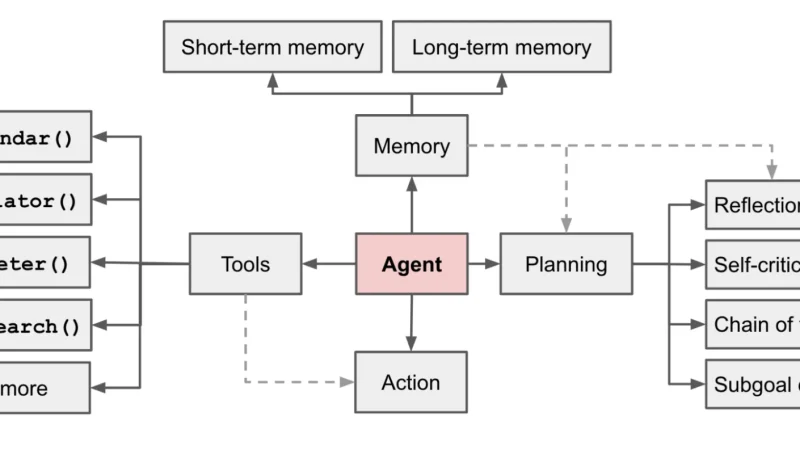
The term Agent OS has spent a year gaining traction across research and product circles. It describes a layer that goes well beyond an agent library: request scheduling, context management, persistent memory, and isolation. A look at the real state of that concept.
Model Context Protocol turns ten months old since Anthropic's announcement, and it is no longer just a proposal: hundreds of servers, cross-vendor implementations and a public registry now back it. A look at what has worked, what is still weak, and why 2025 marks the shift from curiosity to basic infrastructure.
After months of rumors, OpenAI released GPT-5 in early August. The first weeks of real-world use show a picture less spectacular than the marketing suggested and more useful than many expected. It is worth separating what is genuinely new from what is merely incremental.
Since 2 August 2025 the EU AI Act obligations for general-purpose models, national authorities, and the penalty regime are enforceable. A practical look at what changes for those of us deploying AI in Europe.
Redis 8.2 ships vector search as a native data type. The real question is whether it replaces a dedicated engine like Qdrant, Weaviate, or pgvector on workloads with millions of vectors and tight latency budgets, or only works as a bonus on top of the cache you already run.
Small language models have become genuinely useful. Phi-3.5, Gemma 2, and Llama 3.2 fit on modest hardware and solve bounded tasks without reaching the cloud. A look at where they fit on the factory floor and when skipping the large model pays off.
El RAG de 2023 era búsqueda vectorial con un LLM detrás. El de 2025 es un sistema híbrido que combina vectores, búsqueda léxica y grafos de conocimiento. Qué ha cambiado, dónde funciona cada pieza y qué decisiones marcan la diferencia entre un RAG útil y uno decepcionante.
Casi nueve meses después del lanzamiento de Computer Use, algunos equipos lo han llevado a producción para tareas reales. Dónde funciona, dónde todavía no conviene, y qué patrones están emergiendo para que un agente que maneja ratón y teclado no acabe siendo más problema que solución.
Los editores de código han empezado a incorporar MCP como cliente nativo: VS Code, Zed, Cursor y varios forks de Neovim. Esto cambia la forma en que el agente accede al contexto del proyecto y abre preguntas prácticas sobre qué servidores activar y cómo configurarlos sin abrir puertas.
AI agents are starting to earn a real place in continuous integration pipelines: reviewing diffs, proposing fixes, generating missing tests. Six months of real-world use to separate the patterns that work from the ones that end up costing more time than they save.
Google publicó Gemini 2.5 Pro en vista previa en marzo y la versión general llegó en junio. El salto respecto a Gemini 2.0 no está solo en puntuaciones sino en dos frentes prácticos: ventana de contexto utilizable en serio y multimodalidad que deja de ser demostración para convertirse en herramienta.
Anthropic presentó Claude Opus 4 y Claude Sonnet 4 el 22 de mayo de 2025, el primer salto grande de nomenclatura desde la serie 3.5. Un mes de uso real en código, documentación técnica y agentes para separar lo que ha mejorado de lo que sigue igual.
A year after chat stopped being the only acceptable way to talk to an agent, UI patterns built specifically for agent tasks are emerging. I go through the ones starting to stick and the ones that are just cycle fashion.
Seis meses después de que MCP se volviera el protocolo común de integración de agentes, el catálogo comunitario supera el millar de servidores. Repaso cuáles uso a diario, cuáles son ruido y cómo separarlos sin caer en la trampa de la novedad.
Prompt injection is the most common vulnerability in LLM applications, and many teams defend against it with filters that do not work. We review defense layers backed by evidence, what actually works, and what is security theater.
For a decade, knowledge graphs were an academic idea with few real use cases, held back by the cost of building and maintaining the schema. LLMs have changed that equation: they now extract entities automatically and help anchor answers, audit reasoning, and support agents without hallucinating.
In AI systems the real cost is not EC2 instances but input tokens in RAG and agents, chained tool calls, and frequent reindexing; those vectors, plus unattributed experimental spend, concentrate most of the monthly production bill.
Un sistema RAG sin evaluación continua se degrada en silencio. Los índices cambian, los modelos se actualizan, los usuarios preguntan cosas nuevas. Este es un repaso práctico de qué métricas vigilar y cómo montar el cuadro de mando que avisa antes del incidente.
Crunchbase and CB Insights first-quarter data confirm that global startup funding has rebounded, but nearly all of the growth is concentrated in startups presenting themselves as AI. The rest of the ecosystem remains in correction.
La mitad del ecosistema IA de 2024 era una capa fina sobre la API de OpenAI. Dos años después, unos cuantos se han convertido en producto y el resto ha desaparecido. Revisión de qué separa un wrapper serio de un agujero por donde se va el dinero.
Cuando un LLM pasa de contestar texto a ejecutar herramientas, la superficie de ataque cambia de categoría. La inyección de prompts, la contaminación de memoria y el abuso de protocolos entre agentes son el nuevo OWASP Top 10.
AI agents have moved from a lab curiosity to serious SDKs from three major providers. A reflection on moving from the flashy demo to an internal use case that shifts a real, measurable metric.
Desde que Microsoft abrió GraphRAG, el patrón de usar grafos sobre tus propios datos ha pasado de experimento académico a técnica con aplicaciones prácticas. Reflexión sobre cuándo compensa, cómo se monta y qué errores se repiten.
The AI features Figma has rolled out since Config 2024 are changing how product design teams work. A look at what each feature delivers, what remains human work, and which habits are taking hold across teams.
Con las primeras obligaciones del AI Act europeo ya en vigor, la gobernanza de la IA en empresa deja de ser teórica. Qué comités montar, qué políticas escribir y qué auditar, desde la experiencia de varias implantaciones.
Anthropic publicó Claude 3.7 Sonnet a finales de febrero con pensamiento extendido opcional y un compañero de consola llamado Claude Code. Reflexión sobre qué cambia de verdad y qué queda para la próxima familia.
A year ago open weights were a gamble; today they are a real production option. I review what has worked, what has not, and how Llama, DeepSeek, Qwen, and Mistral are fitting into enterprise architectures that used to depend on closed APIs.
vLLM remains the reference engine for serving LLMs on GPU in 2025: automatic prefix caching sharply cuts latency for repeated prompts, speculative decoding speeds up large models, and multi-LoRA support lowers the cost of multi-tenant SaaS, though multi-GPU support and non-NVIDIA hardware remain weak points.
GraphRAG has been in real enterprise use for over a year: during indexing, an LLM builds a knowledge graph that answers global questions about a corpus well, precisely where classic RAG fails because no single chunk holds the full answer. Here I compare indexing costs, the cases where it pays off, and the hybrid pattern that teams have settled on.
Three years after RLHF became popular, the model-alignment field is far richer. A review of RLHF, DPO, and newer methods such as KTO and ORPO, with criteria for choosing between them.
Google released Gemma 2 in mid-2024, and it has since seen real production use. A look at how it competes in the open-model ecosystem, which sizes actually make sense, and where its adoption has settled in.
o3-mini, the first public release of OpenAI's o3 reasoning series, clearly improves logic, math, and complex code over GPT-4o, though it answers slower and still hallucinates facts. This analysis, based on weeks of real use, explains where it pays off and where it does not.
Google ha lanzado Gemini 2.0 con un énfasis claro en uso de herramientas y agentes. Repaso de qué aporta, dónde está por detrás de la competencia y en qué tipo de aplicaciones encaja mejor.
Two years running AI-assisted code review in a real team leave a clear balance: AI catches mechanical oversights well and writes useful pull-request summaries, but it struggles with architectural judgment and produces many false positives on subtle bugs. The single decision that helped the most was not blocking merges on its automated comments.
Meta publicó Llama 3.2 con modelos tan pequeños como 1B y 3B, pensados específicamente para ejecutarse en dispositivos. Análisis de qué pueden hacer realmente y cómo se comparan con las alternativas.
Qualcomm, Intel and AMD Copilot+ processors have normalised the presence of an NPU in everyday PCs. A 40 TOPS NPU can run quantised Phi-3 Mini drawing just 5-10 W, versus 40-50 W for a laptop GPU doing the same task. What actually changes for running AI models locally, and when it is worth it.
Measuring RAG quality rigorously takes more than skimming a handful of answers: it requires objective metrics (faithfulness, relevance, context precision, and coverage), a golden set of hundreds of curated questions, and regular human validation of the LLM judge to avoid misleading conclusions.
Hybrid search combines BM25 and vector retrieval to cover what each misses alone. Vectors fail on exact identifiers like SKUs or CVEs; BM25 fails when query and document use different vocabulary for the same idea. Reciprocal Rank Fusion (RRF) merges both rankings without depending on their score scales.
llama.cpp is the C++ library that powers Ollama and much of the local-LLM ecosystem. 2024 added speculative decoding with two- to three-fold speedups, an RPC server for sharding layers across machines, and a stable GGUF format. Ollama covers 90% of cases; going direct pays off with uncommon hardware or specific flags.
Ollama became the standard for running large language models locally in 2024. It wraps llama.cpp in a single binary with Docker-style CLI and an OpenAI-compatible API. Phi-3 Mini runs in 4 GB; Llama 3.1 8B Q4 needs 6 GB. For production traffic at scale, vLLM remains the correct choice.
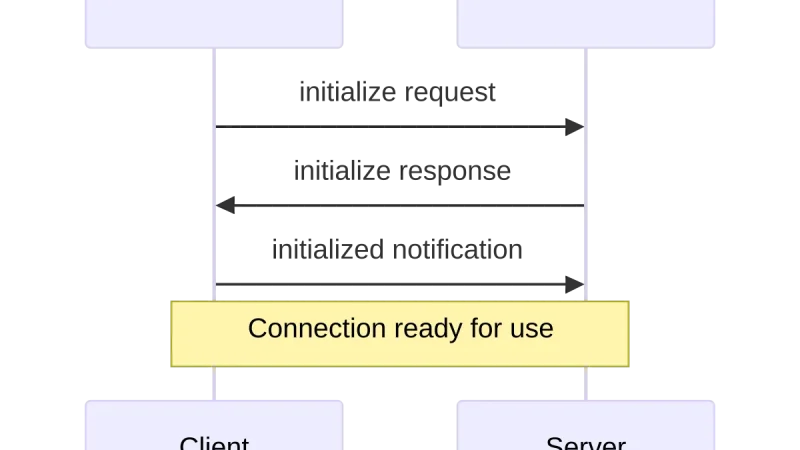
Model Context Protocol (MCP) is the open standard Anthropic published on 25 November 2024 to connect language models with external data and tools over JSON-RPC 2.0. It does not replace function calling: it standardises the server side, aiming to become for context what the Language Server Protocol is for code editors.
Product-market fit for LLM-powered products still depends on the same classic signals: cohort retention, NPS, and revenue expansion. What changes are the higher quality baseline, faster competitor iteration, and where durable moats come from: proprietary data, workflow integration, and network effects.
LLM applications need three distinct observability planes: prompt and response traces for debugging hallucinations, per-token and per-feature cost tracking, and response quality evaluation. Mature tools like Langfuse, LangSmith, and Helicone cover all three planes with specific instrumentation.
TensorRT-LLM is the NVIDIA inference engine that compiles each model into a binary optimized for the exact GPU and batch size it will serve. It uses hand-written CUDA kernels and native FP8 quantization on H100. Against vLLM it can run 2 to 3 times faster in the best case, at the cost of a 30 to 90 minute build.
5 min221
We use first- and third-party cookies to analyze site traffic. You can accept them, reject them, or configure your choice.
Learn more about cookies
Cookie preferences
NecessaryEssential for the site to work. Always on.
AnalyticsHelp us understand how the site is used (Google Analytics).