Hybrid RAG in 2026 combines dense and lexical search fused with RRF, cross-encoder reranking over the top-50 candidates, structure-aware chunking, and continuous evaluation with Ragas or TruLens. It is the pattern that survives in serious production systems three years after the initial embeddings boom.
Opus 4.7 launched as Anthropic's most capable model, with emphasis on long-horizon agentic work. After two months of intensive use, these are the practical changes versus Opus 4.6.
The first invoice for a production agent usually runs double or triple the estimate. This article walks through five real levers, in priority order, caching, routing, context control, batching, and telemetry, to cut cost without touching perceived quality.
While OpenAI and Anthropic dominate headlines with rounds worth hundreds of millions, a growing group of niche AI startups generates one to ten million dollars in revenue with teams of two to ten people. They share five patterns: narrow vertical focus, 70-80% margins, community distribution, iteration cycles in days, and AI as an internal lever.
AI agents fail in production, and what matters is how you respond in the first twenty minutes. This runbook covers severity classification, isolating before investigating, purging contaminated memory, communicating without inventing facts, and turning every incident into a regression test before closing it as done.
LLM red teaming has gone from an esoteric activity to a mandatory practice. With the OWASP Agentic Top 10 and the CSA Agentic AI Red Teaming Guide converging on shared vocabulary, this is the operational playbook any team deploying agents needs to have.
Reliable agents come from measurement, not from better models or prompts. A production agent evaluation setup starts with a golden dataset of 30 to 200 cases, split roughly 60 percent normal usage, 30 percent edge cases and 10 percent adversarial, and it never uses the same model as both worker and judge.
Prompt engineering has moved from viral tricks to a discipline with reproducible patterns: few-shot, chain-of-thought, and structured output with function calling. Teams treating prompts like code (versioned, tested, and monitored) get consistently better results than those who improvise.
An Agent OS is a runtime layer built to run AI agents rather than ordinary applications, and after six months of production deployments the trade-off is clear. A dedicated agent stack starts slower but stays stable; Kubernetes with orchestration bolted on top moves faster early, then hits observability and policy limits. It pays off from five active agents.
Ollama 0.5 or newer runs Llama 3.3 70B and Mistral Large 2 locally on Ubuntu 24.04: Q4_K_M quantization lets a single NVIDIA GPU with 24 GB of VRAM, an RTX 4090 for example, handle the full model. This guide installs the drivers, sets up Open WebUI, and exposes the service behind Traefik with TLS.
A year after GraphRAG left the lab, one statistic holds: it works where corporate information has dense relational structure, fails where there are only loose documents. Patterns, ingestion costs, and architectural decisions that have survived a year of real deployment.
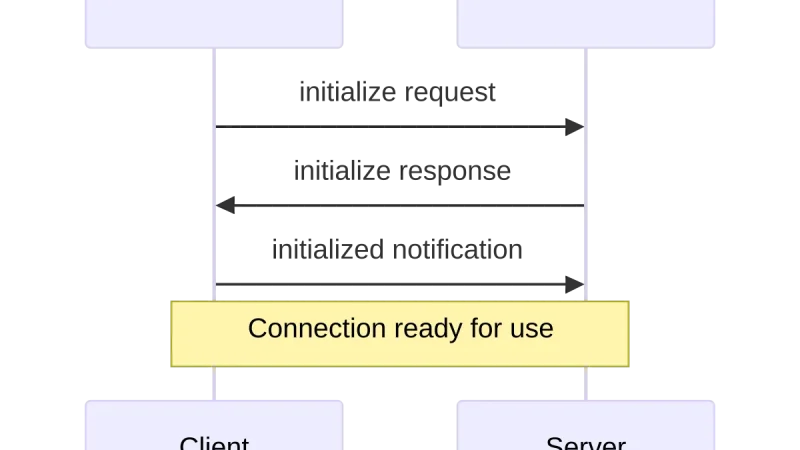
The Model Context Protocol has gone from proposal to de facto standard for connecting editors with external tools. This practical guide walks through standing up a local MCP server, wiring it into VS Code or your client of choice, and understanding exactly what you are exposing.
After two years of pilots and a year of agents in production, governance has moved from an aspirational committee to an operational control. What audits ask for, what broke in 2025, and which guardrails absorb most incidents.
By late 2025, 57.3 percent of organizations had agents in production, up from 51 percent a year earlier, according to LangChain's survey of more than 1,300 professionals. Three failure modes dominate the postmortems: degenerative reasoning loops, hallucinated data in RAG systems, and silent misalignment between the request and the interpretation.
Twenty months after the initial announcement, Model Context Protocol went from curiosity to de-facto standard among agent clients and servers. What is available, which servers are worth it, which problems remain open, and how it compares to earlier protocol maps.
The European AI Act took effect on 1 August 2024 with a staggered calendar, and its Annex III high-risk rules no longer land in August 2026. The Digital Omnibus, closed by the Parliament and the Council, moves that deadline 17 months to 2 December 2027. Prohibitions since February 2025 and general-purpose AI duties since August 2025 still apply.
FinOps for AI counts different units than classic cloud FinOps: tokens, calls, computed embeddings and GPU time, all of which scale nonlinearly with use. The costliest habit is sending everything to frontier models; 40 to 70 percent of those calls run on mid-tier models with no noticeable quality loss. Uncached RAG and self-recursing agents do the rest.
Sixteen months after Anthropic first shipped computer use, with browser-use, OpenAI Operator and Gemini Computer Use all pushing in parallel, agents that drive the browser and desktop have moved from demo to real workflows. Time to review which patterns survive when you run them daily in production.
A selection of postmortems published between 2025 and 2026 by teams running AI systems in production reveals repeated patterns: guardrail failures, silent model drift, hidden vendor dependency, and a collection of near-misses worth distilling.
The AI startup correction is already measurable: down rounds turned from anecdote into a visible statistical pattern from Q4 2025, and selective layoffs cluster in sales, research and operations at companies that over-hired. Survivors share a concrete problem, a concrete segment, and AI costs the business model can absorb. Thin wrappers over commercial models suffer most.
Claude Haiku 4.5, released by Anthropic on October 15, 2025, performs close to Sonnet 4 on structured tasks for roughly a third of the price. It carries a 200K-token context window and tool use on par with Sonnet 4.5. Pairing it as a filter ahead of Sonnet cuts total cost several times over.
Knowledge graphs spent two decades waiting for their moment. With LLMs now bridging free text and formal ontology, and the GraphRAG pattern already mature, the technology is back in the spotlight. Time to look at why it finally fits and where it actually pays off.
After two years watching every product invent its own interface for talking to an agent, by January 2026 a stable design consensus is emerging about which patterns work, which do not, and what the average user already expects. Time to write down what has settled.
Six months after A2A landed at the Linux Foundation, and after several implementation cycles from Google, Microsoft, and open projects, what version 1 of the protocol means and whether it is safe to build on yet.
European sovereign AI discourse has spent three years fueling headlines, public investment, and interstate agreements. We are starting to see which part of the promise has real technical substance and what a technical team expecting alternatives outside the US ecosystem can actually count on.
With MCP solving the agent-to-tool layer, a parallel problem surfaces: how do two agents from different vendors communicate with each other. Google's Agent2Agent protocol, donated to the Linux Foundation in June 2025, tries to fill that gap with an open standard.
Phi-3 is Microsoft Research's family of small language models aimed at the edge, and it competes directly with Llama 3.2, Gemma 2 and Qwen 2.5. Phi-3-mini holds 3.8B parameters and, quantized to 4 bits, fits in about 2 GB, running on a CPU with a neural accelerator, an integrated GPU or an NPU.
Large language models have spent two years promising effortless documentation for code, APIs and architecture. After watching dozens of projects try it, clear patterns emerge for where it works and where it just becomes more debt.
Guardrails frameworks promise to filter language-model inputs and outputs to block data leaks, harmful content, or hallucinations. After evaluating four of the most popular ones in production, I cover what they actually do, what latency and billing cost they add, and when they pay off over simpler controls.
Agents that chain calls to models, tools and memory are hard to debug without instrumentation designed for them. After a long year running agents in production, I cover what to measure first, which standards are consolidating, and which costly mistakes are avoided by getting the traces right from the start.
A caching proxy in front of a language model can cut the token bill significantly, but it introduces subtle risks if the design is not careful. Which cache types work in production, where the usual traps sit, and how to add them without degrading the experience.
An inference router decides which model answers each incoming request, weighing cost, latency and how hard the request actually is. Well-built inference routers cut total token spend by 30 to 70 percent with no quality loss the user can perceive. Four patterns cover most cases: length, task type, an auxiliary classifier, and learned routing.
AI testing breaks the assumption every automated suite was built on, because the same input no longer produces the same output. Anthropic documents that temperature 0.0 is still not fully deterministic, and OpenAI's seed parameter only promises mostly reproducible results. What works instead is a layered belt of checks that catches regressions without tripping over ordinary variance.
The term Agent OS has spent a year gaining traction across research and product circles. It describes a layer that goes well beyond an agent library: request scheduling, context management, persistent memory, and isolation. A look at the real state of that concept.
Model Context Protocol turns ten months old since Anthropic's announcement, and it is no longer just a proposal: hundreds of servers, cross-vendor implementations and a public registry now back it. A look at what has worked, what is still weak, and why 2025 marks the shift from curiosity to basic infrastructure.
After months of rumors, OpenAI released GPT-5 in early August. The first weeks of real-world use show a picture less spectacular than the marketing suggested and more useful than many expected. It is worth separating what is genuinely new from what is merely incremental.
Since 2 August 2025 the EU AI Act obligations for general-purpose models, national authorities, and the penalty regime are enforceable. A practical look at what changes for those of us deploying AI in Europe.
Redis 8.2 ships vector search as a native data type. The real question is whether it replaces a dedicated engine like Qdrant, Weaviate, or pgvector on workloads with millions of vectors and tight latency budgets, or only works as a bonus on top of the cache you already run.
Small language models have become genuinely useful. Phi-3.5, Gemma 2, and Llama 3.2 fit on modest hardware and solve bounded tasks without reaching the cloud. A look at where they fit on the factory floor and when skipping the large model pays off.
RAG 2.0 means retrieval built from several sources at once rather than a single vector search: dense embeddings, lexical matching, and knowledge graphs that capture relationships between entities, with a reranking layer ordering the final candidates. The 2023 pattern of one vector database plus an LLM no longer describes what production systems actually do.
Computer Use in production works today for narrow, repetitive interface tasks where a human still checks the result. Anthropic shipped it in October 2024 calling it experimental and error-prone, and nine months on that framing still holds: teams run it on real work by constraining scope, not by trusting it end to end.
MCP clients are now built into the editor itself: VS Code, Zed, Cursor, and several Neovim forks ship native support. The agent picks up project context in place, with no copying of files into a separate chat window. The practical questions become which servers to keep enabled and how to scope their permissions.
AI agents are starting to earn a real place in continuous integration pipelines: reviewing diffs, proposing fixes, generating missing tests. Six months of real-world use to separate the patterns that work from the ones that end up costing more time than they save.
Gemini 2.5 Pro reached preview on 25 March 2025 and general availability at the end of June, alongside the cheaper, faster Gemini 2.5 Flash. Two things separate it from Gemini 2.0: a one-million-token context window that behaves stably to at least 500k, and multimodality that has left the demo stage behind.
Anthropic released Claude Opus 4 and Claude Sonnet 4 on 22 May 2025, the first major naming jump since the 3.5 series. Claude 4 reasons noticeably better over long programming tasks: multi-hour refactors that previously stalled without a human nudge now run further alone, and the family targets agentic, multi-step flows.
A year after chat stopped being the only acceptable way to talk to an agent, UI patterns built specifically for agent tasks are emerging. I go through the ones starting to stick and the ones that are just cycle fashion.
September 2026 review of the MCP servers I use daily: filesystem, git, fetch, and memory are still reference servers, and DBHub replaces the archived Postgres server. The official registry verifies who publishes, not the code's security, so I apply five criteria and list tools with the MCP Inspector before connecting anything.
Prompt injection is the most common vulnerability in LLM applications, and many teams defend against it with filters that do not work. We review defense layers backed by evidence, what actually works, and what is security theater.
8 min2694.3
We use first- and third-party cookies to analyze site traffic. You can accept them, reject them, or configure your choice.
Learn more about cookies
Cookie preferences
NecessaryEssential for the site to work. Always on.
AnalyticsHelp us understand how the site is used (Google Analytics).