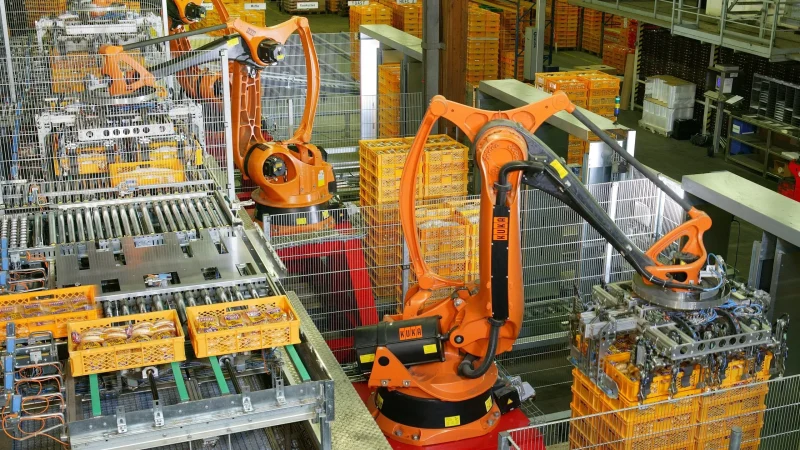
Cobots have been promising the fenceless factory for almost fifteen years. In 2026, with the market heading toward eleven billion dollars and 70% of orders coming from outside automotive, it is time to review what has delivered and what remains open.
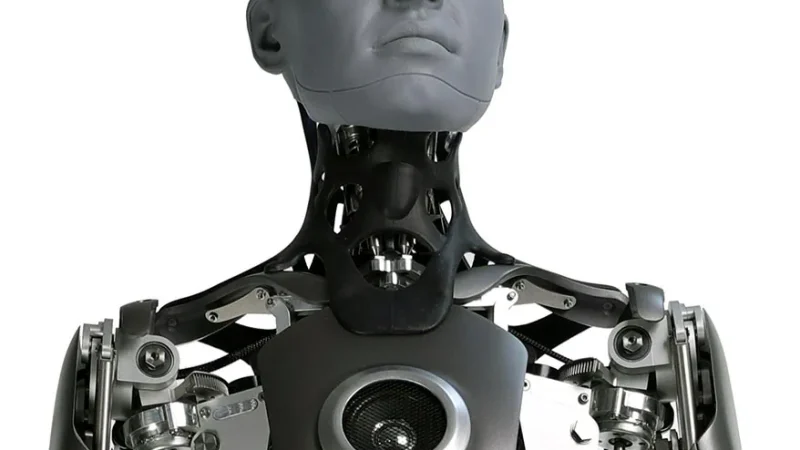
Humanoid robotics left the trade-show floor for factory floors and warehouses during 2025 and 2026. Which companies have really deployed units, which tasks fit, what real costs look like, and where humans remain unbeatable.
Fully connecting the plant to global clouds now collides with European regulators and CFOs who no longer tolerate dependence on foreign providers; 2026 is the year we rethink where industrial data actually lives.
La impresión 3D industrial ha dejado de ser promesa y es operativa en aeroespacial, médico y piezas de repuesto. Repaso de qué procesos dominan, dónde aporta valor real, qué sectores siguen resistiéndose y las limitaciones físicas que todavía no hemos superado.
The dark factory, with no human workers on shift, has been promised for years but is only now starting to multiply in earnest. The Chinese and Japanese cases show a mature model; in Europe and Spain the reality is different. An honest look at what works and what is still hype.
Small language models have become genuinely useful. Phi-3.5, Gemma 2, and Llama 3.2 fit on modest hardware and solve bounded tasks without reaching the cloud. A look at where they fit on the factory floor and when skipping the large model pays off.
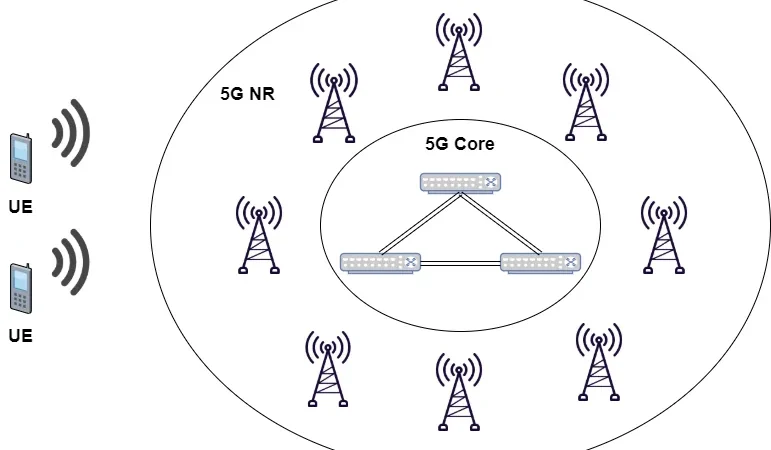
After years of pilots, private 5G is starting to show up in plants, ports, and warehouses with cases that actually work. What changed in 2025, which deployments make sense, and where WiFi 6E or a wired network still win the comparison.
We've spent a decade talking about digital twins on the factory floor, and today real plants in Spain have twins that actually work. Of the four typologies (asset, process, plant, and product), three have proven return; the product twin remains more promise than reality. A look at which platforms are winning, where the twin pays for itself, and what is still hype.
Printing steel, titanium, or aluminum parts is no longer a lab experiment. Metal additive manufacturing has spent a decade maturing, with stable aerospace certifications and service providers across Europe. The question is no longer whether it works, but for which parts it pays off against machining, casting, or forging.
IEC 62443 is the international cybersecurity standard for industrial control systems (ICS) and OT networks. Its four series blocks define security zones and conduits, four protection levels (SL 1-4) and seven foundational requirements. NIS2 pressure is accelerating adoption across Europe. IT teams need to master it to coordinate network segmentation, monitoring and incident response with OT environments.
Industrial edge computing moves processing capacity from the centralised cloud to the plant floor, the machine, or the robotic cell. Local latency (10-50 ms) is critical for process control, machine vision, and safety systems: it is a physical limit that bandwidth alone cannot solve. OPC UA, K3s, and private 5G now form a proven production-ready stack.
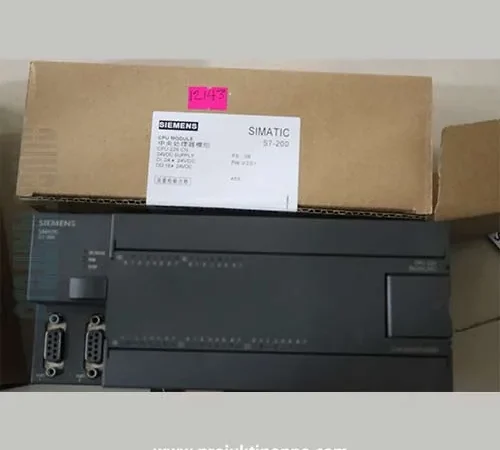
OPC UA is the standard protocol (IEC 62541) that connects industrial PLCs to IT systems, with built-in security and rich information models that Modbus or Profibus cannot match. Incremental adoption in phases, starting with an observer-mode gateway that leaves existing PLCs untouched, lets a plant running decades-old equipment modernise without stopping production.
In 2024, digital twins in health already show measurable results: hospital twins optimise operating rooms and emergency departments, and device twins enable predictive maintenance of imaging equipment. Clinical twins that affect diagnosis or treatment fall under the EU Medical Device Regulation (MDR, 2017/745) and require years of clinical validation before real use.
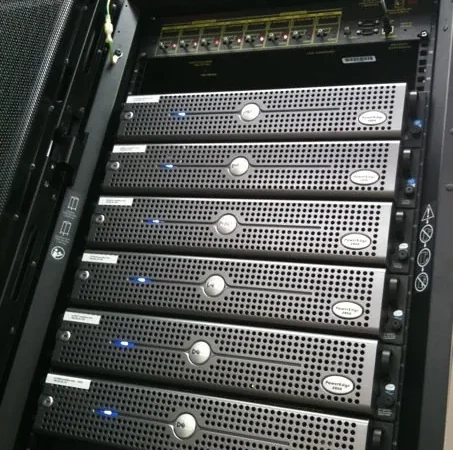
Containerising SCADA makes sense for the upper architecture layers: HMI, historians, and data gateways. PLCs still control hardware with hard determinism. The biggest risk is cultural: applying DevOps patterns without adapting to OT context causes incidents. NIS2 requires managing containers as any other critical infrastructure asset.
In 2024 sustainable data centers move beyond PUE: liquid cooling becomes standard in AI GPU racks, carbon-aware workload scheduling is already practical with tools like the Carbon Aware SDK, and waste-heat reuse has real cases in Stockholm and Helsinki. The EU-wide energy efficiency directive already requires honest metrics instead of greenwashing.
Industrial as-a-service flips equipment sales into outcome sales: Rolls-Royce charges per flight hour, Philips per lux delivered, and several manufacturers guarantee uptime through maintenance contracts. It works when real telemetry, clear SLAs, solid financing, and aligned incentives are all in place; without those four, it stays marketing and the vendor never actually assumes risk.
Private 5G networks deliver high capacity, low latency, and thousands of connected devices for factories that do not want to depend on a carrier or settle for Wi-Fi. They make sense in large campuses with mobility or high IoT density; for medium plants with fewer than 50 devices, Wi-Fi 6/7 remains more cost-effective.
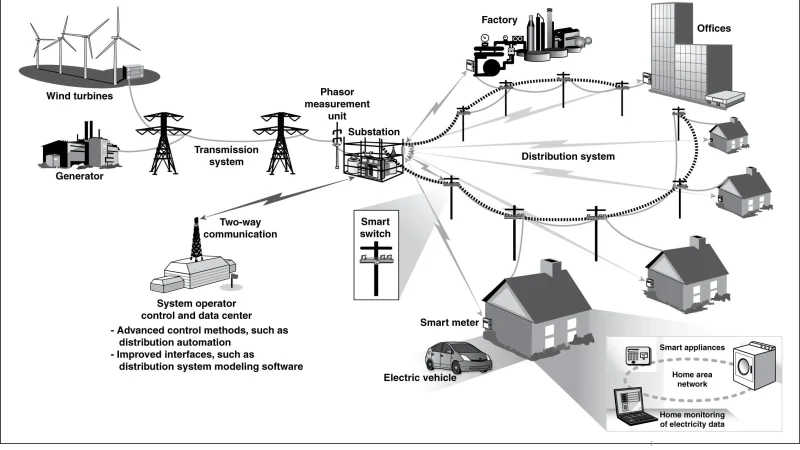
Digital twins in energy simulate transmission grids, wind farms, and conventional plants in real time. They predict failures weeks ahead, cut corrective maintenance 10-25%, and deliver payback in 18-36 months. The main obstacles are IT/OT integration and cybersecurity; not every asset justifies the investment.
A digital thread is the data architecture that connects PLM, MES, ERP, and IIoT under one common identifier, unlike a digital twin, which replicates a single asset. Here I explain what it is, how it differs from the twin, and how to start with one real use case instead of a project that never ends.
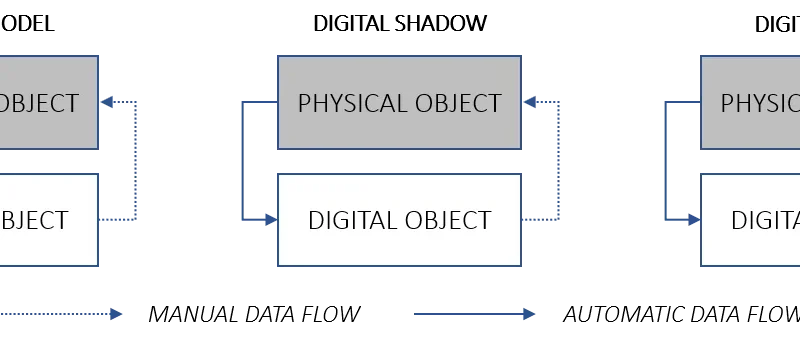
A digital twin is a software replica of a physical asset (machine, production line, or whole plant) synchronised in real time with IoT sensors. It enables failure prediction, energy optimisation, and operator training without risk. It returns real value when the asset is critical, the data is reliable, and the team can maintain the model long-term.
Without sensors generating reliable data, Industry 4.0 is just marketing. The foundation of any real project is instrumenting machines and production lines with temperature, vibration, pressure, and flow sensors, connecting them via Modbus, OPC-UA, or MQTT through a gateway, and starting with 5-10 sensors on a pilot line before buying at scale.
Industrial predictive maintenance rarely needs deep learning: classic models such as random forests, SVMs, or survival models solve 80% of cases. The key lies in feature engineering over vibration, temperature, and power-consumption signals, with pipelines that run on as little as 50 MB of RAM without a GPU.
The customer digital twin is a dynamic virtual representation of a real user, built from behavioural data, preferences, and interactions and updated in real time. Unlike a static CRM profile, it anticipates needs, personalises experiences at scale, and supports proactive decisions about each customer relationship.
The best digital twin tools fall into three categories: simulation (ANSYS, Siemens NX, COMSOL, Dassault SIMULIA), virtual-reality visualisation (Unity, Autodesk VRED, Blender), and lifecycle management or PLM (Siemens Teamcenter, PTC Windchill, Aras). The right choice depends on your sector, asset type, and the integration budget with your existing operational systems.
The Digital Twin of the Organization (DTO), a term coined by Gartner, is a virtual replica of the entire company that synchronises with real data to simulate scenarios, detect problems before they happen, and optimise production, supply chain, and decision-making without risking physical operations.
5 min192
We use first- and third-party cookies to analyze site traffic. You can accept them, reject them, or configure your choice.
Learn more about cookies
Cookie preferences
NecessaryEssential for the site to work. Always on.
AnalyticsHelp us understand how the site is used (Google Analytics).